English
 Español
 Português


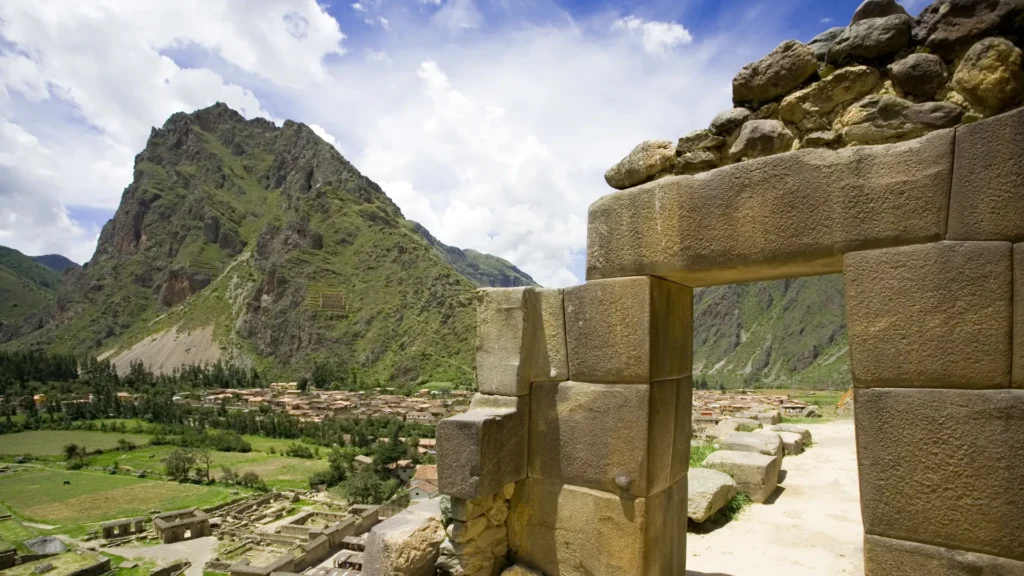
Ollantaytambo is a town in the Sacred Valley of the Incas, on the banks of the Urubamba River, known as the “living Inca town” because its people still live on streets laid out by the Incas. It is famous for its terraced fortress, the Pinkuylluna storehouses and its role as a gateway to Machu Picchu.
In Ollantaytambo, nature, history and Andean spirituality come together. Below we explain what makes it special: its setting among sacred mountains, the mysteries of its stones, its biodiversity and the best ways to explore it.

Ollantaytambo at a Glance
| Topic | What you need to know |
|---|---|
| Where it is | At the western end of the Sacred Valley of the Incas, on the banks of the Urubamba River |
| Altitude | 2,792 m (9,160 ft), lower than Cusco (about 3,400 m / 11,150 ft) |
| Archaeological site hours | Every day, 7:00 a.m. to 5:00 p.m. |
| Entrance | Cusco Tourist Ticket (full or Sacred Valley circuit); there is no single-entry ticket |
| Time at the ruins | About 2 hours |
| From Cusco | About 1 h 30 to 2 h by road |
| Train to Aguas Calientes | About 1 h 30 |
| Dry season | April to October |
| On our tours | Sacred Valley VIP (US$90), plus the trains of our Machu Picchu and Inca Trail tours |
Why Is Ollantaytambo Called the Living Inca Town?
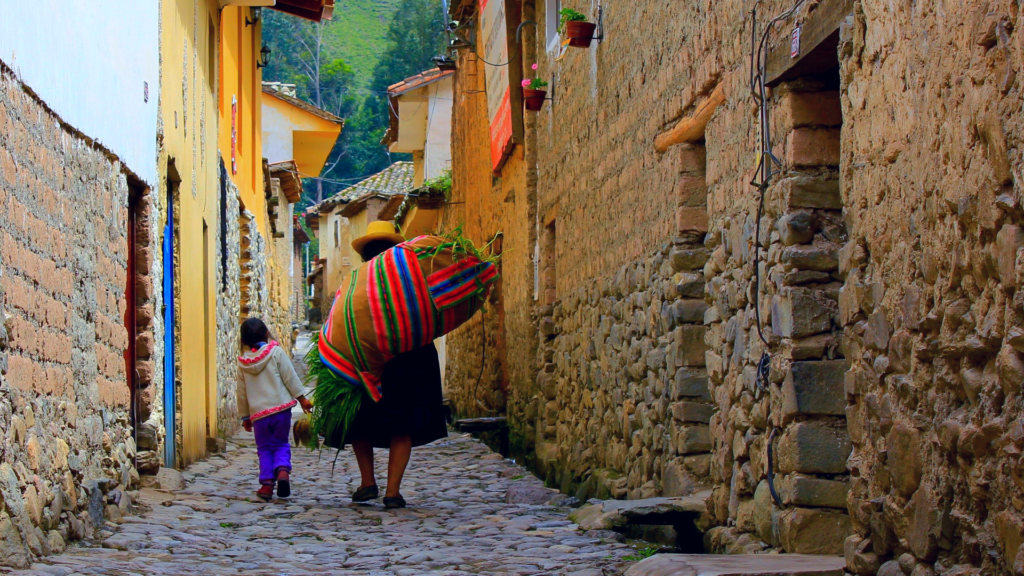
Unlike many archaeological sites, Ollantaytambo was never abandoned. The old part of town keeps its Inca street plan, with narrow lanes, stone walls and water channels that still run beside the streets, and many families live in houses built on Inca foundations. Walking through it is the closest you can get to seeing how an Inca town worked.
Ollantaytambo was a royal estate of the Inca Pachacútec, and during the Spanish conquest it was one of the places where Manco Inca led the resistance against the Spanish.
The Battle of Ollantaytambo (1537)
In 1537, during the rebellion of Manco Inca, Ollantaytambo was the scene of one of the few Inca victories over the Spanish. When Hernando Pizarro’s troops attacked from the valley, the defenders fired arrows and slingstones from the terraces, rolled rocks down the hillside and flooded the plain below by diverting the water, so the horses could not advance. Pizarro had to withdraw under cover of darkness. Shortly afterwards Manco Inca left Ollantaytambo and retreated to Vilcabamba, which we cover in our guide to lesser-known Inca sites.
What to See at the Ollantaytambo Archaeological Site
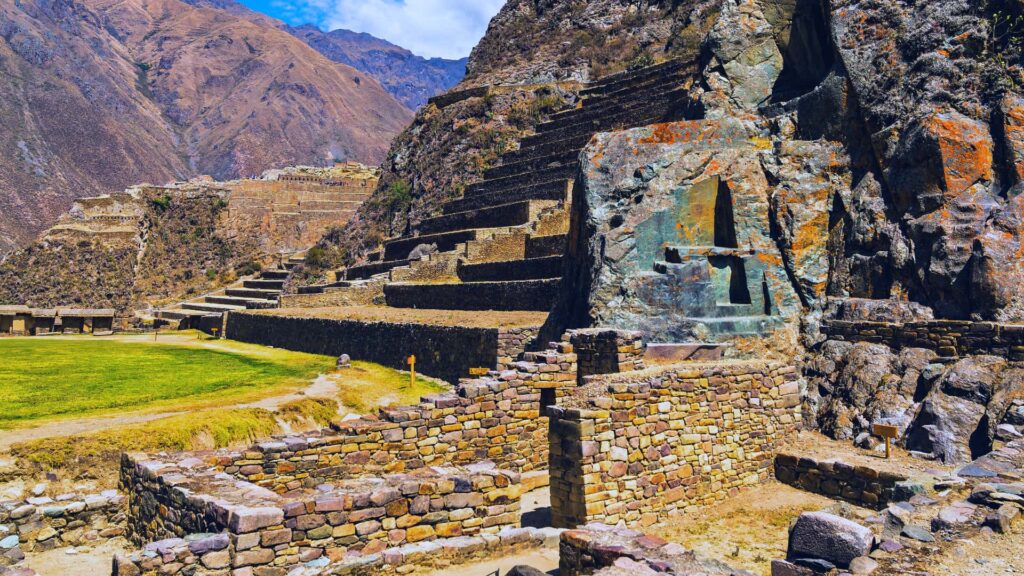
The archaeological site rises right above the town. Its terraces climb the hillside to the ceremonial area at the top, and the climb takes some effort: there are many steep stone steps. These are the highlights:
- The terraces: wide agricultural terraces that climb the hill and frame the view of the valley.
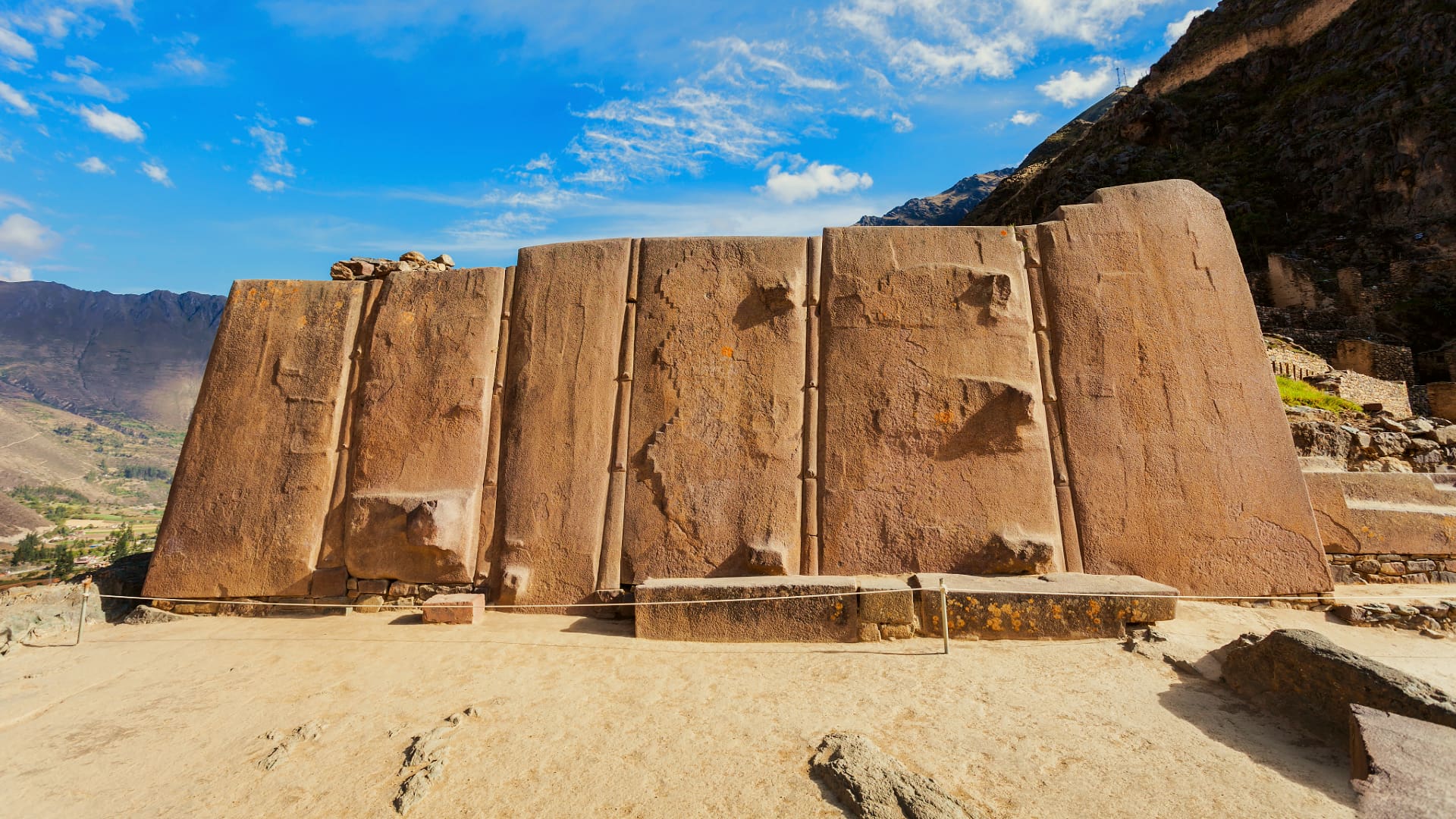
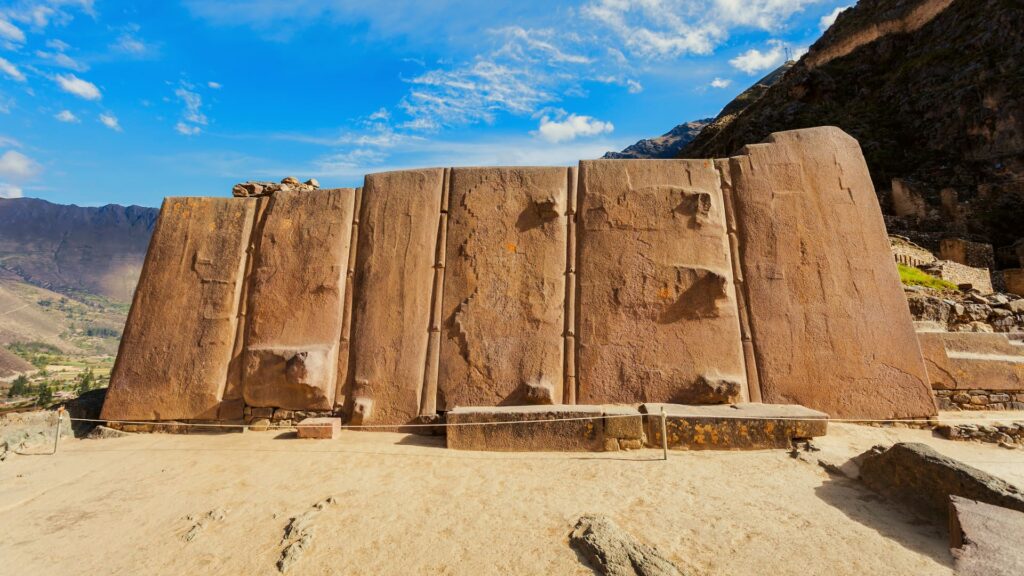
- The Temple of the Sun: at the top stands a wall of six huge pinkish monoliths fitted side by side, one of the finest examples of Inca stonework. The temple was never finished.
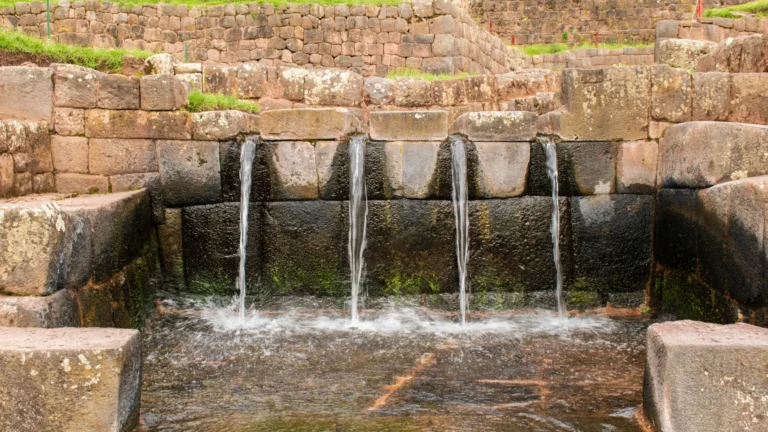
- The Baño de la Ñusta (Princess Bath): a ceremonial fountain at the foot of the site, where water still flows through carved stone.
- The quarry across the river: the great stones came from the Kachiqhata quarry, on the other side of the Urubamba, and had to be moved across the river and up the slope.
The site is open every day from 7:00 a.m. to 5:00 p.m. Allow about 2 hours to go up to the Temple of the Sun and see the fountains without rushing. If you visit on your own, the early morning is the quietest time.
Do You Need a Ticket for Ollantaytambo?
Yes. The archaeological site is covered by the Cusco Tourist Ticket (Boleto Turístico del Cusco): there is no single-entry ticket for Ollantaytambo. You can use the full ticket or the partial Sacred Valley circuit, which includes four sites:
- Pisac
- Ollantaytambo
- Chinchero
- Moray
The ticket can be bought at the site entrance or in Cusco. We do not list prices because they change; we explain how the ticket works in our Coricancha and Sacsayhuamán guide. On our Sacred Valley VIP tour the entrance fees are included: Pisac, Ollantaytambo, Moray and Maras.
Free Sites: Pinkuylluna and Qellorakay
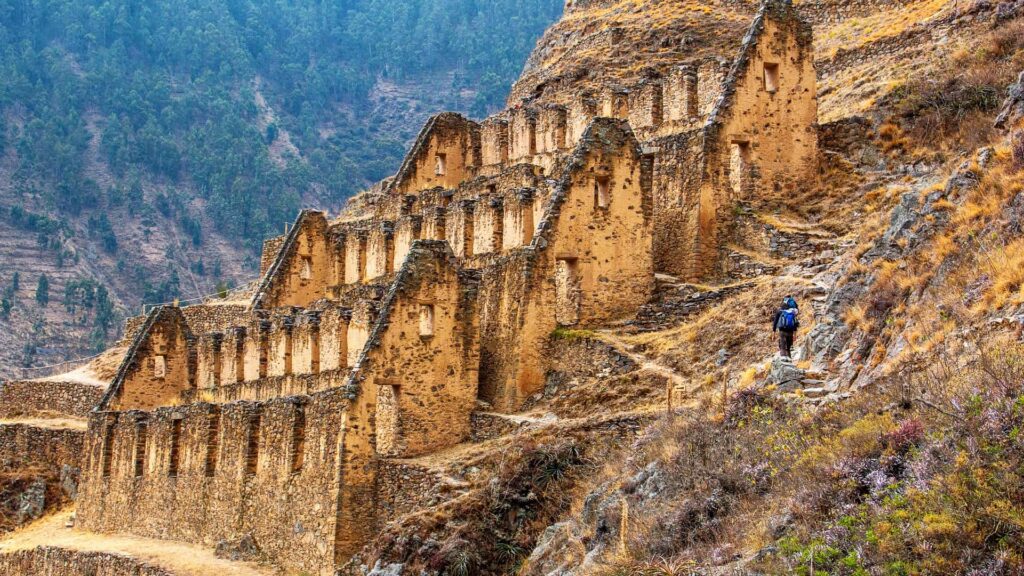
Two Inca sites around the town do not require the ticket. Pinkuylluna, the storehouses on the mountain opposite the fortress, is reached on foot from the old town by a steep path with views over the whole valley. Qellorakay is a small group of ruins a short walk from the main square, a good spot at sunset.
How to Get to Ollantaytambo from Cusco
Ollantaytambo is about 1 h 30 to 2 h from Cusco by road. There are two routes: the shorter one via Chinchero, and the one that goes down to Pisac and follows the valley. You can come on a tour, on your own, or on the way to Machu Picchu. This table helps you compare the first two:
| On a tour (Sacred Valley VIP) | On your own | |
|---|---|---|
| Transport | Pickup at your Cusco hotel at 7:00 a.m. in a luxury vehicle | Shared minivans (colectivos) or taxi from Cusco |
| Guide | Guide in English, Spanish or Portuguese | No guide, unless you hire one |
| Tickets | Included: Pisac, Ollantaytambo, Moray and Maras | You buy the Cusco Tourist Ticket yourself |
| What else you see | Pisac, Moray and the Maras Salt Mines | Whatever you arrange yourself |
| Food | Gourmet lunch in Urubamba | On your own |
| Return | Back in Cusco between 6:00 and 7:00 p.m. | Depends on the transport you choose |
On the Way to Machu Picchu
Ollantaytambo is the main train station for Machu Picchu: the train to Aguas Calientes takes about 1 h 30, and the station is a short walk from the main square. This is how our tours use it:
- Machu Picchu Full Day (from US$300) and Machu Picchu 2 Days (from US$350): private transfer from Cusco to the Ollantaytambo or Poroy station, depending on availability.
- Short Inca Trail (from US$450): transfer to Ollantaytambo and train to Km 104, where the hike begins.
- Classic Inca Trail (from US$650): the trek starts at Km 82, a short drive from town, and you come back by train to Ollantaytambo.
- Lares Trek (from US$450): the trek ends in Ollantaytambo, where you board the train to Aguas Calientes.
To compare train classes and schedules, read our guide to the train to Machu Picchu.
Book with 40%: all these tours are booked by paying only 40% online. The balance is paid when you arrive in Peru.
How Long to Stay in Ollantaytambo
It depends on how you travel:
- Half a day: enough for the archaeological site and a walk through the old town. This is what you do on the Sacred Valley VIP, which visits Ollantaytambo in the afternoon, after lunch in Urubamba.
- One night: ideal if you take the train to Machu Picchu the next day. You see the town quiet in the early morning and late afternoon, and you have time to climb Pinkuylluna.
- Two nights or more: for travelers who want to add walks around the town, such as the hike to Pumamarca.
Best Time to Visit Ollantaytambo
The dry season, from April to October, brings sunny days and clear skies, and it is also the busiest time. The rainy season runs from November to March: the valley turns green and there are fewer visitors than in the months of highest demand, June to August. We compare the seasons month by month in our guide to the best time to visit Cusco.
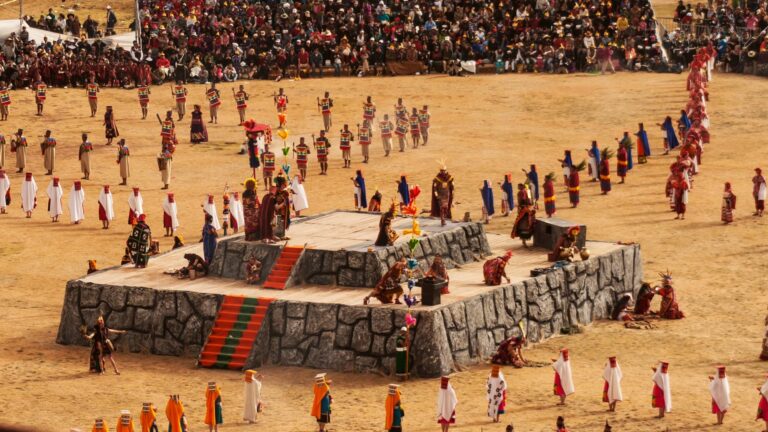
The town’s main festival is the Señor de Choquekillka, held around Pentecost (in 2027, Pentecost falls on 16 May). Find other celebrations of the region in our guide to Cusco festivals.
What Is the Landscape Around Ollantaytambo Like?
The town is surrounded by steep mountains and crossed by the Urubamba River, which makes Ollantaytambo a natural choice for anyone who loves the outdoors. The setting offers spectacular views and a biodiversity that reflects the ecological richness of Peru.
Mountains That Tell Stories
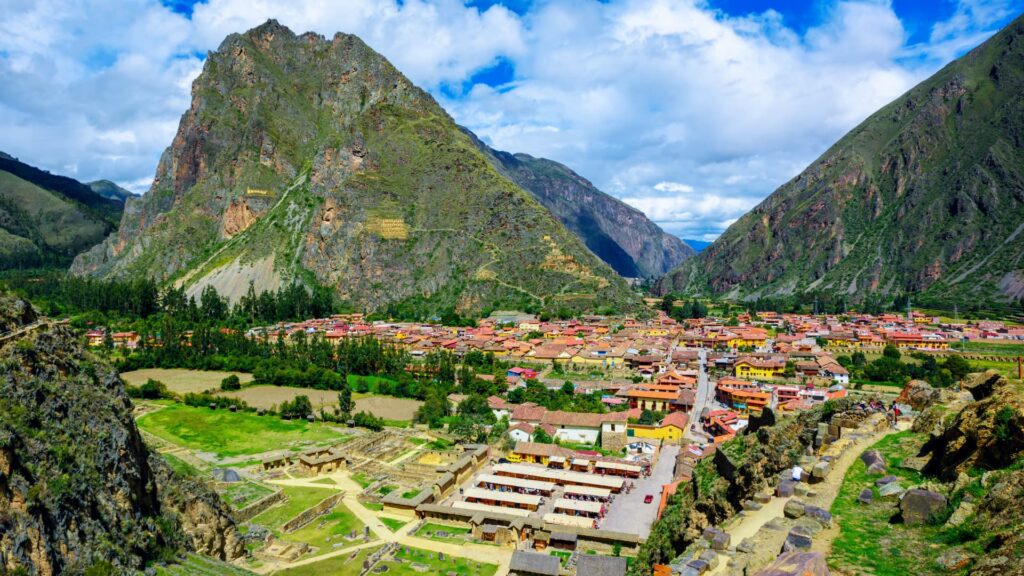
The mountains around Ollantaytambo are not only beautiful; they also hold deep meaning in the Andean worldview. Known as apus, they are considered spiritual guardians by local communities. One of the most emblematic is Pinkuylluna, which rises right above the town.
Pinkuylluna and Its Inca Storehouses
Pinkuylluna is pronounced roughly “pin-kuy-yoo-na”. Its name comes from the Quechua word for an Andean flute, because the wind blowing across its slopes sounds like the instrument. On its side stand Inca storehouses, called colcas or qolqas, that seem to defy gravity on almost vertical slopes. They are more than five centuries old.
The Urubamba River
The Urubamba River, which runs through the Sacred Valley, was revered as a deity in Inca times and has fed the fields of the valley for centuries. Today it also offers activities such as rafting, a great option for travelers looking for adventure in the middle of nature.

What Mysteries Does Ollantaytambo Hide?
The Giant Stones of the Fortress
One of the greatest puzzles of Ollantaytambo is how the Incas moved and placed the enormous stone blocks of its fortress. Some weigh up to 50 tons and were brought from a quarry several kilometers away, which meant crossing the river and hauling them up steep terrain. Archaeologists still debate the techniques the Incas used.
Faces in the Mountains
If you look closely at the mountains around Ollantaytambo, you will notice shapes that resemble human faces in the rock. The most famous, known as the “Face of the Inca”, can be seen on Pinkuylluna. Some believe these figures are the work of nature; others think they were deliberately carved as part of a symbolic and religious system.
An Inca Astronomical Calendar
Ollantaytambo is also linked to astronomy. Some of the fortress buildings and the alignments of nearby mountains are believed to have worked as a solar calendar: during the solstices, sunlight falls on specific points of the structures, marking important moments in the Andean calendar.
What Plants and Animals Live Around Ollantaytambo?
Located between the high Andes and the high jungle, the living Inca town enjoys remarkable biodiversity, and the variety of plants and animals is part of what makes a visit memorable.
Flora
The Sacred Valley is home to a great diversity of plants, many of them cultivated by the Incas for their nutritional and medicinal value. Among them:
- Purple corn: grown since ancient times, it is nutritious and the base of traditional drinks such as chicha morada.
- Coca: a sacred plant used by the Incas in ceremonies, and still used traditionally to ease the effects of altitude.
- Orchids: several species grow around Ollantaytambo, adding vivid color to the landscape.
Fauna
Llamas and alpacas graze peacefully around the town, and the area is rich in birds, from hummingbirds to the imposing Andean condor. With luck, you might even spot a spectacled bear, a threatened species that lives in the most remote mountains.

What Can You Do in Ollantaytambo?
Ollantaytambo offers plenty of ways to enjoy its history and natural surroundings:
- Explore the archaeological site: climb the terraces of the fortress and see the giant stones up close.
- Trekking: hike to nearby archaeological sites such as Pumamarca.
- Rafting: run the waters of the Urubamba River.
- Mountain biking: the trails around town are ideal for adventure on two wheels.
- Photography: from the cultivated fields to the snow-capped peaks, every corner deserves a photo.

Guide’s tip: many travelers only pass through Ollantaytambo on their way to Machu Picchu. If you can, stay overnight: in the early morning and late afternoon the streets are quiet and you can enjoy the town at your own pace.
To plan your trip, read our guide: Sacred Valley Peru: What to See, How to Visit and Tips for 2027. And if you have half a day to spare, our half-day tour to Maras and Moray leaves from Cusco and rounds out your visit to the valley.
What to see in Ollantaytambo. Here is a summary of the places and activities in this guide, and who each one suits:
| Place or activity | What it is | Who it suits |
|---|---|---|
| The old town | Narrow lanes laid out by the Incas, stone walls and water channels that still run. Many families live in houses built on Inca foundations. | Anyone who wants to see how an Inca town worked. If you stay overnight, the streets are quiet in the early morning and late afternoon. |
| The fortress (archaeological site) | Terraces and stone blocks weighing up to 50 tons, brought from a quarry several kilometers away. Some buildings are believed to have worked as a solar calendar. | Travelers interested in Inca engineering and astronomy. You can explore the valley with a guide on our Super Valley / VIP Valley Tour (US$90). |
| Pinkuylluna Mountain | An apu (sacred mountain) rising above the town, with Inca storehouses (colcas) more than five centuries old and the “Face of the Inca” in the rock. | Travelers interested in the Andean worldview and the mysteries of the place. |
| Urubamba River and rafting | A river revered as a deity in Inca times. Today you can go rafting on it. | Anyone looking for adventure in the middle of nature. |
| Trekking to Pumamarca | A hike to a nearby archaeological site. | Hikers who want to see more archaeological sites. |
| Mountain biking | Trails around the town. | Anyone looking for adventure on two wheels. |
| Flora and fauna | Purple corn, coca and orchids; llamas, alpacas and birds, from hummingbirds to the Andean condor. With luck, a spectacled bear. | Nature lovers. |
| Photography | From the cultivated fields to the snow-capped peaks, every corner deserves a photo. | Photography lovers. |
| Classic Inca Trail | A 4-day / 3-night trek to Machu Picchu that begins near town. | Anyone who wants to reach Machu Picchu on foot: Classic Inca Trail (US$650). |
| Train station to Machu Picchu | The trains to Machu Picchu stop in Ollantaytambo. | Travelers going to Machu Picchu by train. Read our guide to the train to Machu Picchu. |
Our Tours That Pass Through Ollantaytambo
These are the tours that include Ollantaytambo, with the starting price and what you pay online to book:
| Tour | How it includes Ollantaytambo | Price from | You pay online (40%) |
|---|---|---|---|
| Sacred Valley VIP | Afternoon visit to the fortress, entrance included | US$90 | US$36 |
| Machu Picchu Full Day | Train from Ollantaytambo or Poroy, depending on availability | US$300 | US$120 |
| Machu Picchu 2 Days | Train from Ollantaytambo or Poroy, depending on availability | US$350 | US$140 |
| Short Inca Trail | Train from Ollantaytambo to Km 104 | US$450 | US$180 |
| Lares Trek | End of the trek and train to Aguas Calientes | US$450 | US$180 |
| Classic Inca Trail | Return train to Ollantaytambo | US$650 | US$260 |
The balance is paid when you arrive in Peru.
Frequently Asked Questions
How long do you need at the Ollantaytambo ruins?
About 2 hours to climb the terraces to the Temple of the Sun and see the Baño de la Ñusta. Add some time if you also want to walk through the old town.
Do I need the Cusco Tourist Ticket for Ollantaytambo?
Yes. There is no single-entry ticket: you enter with the full Cusco Tourist Ticket or the Sacred Valley circuit. On our Sacred Valley VIP tour the entrance is included.
Is Ollantaytambo higher than Cusco?
No. Ollantaytambo is at 2,792 m (9,160 ft), lower than Cusco, which is at about 3,400 m (11,150 ft).
Can you visit Ollantaytambo on a day trip from Cusco?
Yes. On the Sacred Valley VIP you visit Pisac, Ollantaytambo, Moray and the Maras Salt Mines in one day and are back in Cusco between 6:00 and 7:00 p.m.
Does the Inca Trail start in Ollantaytambo?
Not exactly. The Classic Inca Trail starts at Km 82, a short drive from town, and on the Short Inca Trail you take the train from Ollantaytambo to Km 104. On both routes you return by train to Ollantaytambo.
Can I climb Pinkuylluna on my own?
Yes. Entrance is free and the path starts in the old town. It is steep, so wear comfortable shoes and take water.
Is Ollantaytambo Worth Visiting?
Absolutely. Ollantaytambo is a living testimony of the bond between nature and Inca culture. Every stone, terrace and path speaks of ingenuity, respect and a deep connection with the earth, and it leaves visitors with questions worth asking: how did the Incas achieve works like these, and what were the last days of their civilization like?
Discover the answers with a local guide on our Super Valley / VIP Valley Tour through the Sacred Valley. Contact us and we will help you plan your visit to Ollantaytambo.