English
 Español
 Português


The most rewarding lesser known Inca sites near Cusco are Choquequirao and Vilcabamba, the last refuge of the Incas, together with the ancestral trails that link Andean villages such as Cachora and Santa Teresa. They take more effort to reach than Machu Picchu, but reward you with quiet ruins, wild landscapes and living Andean culture.
Machu Picchu is the shining jewel of the Inca civilization, and many travelers rightly choose a two-day Machu Picchu tour. But the Inca Empire left a much wider legacy, and some of its most impressive places are still far from the crowds. If you want a deeper, more authentic experience, routes like Choquequirao and Vilcabamba show you a side of Peru that few tourists see.
Which lesser known Inca sites are worth visiting?
Choquequirao, the “cradle of gold”
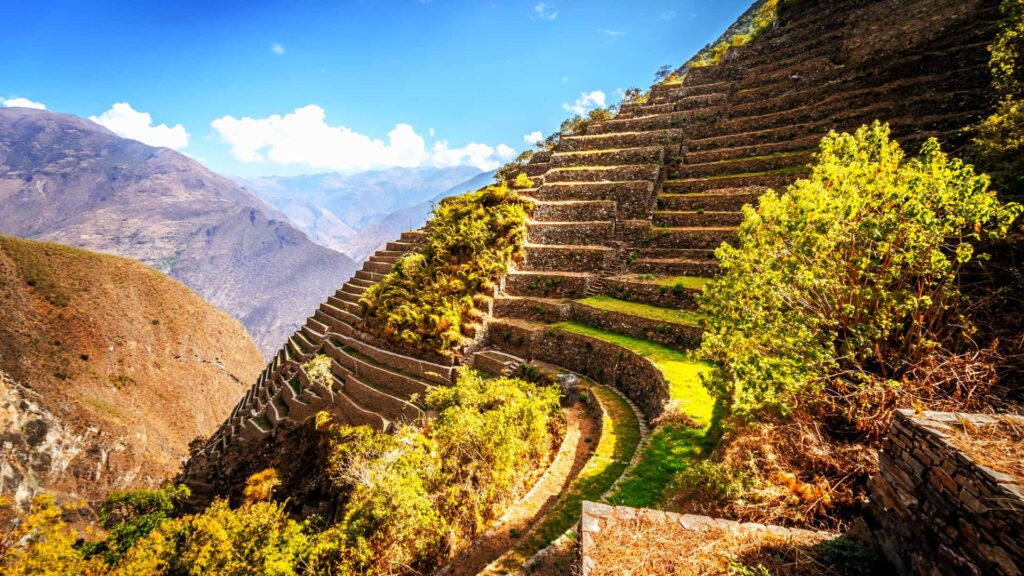
Choquequirao, whose name is usually translated from Quechua as “cradle of gold”, sits on a mountain ridge high above the Apurímac River canyon. It is often called the sister of Machu Picchu for its terraces, plazas and temples, but there is no road to the site: the only way in is on foot, usually starting from the village of Cachora, on a multi-day Choquequirao trek.
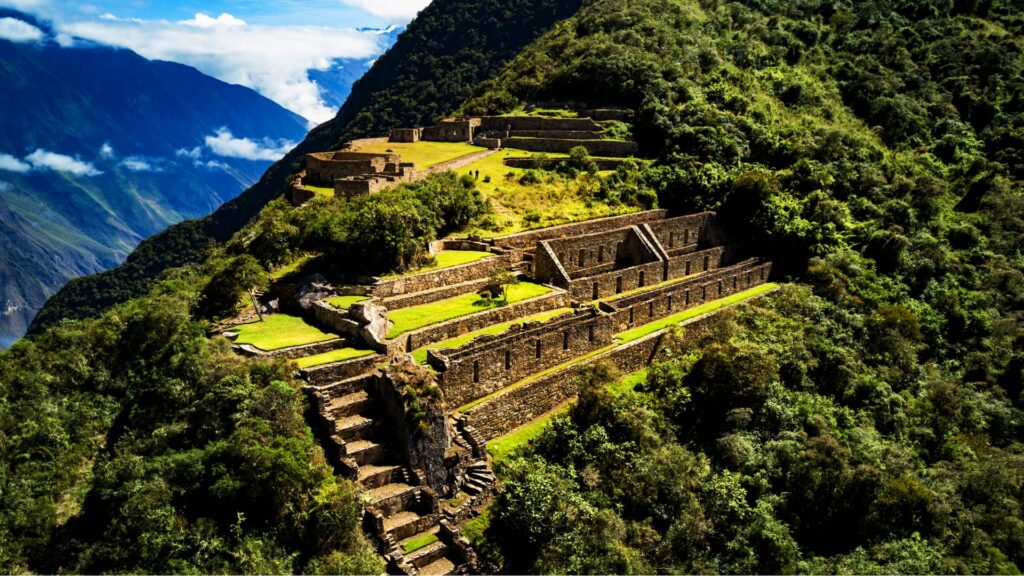
That isolation is precisely its charm. Much of the site is still covered by vegetation, and you can explore its terraces, stairways and ceremonial buildings with very few other visitors around. One of its most striking details is a group of terraces decorated with llama figures made of white stones.


Vilcabamba, the last refuge of the Incas
Another lesser known route leads to Vilcabamba, often called the “last capital of the Incas”. After the Spanish invasion, Manco Inca withdrew to this remote region of mountains and jungle, and from there the Incas resisted for decades, until Túpac Amaru I was captured in 1572. Its isolation made it a bastion of resistance against foreign forces. The best-known sites in the area are Vitcos and Espíritu Pampa, considered the old city of Vilcabamba.
Reaching Vilcabamba means following forgotten trails where traces of the Inca civilization blend into lush vegetation. Along the way you learn the stories of the Incas who fought to keep their independence, cross unspoiled landscapes and meet the communities that still live in this part of Peru. Whether you love history or nature, it is a journey that deepens your understanding of the Inca Empire.
Ancestral trails between Cachora and Santa Teresa
The Classic Inca Trail is well known and busy. In addition to Choquequirao and Vilcabamba, there are ancestral paths that connect villages such as Cachora and Santa Teresa, offering a quieter experience of Andean Peru. On these trails you walk through hidden valleys and mountains with native flora and fauna, and share the rural life of Andean communities, with their strong connection to nature and Inca traditions. Another alternative to the Inca Trail is the Salkantay route, which ends at Machu Picchu without an Inca Trail permit; our guide to the Salkantay route explains it day by day.

Tipón and the South Valley, close to Cusco
If you don’t have time for a multi-day trek, the South Valley of Cusco also hides lesser known sites. Tipón, for example, is famous for its Inca terraces and water channels that still flow today. You can explore this area on our South Valley of Cusco tour.
Lesser known Inca sites at a glance. Here is a summary of the places in this guide, how you reach each one and which of our tours goes there:
| Site | Where it is | How to get there or how many days | Do we have a tour? |
|---|---|---|---|
| Choquequirao, the “cradle of gold” | On a mountain ridge high above the Apurímac River canyon. | There is no road: the only way in is on foot, usually from the village of Cachora, on a multi-day trek. | Yes: Choquequirao Trek (4 days / 3 nights, US$450). |
| Vilcabamba, the last refuge of the Incas (Vitcos and Espíritu Pampa) | In a remote region of mountains and jungle. | On foot, along forgotten trails. It is a demanding route. | Not as a fixed tour, but we can design it on request. |
| Ancestral trails between Cachora and Santa Teresa | Between Andean villages, through hidden valleys and mountains with native flora and fauna. | On foot, along ancestral paths that link the villages. They are quieter than the Classic Inca Trail. | Not as a fixed tour, but we can design it on request. |
| Tipón, in the South Valley | In the South Valley of Cusco, close to the city. | No multi-day trek needed: an option if you are short on time. | Yes: South Valley of Cusco tour (1 day, US$45). |
Why choose lesser known Inca routes?
Each of these routes is a window into the past of the Inca Empire and, at the same time, a way to experience Peru more deeply. Traveling to Choquequirao or Vilcabamba is a physical adventure, but also a cultural immersion that connects you with a civilization still alive in the mountains, valleys and traditions of the Andean peoples.
Because they are away from the crowds, these trails also support a more responsible and sustainable form of tourism: the benefits reach local communities directly and help preserve both natural and cultural heritage. It is the side of Peru we most enjoy sharing as local guides from Cusco. If you are also drawn to the high Andes, our guide to Ausangate covers its 7 lakes and the Qoyllur Rit’i pilgrimage.
Our tip: routes like Choquequirao and Vilcabamba are demanding. Spend a few days in Cusco to acclimatize before you start, and pack for both warm hours in the canyon and cold nights at camp.
Ready to discover the Inca world beyond Machu Picchu? Join our Choquequirao Trek (4 days / 3 nights) or contact us and we will help you choose the lesser known route that best suits you.