 English
 Español
 Português


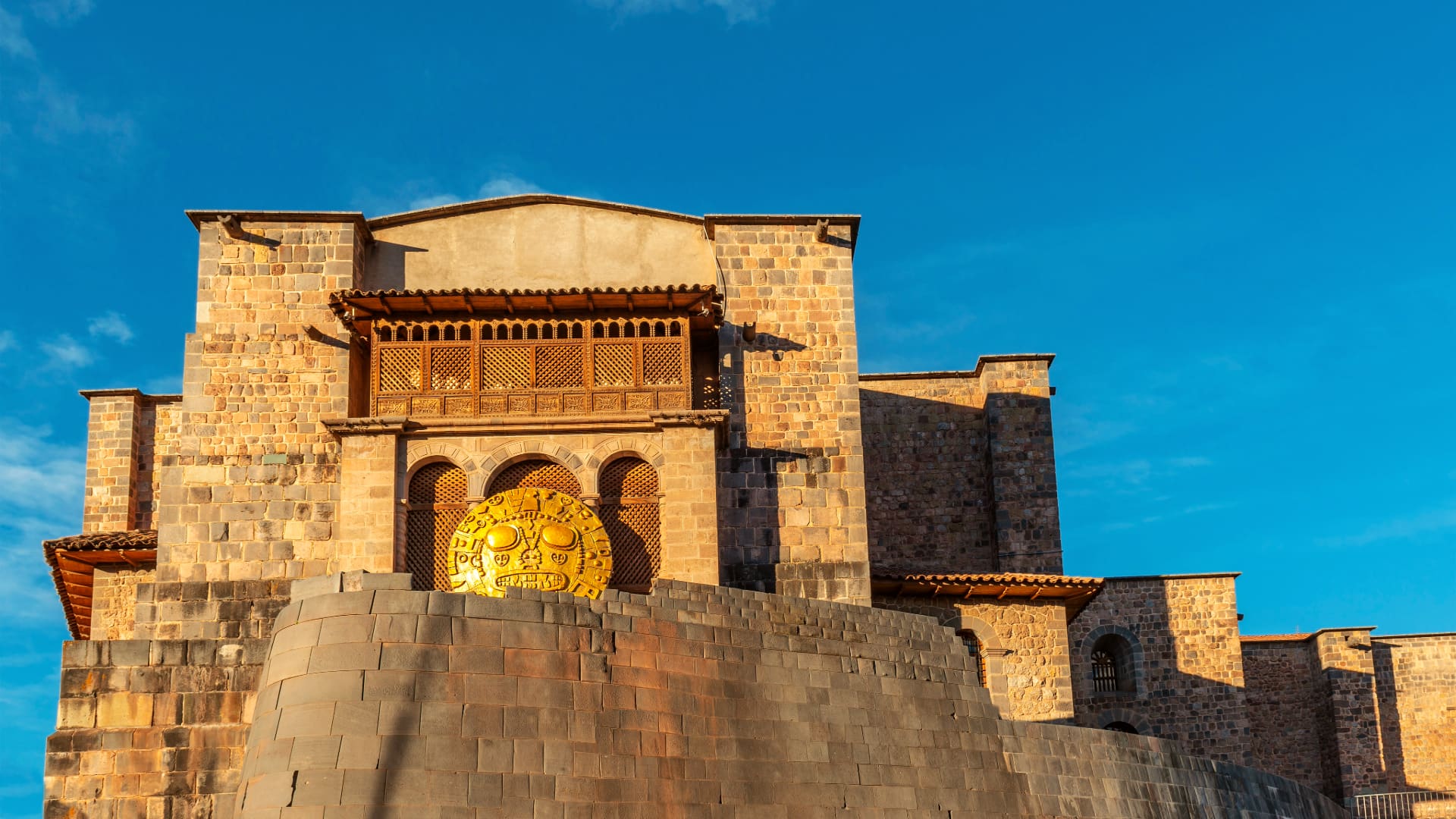
The Coricancha (also spelled Qorikancha or Korikancha) was the main temple of Inca Cusco, dedicated to the Sun. Today its Inca walls hold up the Santo Domingo convent in the heart of the city. Above Cusco rises Sacsayhuamán, the complex of giant stone walls where Inti Raymi is held. Together they are the best introduction to Inca Cusco.
We are local guides based in Cusco, and we visit both sites almost every week. In this guide we explain what to see at each one, which ticket you need and how to plan your visit, on foot or with a tour.
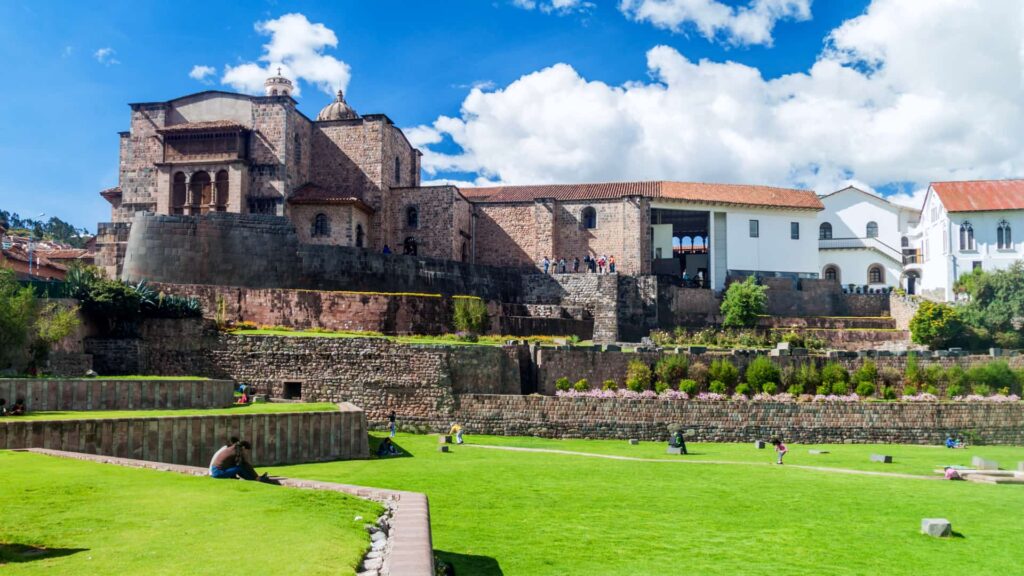
What is the Coricancha?
The name comes from Quechua: quri means “gold” and kancha means “enclosure”. The Coricancha, the “golden enclosure”, was the most important temple in Inca Cusco and was dedicated to Inti, the Sun god. According to the chroniclers, other deities were also worshipped here, such as the Moon, the stars, thunder and the rainbow, each in its own chamber.
Spanish chroniclers wrote that its walls were covered with sheets of gold and that its courtyards held offerings of gold and silver. Almost none of that metal survives: it was melted down after the conquest. What does survive is the stonework, and that is the real reason to visit.
It stands in Cusco’s historic center, a few blocks from the Plaza de Armas, so you can walk there from almost any hotel downtown. If you want to understand why the Incas aligned their temples with the sun and stars, read our guide to Inca astronomy and Cusco’s architecture.
Coricancha history and the Santo Domingo convent
According to historians, the temple was rebuilt and expanded under the Inca ruler Pachacutec, who turned Cusco into the capital of a great state. For the Incas, the Coricancha was the religious center of the Inca Empire.
After the conquest, the Spanish handed the temple to the Dominican order, which built the Santo Domingo church and convent on top of it. They did not tear it down completely: they used the Inca walls as foundations. That is why today you see a unique blend of two worlds, with colonial cloisters and stone arches next to Inca chambers that are almost intact.
The walls are what impress visitors most:
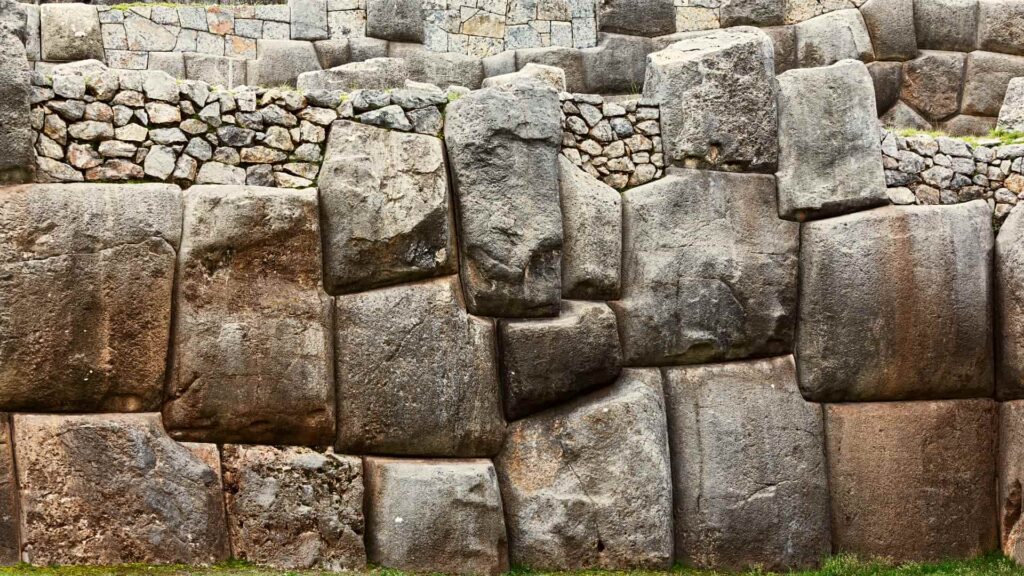
- Stones fitted without mortar: polished blocks joined so precisely that you cannot slide a sheet of paper between them.
- The curved wall: an Inca wall that forms a perfect curve beneath the church. It is best seen from below, on the Avenida El Sol side.
- Chambers with niches: Inca rooms with trapezoidal niches, the typical shape of Inca doors and windows.
- Earthquake-resistant walls: the 1950 earthquake damaged the colonial building and exposed more of the Inca walls, which had held up much better.
What is Sacsayhuamán?
Sacsayhuamán (Saqsaywaman in Quechua) is a large Inca complex built on a hill just north of the city, at about 3,700 m (12,140 ft), roughly 300 m (1,000 ft) above the Plaza de Armas. Its name is often translated as “satisfied falcon”, although there are other interpretations. According to one tradition, Cusco was laid out in the shape of a puma, and Sacsayhuamán was its head.
Fortress or temple? Archaeologists still debate it. Its walls look defensive, and there was fighting here during Manco Inca’s resistance against the Spanish, but the site also had towers, chambers and ceremonial spaces. Most likely it served both purposes. For the bigger picture, read our introduction to Inca history.
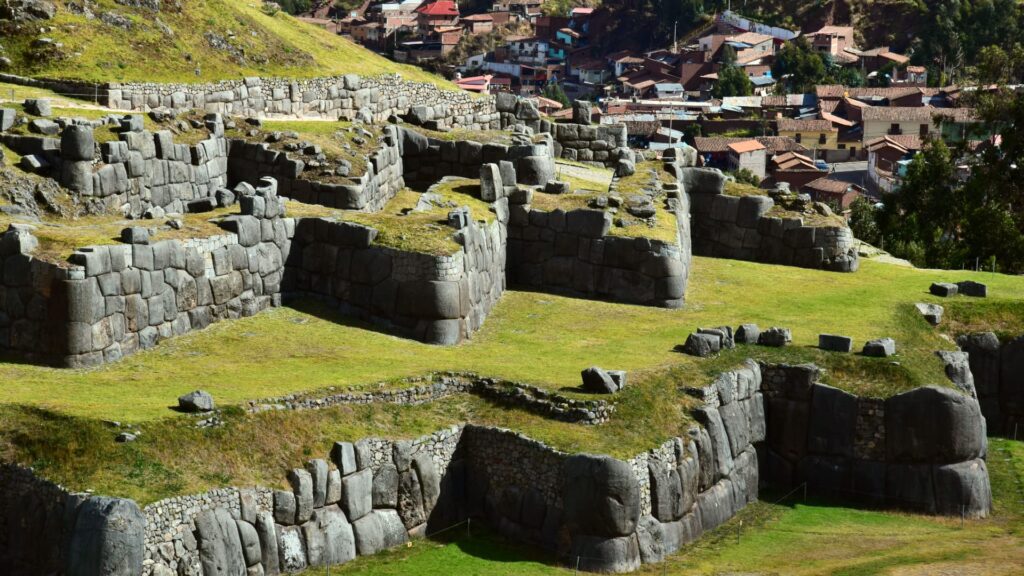
After the conquest, many stones were taken from Sacsayhuamán to build colonial houses and churches in Cusco. Even so, what remains is still one of the most impressive examples of Inca architecture.
Sacsayhuamán walls, giant stones and Inti Raymi
The most famous image of Sacsayhuamán is its zigzag walls: three stone terraces that advance in angles in front of a wide esplanade. Some of the stones are enormous, taller than a person, and yet they fit together without mortar, with irregular shapes and many angles. How the Incas moved and carved these blocks is still one of the questions travelers ask us most.
On the upper part of the complex you can see the foundations of old towers, and on the hill opposite the walls there are carved rocks worn smooth over time, which visitors use as natural slides.
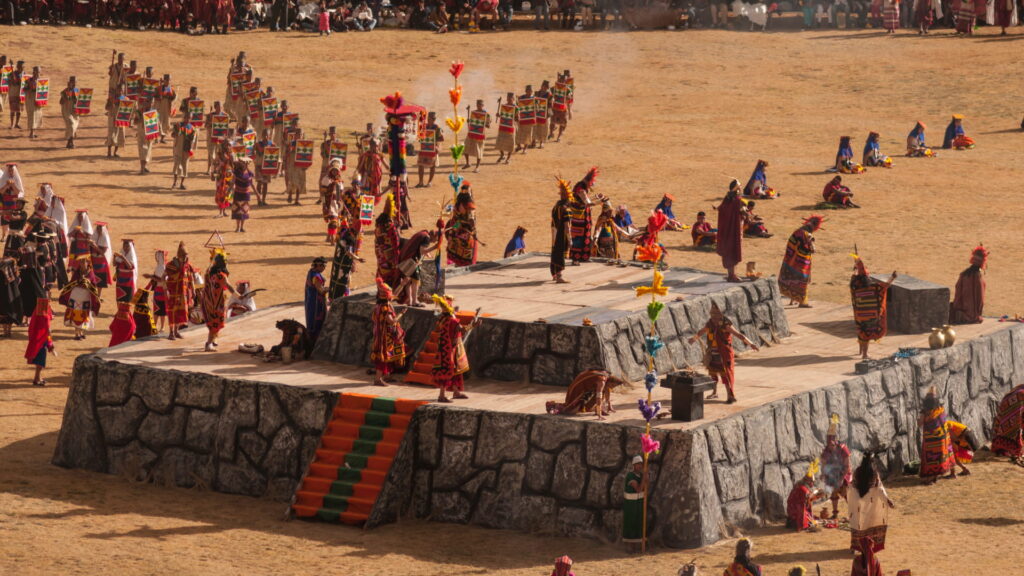
Every June 24, the esplanade in front of the walls becomes the main stage of Inti Raymi, the Festival of the Sun. It is a reenactment of the Inca ceremony that marked the Andean winter solstice. The celebration usually begins at the Coricancha, moves through the Plaza de Armas and ends at Sacsayhuamán. If you are traveling in June, book early and check our guide to Cusco festivals.
Qenqo, Puka Pukara and Tambomachay: sites near Sacsayhuamán
Along the road that leaves Cusco to the north, near Sacsayhuamán, there are three more Inca sites that are usually visited together:
- Q’enqo (Qenqo): a large carved rock with channels, steps and an inner chamber, believed to have had a ceremonial use.
- Puka Pukara: its name means “red fortress”, for the color of its stones. It is believed to have been a checkpoint or a resting place on the road.
- Tambomachay: known as the “Inca baths”, with fountains and water channels that still work. It shows the Inca skill at managing water.
All three sit higher than downtown Cusco. If you have just arrived, walk slowly and read our guide to Cusco’s elevation to acclimatize properly.
Coricancha tickets and the Cusco Tourist Ticket
This is the most common question, and the answer is simple: the two sites do not use the same ticket.
- Coricancha: has its own separate ticket, sold on site. It is not part of the Cusco Tourist Ticket (Boleto Turístico del Cusco).
- Sacsayhuamán: you enter with the Cusco Tourist Ticket, the same one that covers Qenqo, Puka Pukara and Tambomachay.
The Tourist Ticket comes in different versions and also covers sites in the Sacred Valley and the South Valley. We do not list prices or opening hours because they change; confirm them before your trip or ask us when you book.
| Coricancha | Sacsayhuamán | |
|---|---|---|
| Location | Historic center, a few blocks from the Plaza de Armas | Hill just north of the city |
| Altitude | Same as downtown Cusco, about 3,400 m (11,150 ft) | About 3,700 m (12,140 ft) |
| What to see | Inca walls, the curved wall and the Santo Domingo convent | Zigzag walls, giant stones and views over Cusco |
| Ticket | Separate, not included in the Tourist Ticket | Cusco Tourist Ticket |
| Nearby | Plaza de Armas, Loreto Street, San Blas | Qenqo, Puka Pukara and Tambomachay |
Book with 40%: our Cusco City Tour, which includes the Coricancha and Sacsayhuamán, is booked by paying only 40% online. The balance is paid when you arrive in Peru.
How to visit both sites: on foot or with a guided tour
On your own, on foot
You can walk to the Coricancha from the Plaza de Armas. You can also hike up to Sacsayhuamán from downtown, along the steep streets that pass the San Cristóbal church. It is a short climb but a tiring one because of the altitude, so it is best done after one or two days in the city. For Qenqo, Puka Pukara and Tambomachay, transport is more practical, because they are farther away and the road keeps climbing.
Going on your own is more flexible, but without a guide it is easy to miss the details: where the gold used to be, why the niches are trapezoidal or how to read the orientation of the walls.
With our Cusco City Tour
Our Cusco City Tour (US$40) includes the Coricancha and Sacsayhuamán with a local guide who explains the story behind each wall. It is a good activity for your first or second day, because it helps you acclimatize without much effort. Our guides speak English, Spanish and Portuguese.
After the City Tour, the natural next step is to head out of the city. The Sacred Valley VIP tour (US$90) covers the great Inca sites of the Urubamba Valley, and the South Valley of Cusco tour (US$45) shows a less visited area. For more ideas, see our list of things to do in Cusco.
Frequently asked questions
Is the Coricancha included in the Cusco Tourist Ticket?
No. The Coricancha has its own separate ticket. Sacsayhuamán, on the other hand, is visited with the Cusco Tourist Ticket, just like Qenqo, Puka Pukara and Tambomachay.
Are Coricancha, Qorikancha and Korikancha the same place?
Yes. They are different ways of writing the same Quechua word. The same goes for Sacsayhuamán and Saqsaywaman: it is the same site.
Was Sacsayhuamán a fortress?
No one knows for sure. Its walls look defensive and there were battles here after the Spanish arrived, but it also had ceremonial spaces. Many researchers believe it was both a fortress and a temple.
Can you walk up to Sacsayhuamán?
Yes, from downtown Cusco along the streets that climb past San Cristóbal. The slope and the altitude make it tiring, so go slowly, carry water and, if you can, wait until you are acclimatized.
When is Inti Raymi at Sacsayhuamán?
Every June 24. It is one of the busiest dates of the year in Cusco, so book your accommodation and tours well in advance.
Which tour includes the Coricancha and Sacsayhuamán?
Our Cusco City Tour, priced at US$40, includes both sites with a local guide. You book with 40% online and pay the balance when you arrive in Peru.
Plan your visit to Inca Cusco
The Coricancha shows you the religious heart of the Incas and how the Spanish built on top of it. Sacsayhuamán shows you the scale of their architecture, with stones that still amaze everyone who sees them. Visit them in your first days in Cusco, without rushing, and you will have the context to understand everything you see later in the Sacred Valley and at Machu Picchu.
If you want to see both with a local guide, book our Cusco City Tour with the Coricancha and Sacsayhuamán. You pay only 40% online and the rest when you arrive in Peru.


