 English
 Español
 Português


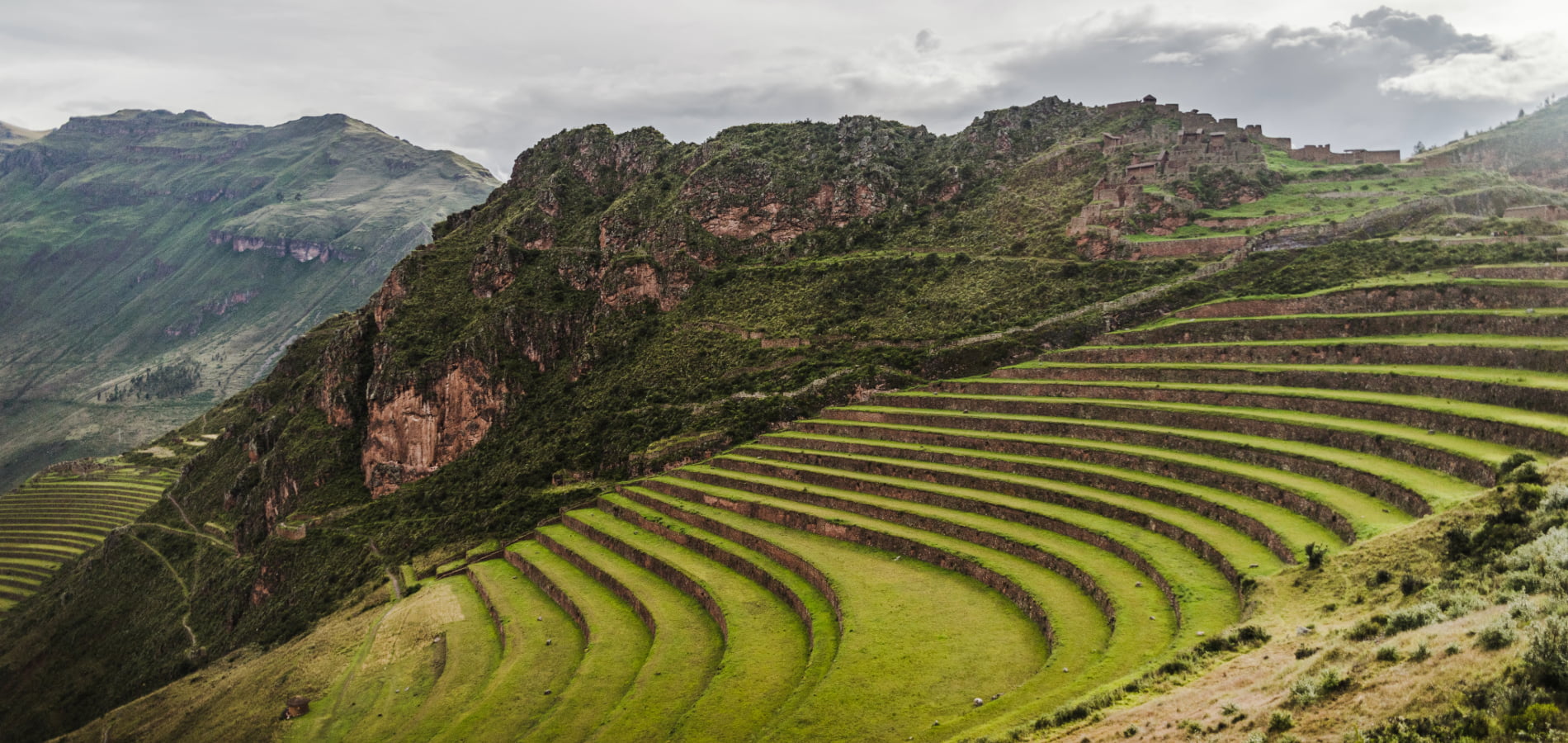
The Sacred Valley of Peru is the Urubamba River valley between Pisac and Ollantaytambo, near Cusco. It brings together Inca terraces and fortresses, Andean villages, the circular terraces of Moray and the Maras salt pans. It sits lower than Cusco, can be explored in one day and is where the train to Machu Picchu starts.
We are a local tour operator in Cusco and run trips through the valley all year round. In this guide we explain what to see, where each site is, what the Cusco Tourist Ticket covers, the ways to get around, how many days you need and the best time for your 2027 trip.
What Is the Sacred Valley of Peru?
It is the stretch of the Urubamba River valley, also called the Vilcanota, that runs from Pisac to Ollantaytambo. For the Incas it was a key area: fertile land, a mild climate and water all year. That is why they built terraces on the slopes, ceremonial centers, storehouses and fortresses that you can still visit today.
Today the valley combines archaeological sites with living towns. Local communities still grow corn and potatoes on the terraces, weavers work with traditional techniques, and the markets serve both visitors and locals. It is not a single place but a region with several sites you can combine depending on how much time you have.
Where Is the Sacred Valley and How High Is It?
The Sacred Valley lies north of Cusco and is reached by road. The valley floor sits at about 2,800–3,000 m (9,200–9,800 ft), lower than the city of Cusco, which is at about 3,400 m (11,150 ft). You can feel the difference: the climate is milder and breathing is a little easier.
That makes the valley a good place to acclimatize. Many travelers spend their first nights in Urubamba or Ollantaytambo and go up to Cusco afterwards, once their body has started to adjust to the altitude. If you are worried about the altitude, read our guide on how to prevent altitude sickness in Peru.
What to See in the Sacred Valley, Peru
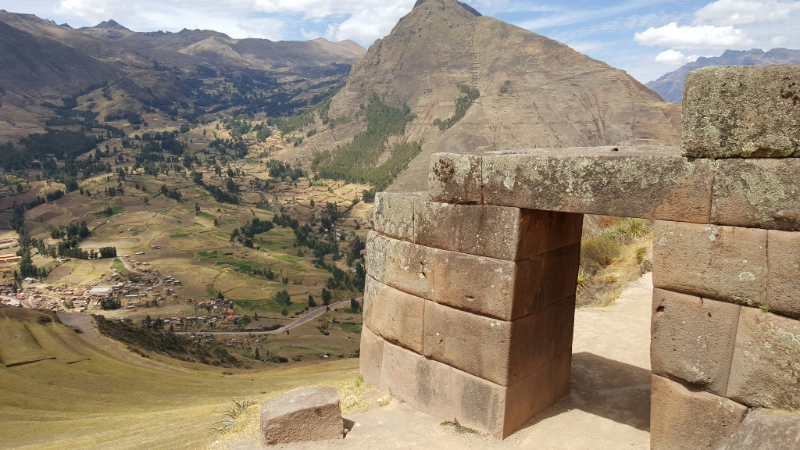
These are the main sites, listed roughly in the order you find them on the way from Cusco. You do not need to see them all in a single day: choose according to your interests.
Pisac
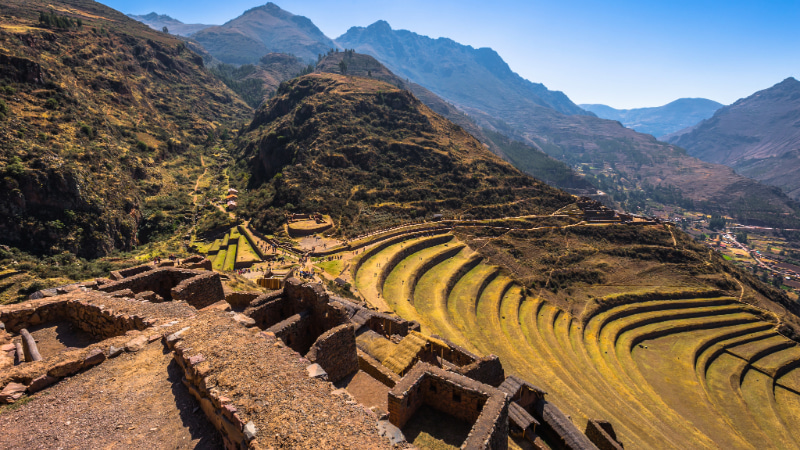
Pisac has two parts. Up on the mountain is the archaeological site, with curved terraces running down the slope, temples and stone buildings. Down below is the town, famous for its craft market, where you will find textiles, jewelry and handicrafts. It is the first stop on almost every trip through the valley.
Ollantaytambo
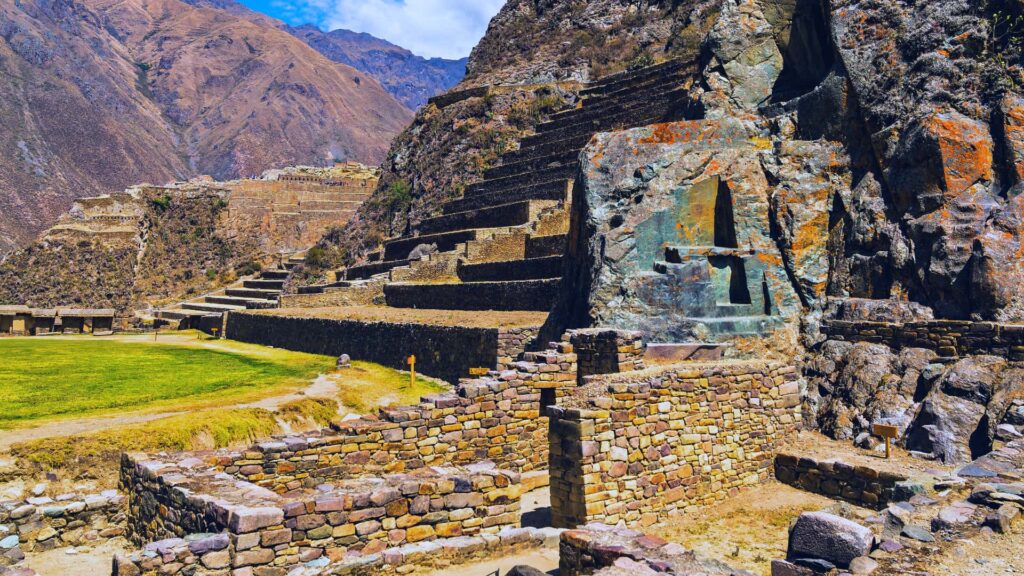
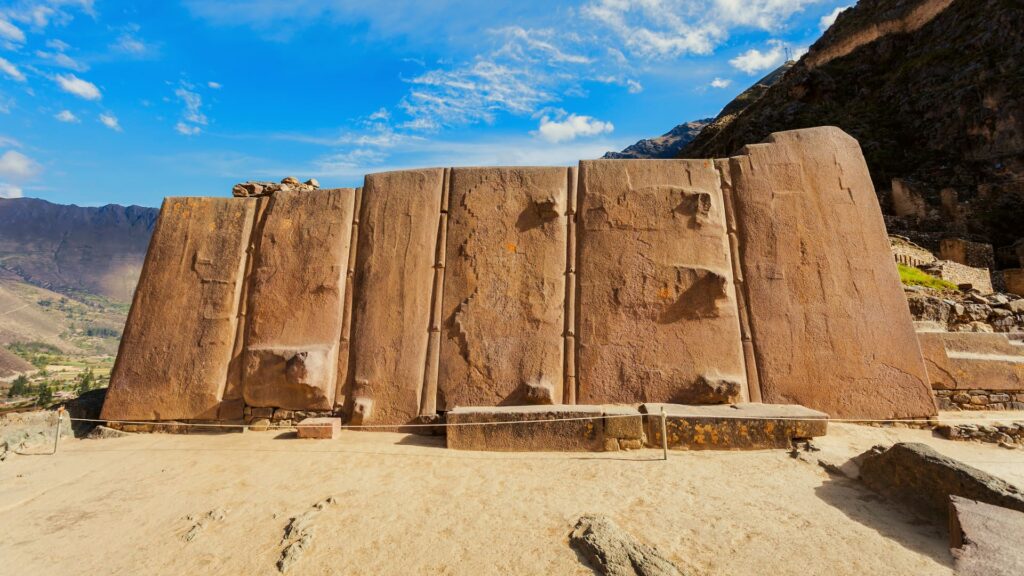
Ollantaytambo is one of the best-preserved Inca towns. Its streets keep their Inca layout and still have stone water channels. Above the town rises the fortress, with large terraces and finely worked stone walls; it was an important military, religious and agricultural center. On the hill opposite you can see the old Pinkuylluna storehouses.
The train to Machu Picchu also leaves from Ollantaytambo, so many travelers pass through here twice. To learn more about its history, read our post on Ollantaytambo, the living Inca town.
Chinchero
Chinchero is a town in the upper part, on the plateau, on the road between Cusco and the valley. Its colonial church was built on Inca foundations, and around the square you can see walls and terraces from that time. It is known for its weavers, who show how they clean alpaca wool, dye it with plants and weave it.
Moray
Moray is one of the most intriguing sites in the valley: circular terraces that step down in rings, like a large amphitheater. The most widely accepted explanation is that the Incas used them as an agricultural laboratory, to adapt crops to different microclimates depending on the height of each ring.
Maras Salt Pans
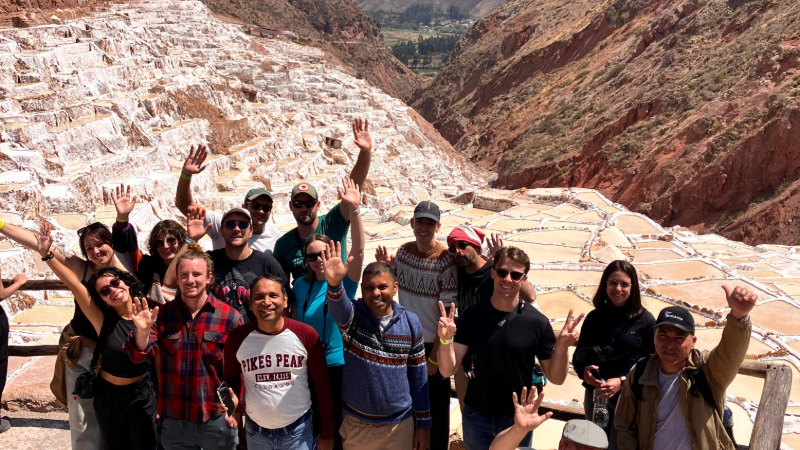
The salt pans, or Salineras de Maras, are thousands of terraced salt pools on a hillside, filled with salty water from a spring. They have been used since pre-Inca times, and local families still harvest the salt by hand. The view of the white pools is one of the most photographed images of the valley.
Urubamba and Calca
Urubamba is the largest town in the valley and sits in the middle of it, which makes it a convenient base for sleeping and for lunch during the trip. Calca, between Pisac and Urubamba, is another valley town with local life and a market. Neither is an archaeological site, but both show everyday life in the valley.
Cusco Tourist Ticket: Which Valley Sites Does It Include?
To enter most archaeological sites in the valley you need the Cusco Tourist Ticket (Boleto Turístico del Cusco). Its Sacred Valley circuit includes Pisac, Ollantaytambo, Chinchero and Moray. You can buy the full ticket, which also covers sites in the city and other circuits, or just the Sacred Valley one.
Keep in mind that the Maras salt pans are not part of the Tourist Ticket: their entrance fee is paid separately on site. If you join our tour, entrance to Pisac, Ollantaytambo, Moray and Maras is already included.
How to Visit the Sacred Valley: Tour, Train or on Your Own
There are three common ways to see the valley. The best one depends on your time, your budget and whether you are continuing to Machu Picchu.
| Option | What it is like | Best for | Keep in mind |
|---|---|---|---|
| Day tour from Cusco | Early start, transport, guide and entrance fees; back in Cusco in the evening | Seeing the highlights in one day without worrying about logistics | It is a long day with a fixed schedule |
| Combined with Machu Picchu | You tour the valley, sleep in Urubamba or Ollantaytambo and take the train from Ollantaytambo | Making the most of the way to Machu Picchu and acclimatizing at a lower altitude | You need to coordinate the hotel, train tickets and entrance tickets |
| On your own | Local transport or taxi between towns, at your own pace | Travelers with time who want to stay longer at each place | You must buy the Tourist Ticket and the Maras ticket and arrange every transfer |
Day tour. Our Sacred Valley VIP tour is a group tour. We pick you up at your hotel around 7:00 a.m., visit Pisac, have lunch in Urubamba and continue to Ollantaytambo, Moray and the Maras salt pans. It includes transport, a guide in English, Spanish or Portuguese, lunch and entrance fees, and we are back in Cusco between 6:00 and 7:00 p.m.
Combined with Machu Picchu. Since the train leaves from Ollantaytambo, many travelers tour the valley, sleep there and take the train the next day. This way you avoid going back to Cusco and save time. See all the options in our guide on how to get to Machu Picchu, or choose between the Machu Picchu full-day tour and the 2-day Machu Picchu tour.
On your own. Local transport runs between the valley towns, and you can also hire a taxi for the day. It is more flexible, but you will have to organize every transfer and buy the tickets yourself. Moray and Maras are farther from the main road, so a taxi is the easiest way to reach them.
Book with 40%: all our tours are booked by paying 40% online, and the balance is paid when you arrive in Peru. Guide’s tip: if you are going to Machu Picchu by train, plan the valley for the day before and sleep in Ollantaytambo or Urubamba.
How Many Days Do You Need in the Sacred Valley?
It depends on how you want to experience it:
- 1 day: enough to see the highlights on a tour from Cusco: Pisac, Ollantaytambo, Moray and Maras.
- 2 days: lets you go at a calmer pace, add Chinchero and spend the night in the valley.
- 3 days or more: ideal if you want to acclimatize here, explore the towns without rushing and then continue to Machu Picchu by train.
If your trip is short, one day in the valley and another at Machu Picchu is a very common combination.
Best Time to Visit the Sacred Valley
The valley can be visited all year. The best time is the dry season, from April to October, with more sunny days and clear skies for photographing the terraces and salt pans. In the rainy season, from November to March, the valley is greener and there are fewer visitors, though you should bring rain gear. To see what each month is like, read our guide on the best time to visit Cusco.
Sacred Valley vs. South Valley of Cusco
They are two different trips. The Sacred Valley lies north of Cusco and is the most visited: terraces, fortresses, salt pans and the train to Machu Picchu. The South Valley lies southeast of the city (Tipón, Pikillacta and the Andahuaylillas church), gets fewer visitors and is ideal for those who already know the Sacred Valley or want something less crowded. If you are interested, take a look at our South Valley of Cusco tour.
Sacred Valley Peru: Frequently Asked Questions
Can you visit the Sacred Valley in one day?
Yes. On a day tour from Cusco you can see Pisac, Ollantaytambo, Moray and the Maras salt pans. It is a full day: you leave early and return in the evening.
Is the Sacred Valley lower than Cusco?
Yes. The valley floor is at about 2,800–3,000 m (9,200–9,800 ft), and Cusco at about 3,400 m (11,150 ft). That is why many travelers spend their first nights in the valley to acclimatize. Chinchero is the exception, since it sits in the upper part.
Does the Tourist Ticket include the Maras salt pans?
No. The Sacred Valley circuit of the Tourist Ticket includes Pisac, Ollantaytambo, Chinchero and Moray. Entrance to the Maras salt pans is paid separately.
Should I stay in the Sacred Valley before Machu Picchu?
Yes, especially if you take the train from Ollantaytambo. Sleeping in the valley saves you the early-morning transfer from Cusco and helps with the altitude.
Is the Sacred Valley VIP tour private?
The regular tour is a group tour with a guide in English, Spanish or Portuguese, from US$90 per person. If you prefer to travel only with your own group, there is also a private service: US$200 per person for 1 traveler, US$170 per person for 2 and US$150 per person for 3; for 4 or more we send you a quote.
What other destinations can I combine with the Sacred Valley?
The most common choice is to continue to Machu Picchu by train from Ollantaytambo. If you enjoy long hikes and sites with few visitors, read our guide on how to get to Choquequirao.
To plan your trip, read our guide: Maras Salt Mines and Moray 2027: How to Get There, Tickets and Best Time.
Plan Your Sacred Valley Trip in 2027
The Sacred Valley is one of the best ways to start a trip to Cusco: it sits lower than the city, brings together some of the most impressive Inca sites and leaves you at the door of the train to Machu Picchu. Whether in one day or with several nights in the valley, it is worth giving it time.
If you want to see it all in one day without hassle, book the Sacred Valley VIP tour. Need help planning your itinerary? Contact us and we will help you.


