 English
 Español
 Português


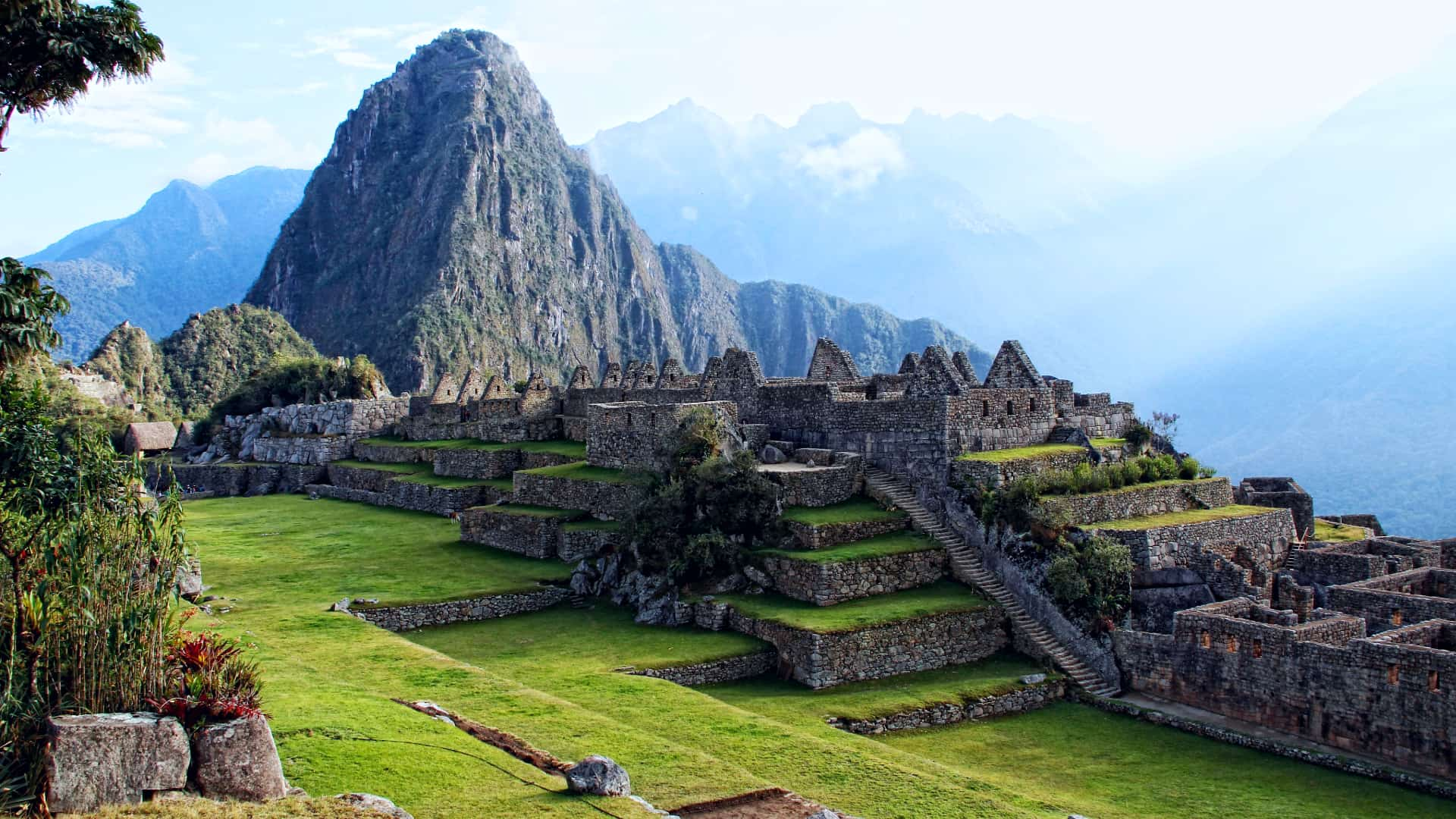
Machu Picchu weather is mild and humid all year, because the citadel sits at about 2,430 m (7,970 ft) on the edge of the cloud forest. There are two seasons: the dry season, roughly May to September, and the rainy season, roughly November to March. April and October are transition months.
We are local guides based in Cusco, and we take travelers to Machu Picchu in every season. This guide covers only the citadel, month by month. For the weather in the city of Cusco and its festivals, read our guide to the best time to visit Cusco.

What Is the Weather Like at Machu Picchu?
Machu Picchu is lower than Cusco and surrounded by cloud forest: steep mountains covered in vegetation, rivers and plenty of moisture. That makes it warmer and more humid than the city. Days are usually mild and nights are cool. Aguas Calientes, the town at the foot of the mountain, sits even lower and is milder still.
| Place | Approximate altitude | What it feels like |
|---|---|---|
| Cusco | About 3,400 m (11,150 ft) | Highland climate: strong sun by day and cold nights. |
| Machu Picchu | About 2,430 m (7,970 ft) | Cloud forest edge: mild days, cool nights and humidity. |
| Aguas Calientes | About 2,040 m (6,690 ft) | Lower and milder than the citadel. |
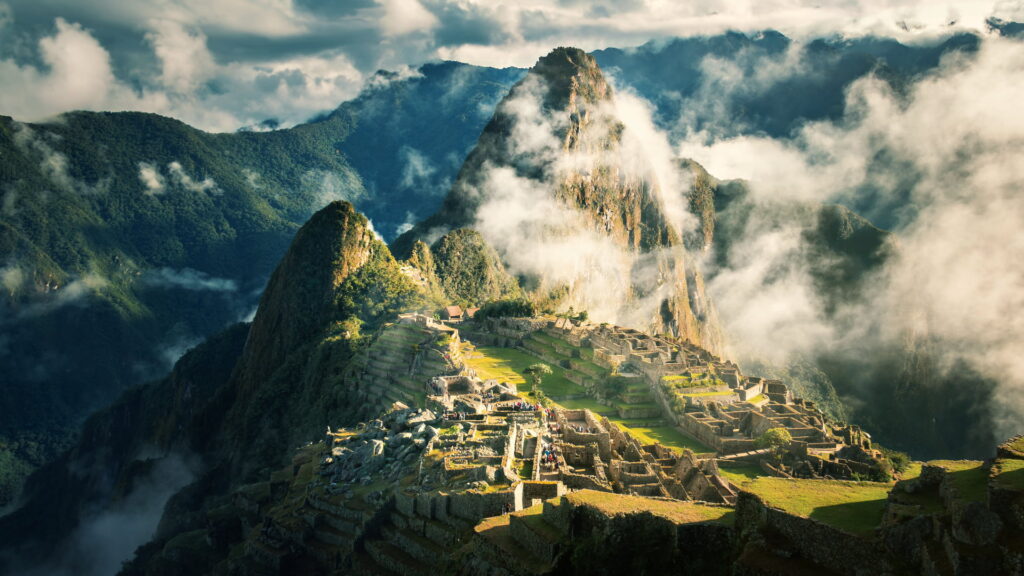
One thing that surprises many travelers is the morning mist. In the early hours the citadel is often wrapped in clouds that lift by mid-morning, revealing the terraces and the mountains around them. It is a tendency, not a guarantee: some days are clear from sunrise, and on others the clouds come and go all day.
Dry Season and Rainy Season: Machu Picchu Weather Explained
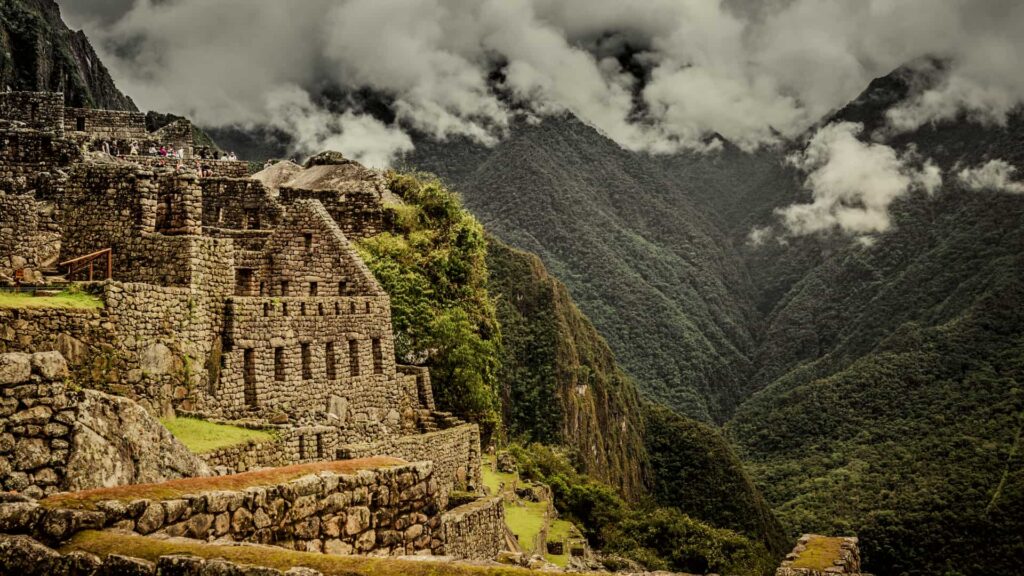
At Machu Picchu people don’t talk about four seasons, but two. Here is how they compare:
| Dry season | Rainy season | |
|---|---|---|
| Months (approx.) | May to September | November to March |
| Rain | Little | Frequent; January and February are the wettest months |
| Sky | Cold, clearer mornings | Clouds that hide the view at times |
| Landscape | Drier | Very green |
| Crowds | More visitors, especially in June, July and August | Fewer visitors |
| Inca Trail | Open | Closed in February for maintenance |
In the rainy season, rain usually comes as showers rather than all-day downpours. It is common to get a spell of heavy rain followed by open sky. April and October sit in between: some days bring rain, but there are also plenty of sunny hours.
Machu Picchu Weather by Month
This table describes each month in words. We don’t give temperatures or rainfall figures because sources disagree and every year is different, so treat it as a rough guide.
| Month | Rain | Crowds | Tip |
|---|---|---|---|
| January | High | Fewer | Pack a poncho and leave a spare day in your trip. |
| February | High | Fewer | The Inca Trail is closed; arrive by train. |
| March | Medium to high | Fewer | Very green scenery; bring quick-dry clothes. |
| April | Medium (transition) | Medium | A good balance of green hills, sun and fewer people. |
| May | Low | Medium | One of the best months; book ahead. |
| June | Low | High | Cold mornings; book tickets and trains well in advance. |
| July | Low | High | Peak season; enter early or in the afternoon. |
| August | Low | High | Clearer skies; bring a warm layer for the morning. |
| September | Low | Medium | A good month for hikes and photos. |
| October | Medium (transition) | Medium | Pack a rain jacket in case the first rains arrive. |
| November | Medium to high | Fewer | The rains begin and the landscape turns green. |
| December | High | Fewer | Frequent showers; plan with flexibility. |
January, February and March: Peak Rainy Season
These are the wettest months, and January and February get the most rain of the year. Even so, Machu Picchu stays open, and it rarely rains nonstop all day. Clouds can hide the view for a while, but they also create beautiful scenes when they part over the terraces. In February the Inca Trail closes for maintenance, so that month you reach the citadel by train. There are fewer people than in high season.
April and May: The End of the Rains
April is a transition month: it can still rain, but less and less. The landscape stays green after the wet season. By May the dry season has started and the biggest crowds have not yet arrived, which is why it is one of our favorite months to recommend.
June, July and August: Dry and High Season
This is the period with the least rain and the most visitors. Mornings are usually cold and clearer, and the sun warms things up by midday. Entrance tickets, trains and Inca Trail permits sell out first, so it pays to book months ahead. If you want to climb Huayna Picchu in these months, read our Huayna Picchu guide.
September and October: The End of the Dry Season
September is still dry and usually a little less busy than the central months. October is another transition month: on some days the first rains appear, mostly in the afternoon. Both are good months to combine Machu Picchu with a hike.
November and December: The Rains Return
The rainy season starts in November, and by December showers are frequent. The cloud forest turns lush and green, and there are fewer visitors. Bring a rain jacket and leave some slack in your itinerary in case one morning is very cloudy.
What to Pack for Machu Picchu Weather
In any month, the best approach is to dress in layers: mornings can be cold and midday warm. This is what we recommend for each season:
- All year: a light jacket, comfortable clothes, shoes with good grip, sunscreen, a hat, sunglasses, insect repellent, water and a small daypack.
- Dry season: a warm layer for early mornings, especially from June to August, and extra sun protection for the middle of the day.
- Rainy season: a poncho or waterproof jacket, quick-dry clothes, a spare pair of socks and a cover or bag to keep your phone and camera dry.
- If you are hiking: thermal layers, a hat and gloves for nights at altitude, because the cold on trekking routes is much stronger than at the citadel.
Book with 40%: our Machu Picchu tours, with guides who speak English, Spanish and Portuguese, can be booked by paying just 40% online. You pay the balance when you arrive in Peru.
Weather on the Inca Trail and Other Hikes
If you walk to Machu Picchu, the weather along the route is not the same as at the citadel. The hikes cross much higher mountain passes, where it is cold and conditions change quickly:
| Route | Highest point (approx.) | What to expect |
|---|---|---|
| Classic Inca Trail | Dead Woman’s Pass (Warmiwañusca), about 4,200 m (13,780 ft) | Cold on the pass and at camp; closed in February. |
| Short Inca Trail | About 2,700 m (8,860 ft) | Similar to Machu Picchu: mild and humid. |
| Lares | About 4,400 m (14,440 ft) | Cold nights at altitude. |
| Salkantay | Salkantay Pass, about 4,600 m (15,090 ft) | Very cold nights up high and humid heat as you descend toward the jungle. |
For hiking, the dry season is the most comfortable: less mud and clearer skies on the passes, although nights up high are colder. Our 4-day Classic Inca Trail (US$650) and 2-day Short Inca Trail (US$450) require permits, and dry-season spaces sell out early. We explain the routes and permits in our guide to the Inca Trail to Machu Picchu.
Machu Picchu in the Rain: Is It Worth It?
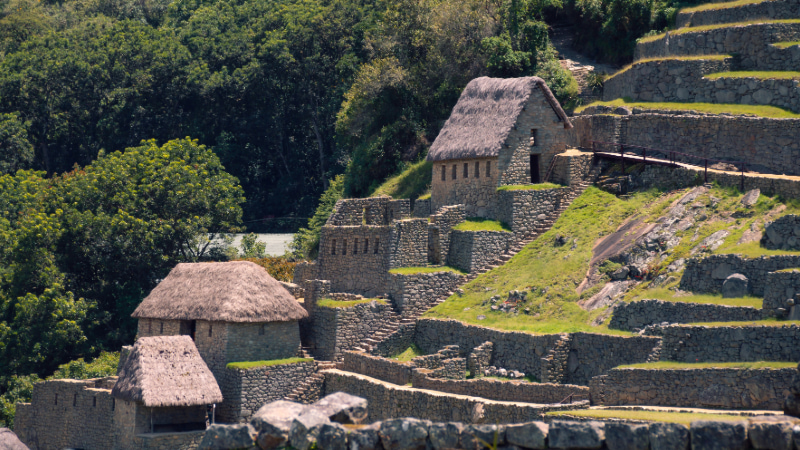
Yes. Many of our travelers visit Machu Picchu in the rainy season and come away with great memories. There are fewer people, the landscape is at its greenest, and the clouds rising from the valley give the citadel a mysterious feel. The key is to come prepared and with realistic expectations:
- Be patient with the clouds: if the view is hidden, wait a while; it often opens up.
- Watch your step: the stone stairs get slippery in the rain.
- Stay overnight in Aguas Calientes: it gives you more room to pick the best moment of the day.
- Avoid February if you dream of the Inca Trail: it is closed that month, but the citadel stays open.
To get that extra room, we recommend our 2-day Machu Picchu tour (US$350), with a night in Aguas Calientes. If you are short on time, the Machu Picchu Full Day tour from Cusco (US$300) takes you there and back in one day. See every train and bus option in our guide on how to get to Machu Picchu.
Frequently Asked Questions
What is the best month to visit Machu Picchu?
It depends on what you want. May and September combine dry weather with slightly fewer people. June, July and August are the driest months, but also the busiest. April and October are good transition months.
Does it rain all day at Machu Picchu in the rainy season?
Usually not. Rain tends to come as showers that alternate with spells of open sky. What can happen is that clouds hide the view for a while.
Can you visit Machu Picchu in February?
Yes. Machu Picchu stays open in February. What closes that month for maintenance is the Inca Trail, so you arrive by train.
Is it cold at Machu Picchu?
Less than in Cusco. Days are mild and nights are cool. Mornings from June to August can be cold, so bring a jacket you can stash in your daypack once it warms up.
Is there fog at Machu Picchu in the morning?
Often, yes. Mist commonly covers the citadel early and lifts by mid-morning, but this is a tendency, not a guarantee.
How do I book a Machu Picchu tour?
Choose your tour on our website and pay just 40% online. You pay the balance when you arrive in Peru. Our guides speak English, Spanish and Portuguese.
Plan Your Machu Picchu Visit Around the Weather
There is no bad month to see Machu Picchu: the dry season brings clearer skies and more people, and the rainy season brings lush green scenery and fewer visitors. Dress in layers, pack rain gear from November to March, and book early if you travel from June to August.
Build your full route with our 7 to 10 day Peru itinerary and choose how to get there: the 2-day Machu Picchu tour, the Machu Picchu Full Day tour or the Classic Inca Trail. On all of them you pay just 40% online and the rest when you arrive in Peru.


