English
 Español
 Português


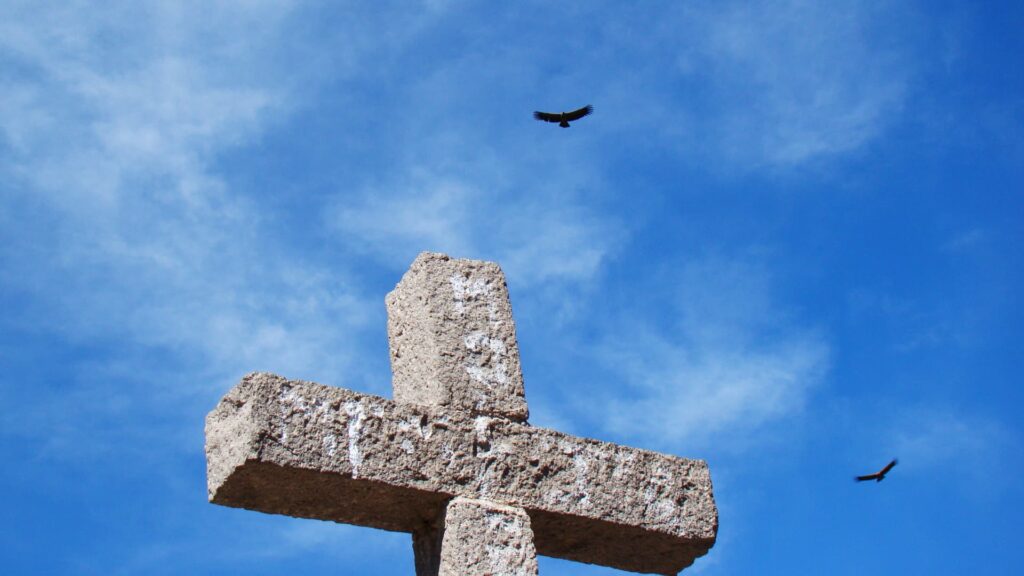
The Andean condor (Vultur gryphus) is one of the largest flying birds in the world: its open wings can span more than 3 m (about 10 ft). It lives along the Andes, and in Peru the most famous place to see it is the Condor Cross viewpoint in the Colca Canyon, especially in the morning.
We are local guides based in Cusco, and we take travelers to the Condor Cross from Arequipa. In this guide we explain what the condor looks like, how it flies, what it means in Andean culture, where and when to see it, and why it needs protection.
What Is the Andean Condor?
The Andean condor is a large scavenging bird found along the Andes mountain range. It belongs to the New World vulture family, not to the eagles or falcons. That explains many of its traits: it is not a bird of prey, it feeds on dead animals, and its feet are not built to grab or carry prey.
For Andean peoples it is much more than a bird. It appears in the pottery, textiles and architecture of many cultures, and it is still a symbol of strength and of the link with the sky. It is also among the national emblems of several Andean countries, though not of Peru: Peru’s national bird is the Andean cock-of-the-rock.
Andean Condor Size and Features
The first thing that strikes you is its size. When it glides over a canyon, its wings look like black boards, with the feathers at the tips spread out like fingers. These are its main features:
| Feature | What it is like |
|---|---|
| Wingspan | Can exceed 3 m (about 10 ft). It ranks among the largest flying birds in the world. |
| Adult plumage | Black, with a ruff of white feathers at the base of the neck and white patches on the wings. |
| Head | Featherless, with bare skin. Males have a fleshy crest on top of the head. |
| Young birds | Brown plumage; the white ruff appears once they become adults. |
| Diet | Scavenger: it eats dead animals. |
| Breeding | Slow: a single egg every one or two years. |
| Lifespan | A very long-lived bird. |
| Conservation | Listed as vulnerable. |
The bare head is believed to have a practical purpose: when feeding on a carcass, a featherless head stays cleaner. The crest makes it possible to tell males from females at a distance.
How Does the Condor Fly and What Does It Eat?
The condor hardly flaps its wings. It is a heavy bird and flapping would cost too much energy, so it uses the air instead: it soars on the rising currents of warm air that form when the sun heats the slopes and canyon walls. It climbs in circles, gains height and then glides long distances with its wings spread, barely moving them.
That is why it is easier to see in the morning. The air cools overnight, and when the sun starts warming the canyon walls, the currents it needs to take off from the rocks where it rests begin to form. On very cloudy or cold days those currents are weaker, and the birds may stay perched for longer.
As for its diet, it is a scavenger: it feeds on dead animals, which it spots from the air thanks to its sharp eyesight. It plays an important role in the ecosystem, cleaning the land of animal remains and helping to stop diseases from spreading.
It is also very long-lived and breeds slowly: it lays a single egg every one or two years, usually on a hard-to-reach rock ledge. This slow pace explains why every condor that dies is a loss that is hard for the population to replace.
The Condor in Andean Culture
In the Andean worldview, the world is divided into three realms, and each one is represented by an animal:
- Hanan Pacha, the upper world: represented by the condor. It is the realm of the sky and the higher powers.
- Kay Pacha, this world: represented by the puma. It is the world where people, animals and plants live.
- Uku Pacha, the lower world: represented by the serpent. It is the inner world, what lies beneath the earth.
Because it flies so high, the condor is often seen as a messenger between the world of people and the world above. Many communities still speak of it with respect, and its figure appears in dances, textiles and festivals. To learn more about Inca beliefs, read our post on Inca economy, engineering and religion.
The Temple of the Condor at Machu Picchu
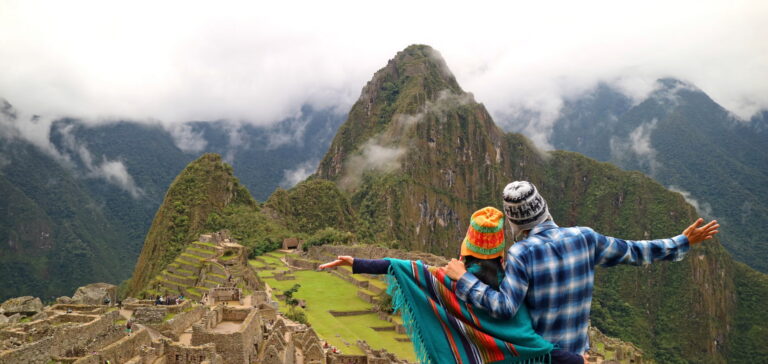
Machu Picchu has a Temple of the Condor: a group of rocks that resemble a bird’s open wings, with a stone on the ground carved in the shape of a condor’s head. It is one of the most striking corners of the citadel. We tell you more in our guide to Machu Picchu history.
Other Traces of the Condor in Peru
The best-known Andean melody in the world, El cóndor pasa, was composed by the Peruvian Daniel Alomía Robles. And in the Nazca desert, one of the most famous geoglyphs depicts a condor.
Where to See the Andean Condor in Peru: the Condor Cross
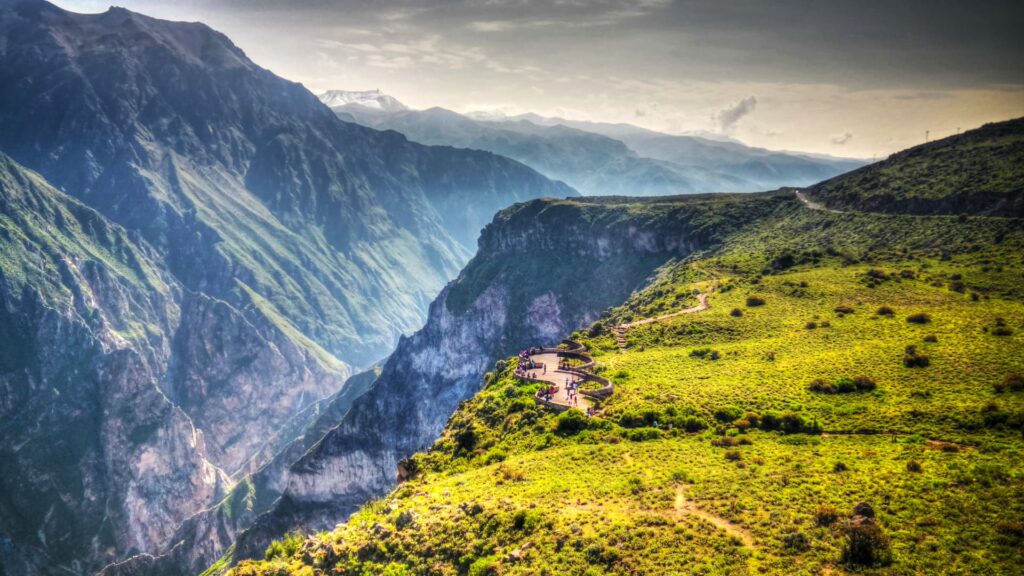
The condor lives in many parts of the Andes, but seeing one in the wild is not easy: it flies high, covers long distances and usually stays far from roads and trails. The most famous and accessible place in the country to watch it is the Condor Cross (Cruz del Cóndor), a viewpoint on the edge of the Colca Canyon in the Arequipa region.
From the viewpoint, the river lies far below, between almost vertical rock walls. Condors rest on those walls and, as the air warms up, they rise gliding; sometimes they pass close to visitors. You do not need to hike much to see them.
Important: condor sightings are never guaranteed. They depend on the weather, the season and the day itself. An experienced guide knows the times and spots where they usually appear, but these are wild birds.
How to Get to the Condor Cross
The Condor Cross is a long way from the city of Arequipa, which sits at 2,335 m (7,660 ft). You cross the puna, and the road climbs to about 4,900 m (16,100 ft) at the Patapampa viewpoint. The most practical way is a tour that leaves before dawn so you reach the viewpoint in the morning. If you are coming from the coast, read our guide to altitude sickness in Peru first.
Our one-day Colca Canyon tour costs US$55, leaves Arequipa before dawn and visits the Condor Cross in the morning, with transportation and a guide in English, Spanish or Portuguese. The Colca tourist ticket (boleto turístico) is not included and is paid separately.
Book with 40%: our Colca Canyon and Condor Cross tour can be booked by paying only 40% online. You pay the balance when you arrive in Peru.
Near Cusco: the Chonta Viewpoint
If you are in Cusco and not traveling to Arequipa, the best-known place to see condors is the Chonta viewpoint, in Limatambo district, Anta province, at about 3,400 m (11,150 ft) above the Apurímac River canyon. From the village of Chonta it is roughly a one-hour walk to the viewpoints, where condors are often seen gliding over the canyon.
It is a full-day trip from Cusco: a paved road, a detour on a dirt track and the final walk. As at the Condor Cross, sightings are not guaranteed. If you would like to add Chonta to your trip, contact us and we will help you plan it.
Best Time of Day and Season to See Condors
Since the condor depends on warm air to fly, the time of day matters as much as the time of year. This is what usually happens at the Condor Cross:
| When | What to expect |
|---|---|
| Early hours | The air is still cold and the condors usually stay perched on the canyon walls. |
| Sunny morning | The sun heats the rocks and the air currents form: this is when they most often fly close to the viewpoint. |
| Midday and afternoon | The birds tend to move away in search of food, and they are harder to see up close. |
| Dry season (roughly April to November) | Clearer skies and better conditions for watching them. |
| Rainy season (roughly December to March) | More clouds and rain; there may be fewer sightings. |
No hour or month is a guarantee, but arriving in the morning and in the dry season improves your chances. That is why our tour leaves before dawn: you reach the Condor Cross just as the birds start to move.
What to Bring to the Condor Cross
- Warm layers: the early morning and the puna are cold; by midday the sun is strong.
- Binoculars: they help you spot condors perched on the canyon walls.
- A camera with zoom: condors may pass close, but they often fly far away.
- Sun protection: sunscreen, sunglasses and a hat; the high-altitude sun is intense.
- Water and snacks: the day starts very early.
- Patience: sometimes you need to wait quietly for a while until they appear.
At the viewpoint you will also find handicraft stalls, and the cross that gives it its name is often decorated with colorful textiles.

Is the Condor Endangered?
The Andean condor is listed as vulnerable: it is not considered critically endangered, but its populations are under threat. The main threats are poisoning, when it eats poisoned carcasses, and hunting. Because it breeds so slowly, the species finds it very hard to recover from each loss.
Travelers can help with a few simple habits:
- Do not feed the birds or try to attract them.
- Stay within the viewpoint areas and respect the railings.
- Avoid flying drones near the condors.
- Do not buy items made with feathers or parts of wild animals.
- Travel with local operators who respect wildlife and communities.
Frequently Asked Questions
Is the Andean condor Peru’s national bird?
No. Peru’s national bird is the Andean cock-of-the-rock. The condor is a very important symbol of Andean culture and is among the emblems of other Andean countries, but it is not Peru’s national bird.
How big is the Andean condor with its wings open?
Its wingspan can exceed 3 m (about 10 ft), which is why it is considered one of the largest flying birds in the world.
Does the condor attack people or live animals?
It does not attack people. It is a scavenger: it feeds on dead animals and is not a bird of prey like an eagle. Its feet are not built to catch or lift animals.
Will I always see condors at the Condor Cross?
Not always. Morning is the best time, but their presence depends on the weather and the season. That is why our tour reaches the viewpoint early, when the chances are better.
Can you see condors in Cusco or at Machu Picchu?
Yes: near Cusco there is the Chonta viewpoint, in Limatambo, above the Apurímac canyon, a full-day trip away. Even so, the best-known and most accessible place to see them is the Condor Cross in Colca. At Machu Picchu you will see the Temple of the Condor, a stone representation of the bird.
How much is the tour to see condors in Colca?
Our one-day Colca Canyon tour costs US$55 and leaves from Arequipa. The Colca tourist ticket is paid separately. You book with 40% online and pay the balance when you arrive in Peru.
Plan Your Visit to the Condor Cross
Watching a condor glide over the Colca is one of the most exciting moments of a trip through southern Peru. Leave early, bring warm clothes and binoculars, and remember you are entering the territory of a wild bird that needs respect and protection.
Spend a day exploring the White City on our Arequipa City Tour, and the next morning head out before dawn on our Colca Canyon and Condor Cross tour. To combine it with Cusco and Machu Picchu, see our Peru itinerary. On both tours you pay only 40% online and the rest when you arrive in Peru.