English
 Español
 Português


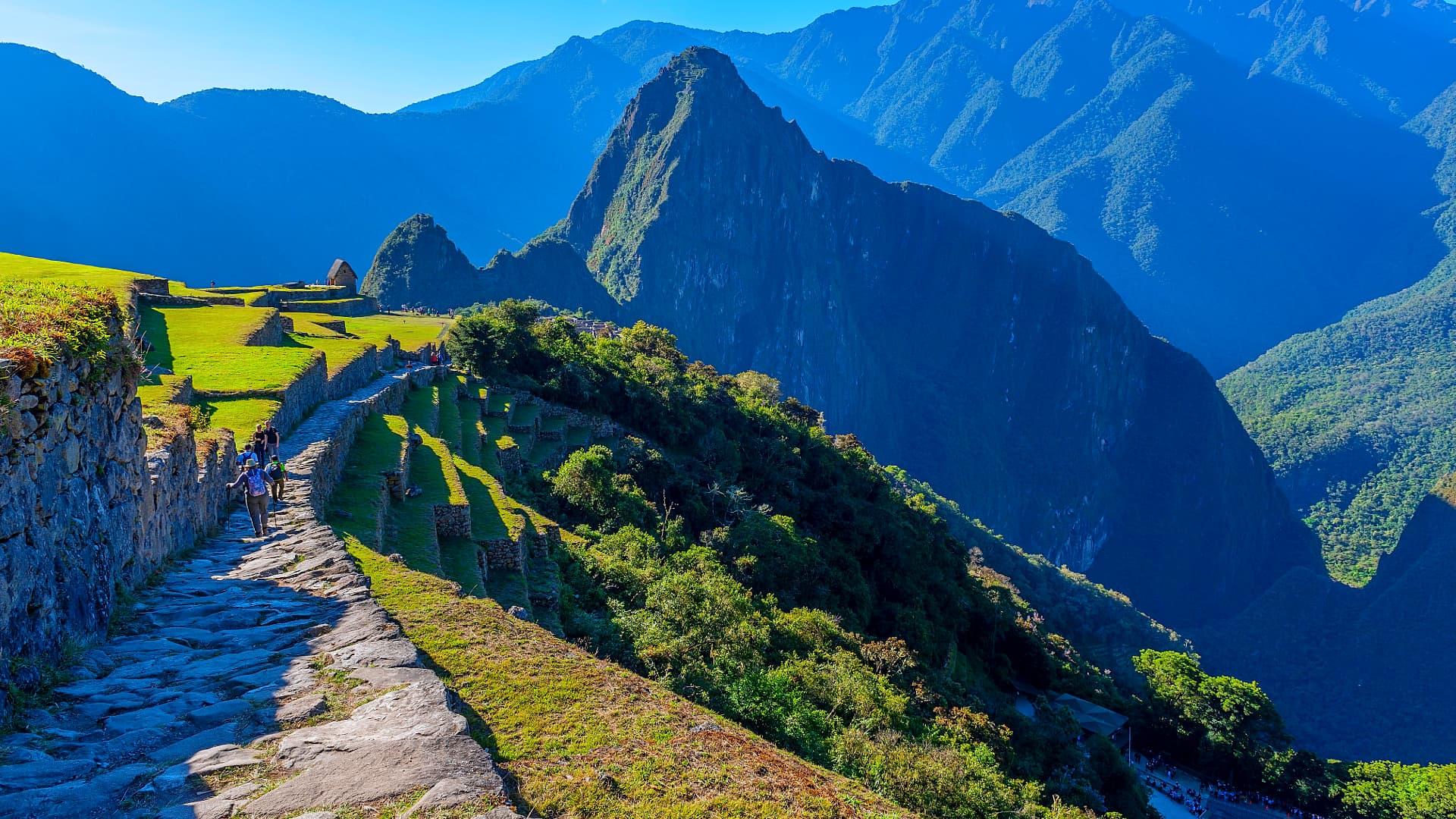
Inca Trail vs Salkantay? If you dream of walking into Machu Picchu through the Sun Gate and can get a permit, choose the Classic Inca Trail. If permits are sold out or you want more mountain scenery, choose Salkantay. If you prefer Quechua communities and a moderate effort, choose Lares. Short on time? Take the 2-day Short Inca Trail.
We are a local operator based in Cusco and run our own departures on all four routes. Here we compare them side by side so you can choose by your trip, your fitness and your dates.
Inca Trail vs Salkantay vs Lares: The Short Answer
All three end at Machu Picchu, but each has its own character:
- Classic Inca Trail: 4 days on an original Inca path, arriving on foot through Inti Punku. Permit required.
- Short Inca Trail: one day of hiking, a night in a hotel and the same arrival through the Sun Gate. Permit also required.
- Salkantay: the highest route and the one with the most varied scenery, from glacier to cloud forest. No Inca Trail permit needed.
- Lares: the most cultural, with hot springs and weaving communities. Moderate, with no special permit.
Inca Trail vs Salkantay vs Lares Compared: Treks to Machu Picchu at a Glance
Figures from our tours; elevations are approximate.
| Route | Days | Highest point | Difficulty | Permit | Nights | How you reach Machu Picchu | From |
|---|---|---|---|---|---|---|---|
| Classic Inca Trail | 4 days / 3 nights | Dead Woman’s Pass (Warmiwañusca), about 4,215 m (13,830 ft) | Challenging | Yes, limited spaces | 3 camping | On foot, through Inti Punku | US$650 |
| Short Inca Trail | 2 days / 1 night | About 2,700 m (8,860 ft) | Moderate | Yes, its own quota | 1 in a hotel in Aguas Calientes | On foot, through Inti Punku; tour of the site the next day | US$450 |
| Salkantay | 5 days / 4 nights | Salkantay Pass, about 4,600 m (15,090 ft) | Moderate to challenging | No | 3 camping and 1 in a hotel | Hike from Hidroeléctrica to Aguas Calientes, then bus to the citadel | US$550 |
| Lares | 4 days / 3 nights | Ipsay Pass, about 4,450 m (14,600 ft) | Moderate | No | 2 camping and 1 in a hotel | Train from Ollantaytambo to Aguas Calientes, then bus to the citadel | US$450 |
On all four routes we travel in groups of 8 to 12 people, with a professional guide and your Machu Picchu entrance included. To see every way of reaching the citadel, by train, via Hidroeléctrica or on foot, read our guide on how to get to Machu Picchu.
Book with 40%: all our treks to Machu Picchu are booked by paying just 40% online; the balance is paid when you arrive in Peru. If you choose the Inca Trail, don’t wait: permits are limited, issued in your name and they sell out. For travel between April and September we recommend booking 6 to 8 months ahead.
Classic Inca Trail (and the Short One): Who It’s For
The Classic Inca Trail starts at Km 82 and covers about 42 km (26 miles) of Inca paths. Day 1 is gentle, along the Urubamba River. Day 2 is the hardest: the climb to Dead Woman’s Pass (Warmiwañusca) and a descent on stone steps. Day 3 passes Runkurakay, Sayacmarca and Phuyupatamarca on the way to Wiñay Wayna, and on day 4 you rise early to see Machu Picchu from Inti Punku.
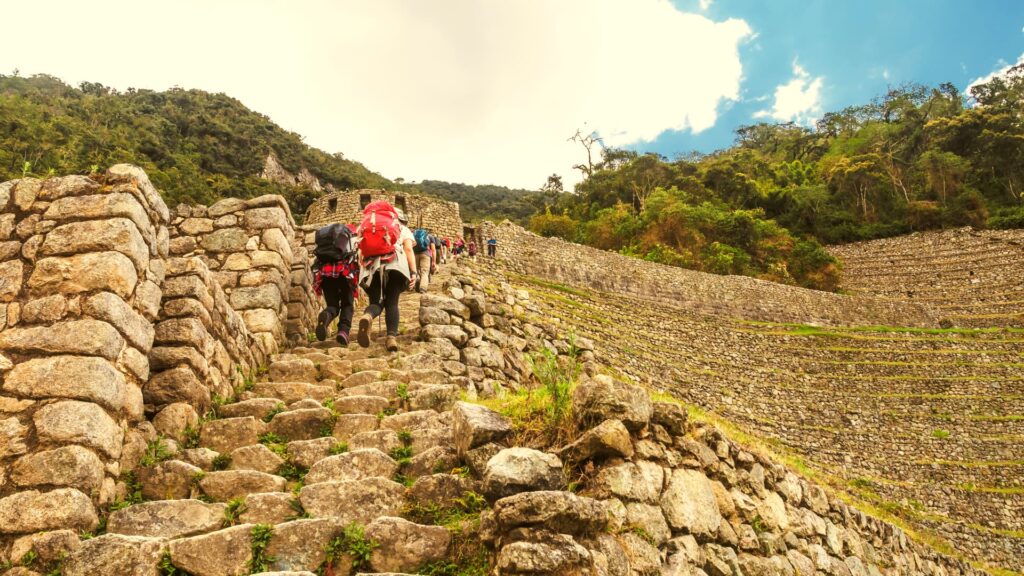
Hiking days last 5 to 8 hours, with lots of stairs. You don’t need mountain experience, but you do need good fitness and to arrive acclimatized. Porters and cooks carry the tents and food; you only carry a small daypack.
It’s for you if… you want to walk an original Inca path, camp in the mountains and reach the citadel on foot, and you can book months in advance. See the full itinerary of our 4-day Classic Inca Trail.
The Short Inca Trail starts at Km 104: you hike about 12 km (7.5 miles), in around 6 hours, to Wiñay Wayna and the Sun Gate, then sleep in a tourist-class hotel in Aguas Calientes. The next day you tour Machu Picchu at an easy pace. It’s moderate, crosses no high passes and has no porters: everyone carries their own daypack. It’s for you if… you have only a few days in Cusco or want to hike part of the Inca Trail without camping. Details in our 2-day Short Inca Trail.
Permits, daily stages and what to pack are in our Inca Trail to Machu Picchu guide.
Salkantay: Who It’s For
The route runs at the foot of Mount Salkantay, about 6,270 m (20,570 ft) high and an apu, a sacred mountain, for Andean communities. On day 1 you leave Cusco around 4:30 a.m., reach Soraypampa (about 3,900 m / 12,800 ft) and hike up to Humantay Lake, good preparation for the next day. On day 2 you cross Salkantay Pass and descend to Chaullay; on day 3 you walk past rivers, waterfalls and coffee farms to Lucmabamba.
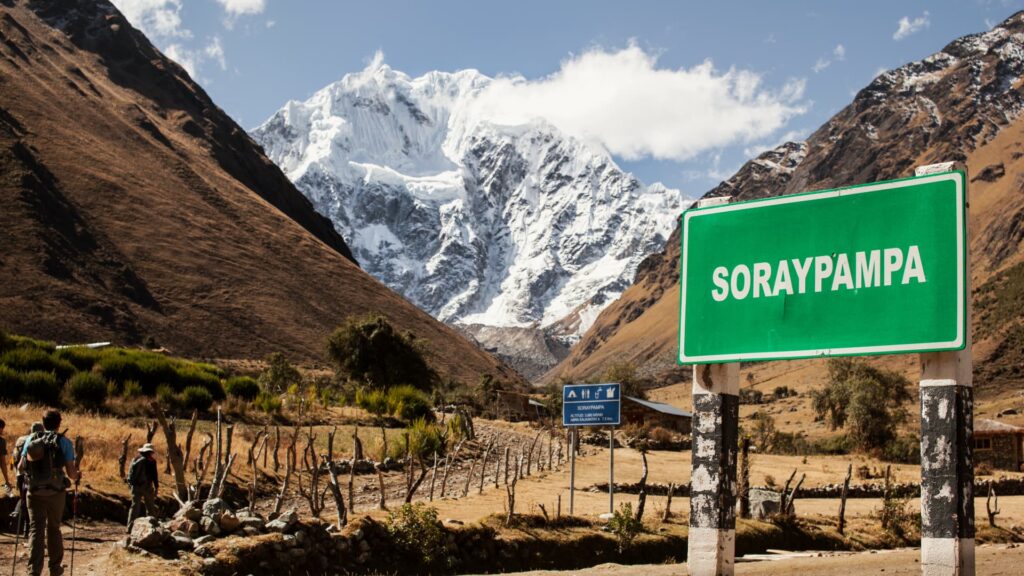
On day 4 you climb to the Inca viewpoint of Llactapata, with a distant view of Machu Picchu, descend to Hidroeléctrica and walk along the railway to Aguas Calientes. Day 5 is the guided tour of the citadel. Note: Salkantay does not pass through Inti Punku. Horses carry the kitchen gear and tents, but you carry your own clothes and sleeping bag.
It’s for you if… you are active, have some hiking experience, want glaciers, lakes and jungle in one trip, or couldn’t get an Inca Trail permit. Check out our 5-day Salkantay trek and, to know the route in depth, our Salkantay day-by-day guide.
Lares: Who It’s For
Lares is a valley north of the Sacred Valley, known for its hot springs and for communities that still weave and dress in traditional clothing (more in our guide to Pachamama and Andean beliefs). On day 1 you drive about 3.5 hours to the town of Lares, relax in the hot springs and hike to Huacawasi. On day 2 you cross Ipsay Pass, the hardest stretch, have lunch by Ipsaycocha Lake and descend to the Patacancha valley, where you’ll see the women of the community weaving by hand.
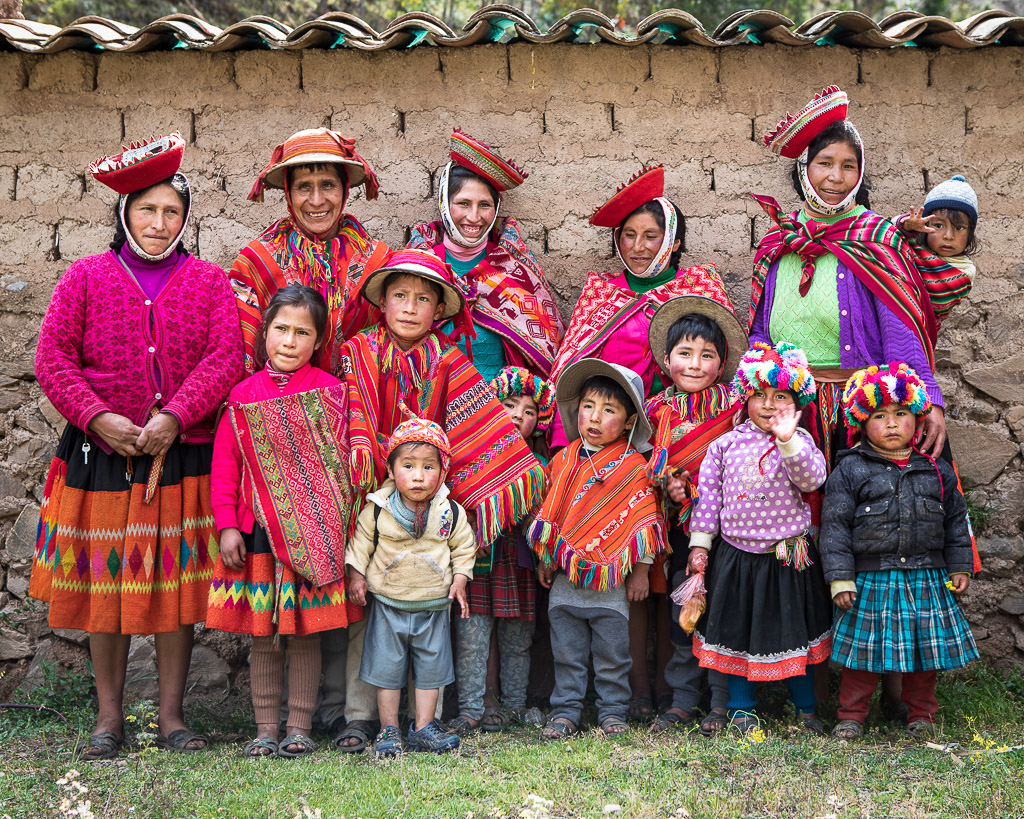
On day 3 you walk down past Inca terraces to Ollantaytambo and take the train to Aguas Calientes, where you sleep in a hotel. On day 4 you ride the bus up to Machu Picchu at sunrise. The trail is not technical, and porters and muleteers carry the gear while you walk with your daypack.
It’s for you if… you want culture as well as scenery, quiet trails, or you travel as an active family in good health. It can be your first multi-day trek. See our 4-day Lares trek.
Elevation of Each Route
All three profiles use the same scale, from 2,000 to 5,000 m (about 6,560 to 16,400 ft), so you can compare them at a glance: look at which day reaches the highest point and how far you descend afterwards.
Approximate elevations. The highest point is marked in red. See the tour from US$650
Approximate elevations. The highest point is marked in red. See the tour from US$550
Approximate elevations. The highest point is marked in red. See the tour from US$450
On all three, the highest point comes on day 2 and you finish at Machu Picchu, lower than Cusco. Salkantay climbs the highest and drops the most in a single day; the Short Inca Trail stays below about 2,700 m (8,860 ft). We recommend spending at least 2 days in Cusco before the longer treks (one before the short one). We explain why in our guide to Cusco elevation. If you want to test how you handle altitude first, our Humantay Lake day tour takes you to the start of the Salkantay route.
Inca Trail vs Salkantay: Which One Should You Choose?
- You’re short on time: the Short Inca Trail gets you through the Sun Gate on foot in just 2 days.
- It’s your first visit to Machu Picchu and you want the full experience: the Classic Inca Trail, if you book in time.
- Permits are sold out: the Salkantay trek is the most popular alternative when spaces run out.
- You’re interested in Andean communities: the Lares trek, with weavers, hot springs and few people.
- You want the toughest challenge: Salkantay, for the height of its pass and its total distance.
- You’d rather not trek: our 2-day Machu Picchu tour goes by train and stays overnight in Aguas Calientes.
And if you’re after an Inca citadel without the crowds, even though it doesn’t reach Machu Picchu, take a look at our 4-day Choquequirao trek.
Permits, Season and When to Book
Permits. Inca Trail permits are controlled by Peru’s Ministry of Culture and can only be bought by authorized agencies. They are personal: issued with your name and passport number, and they can’t be transferred to someone else. The classic route has about 500 spaces per day, including guides, cooks and porters; the short route has its own, smaller quota. As of October 2026, the 2027 release date has not been announced; the last two seasons went on sale in November of the previous year.
Season. The dry season, roughly May to September, brings clearer skies and drier trails; April and October are transition months. From November to March there is more rain and mud, though the landscape is greener. We cover it month by month in our guides to the best time to visit Cusco and Machu Picchu weather.
February. The Inca Trail, classic and short, closes for all of February for maintenance and reopens in March. Machu Picchu stays open, so that month the hiking alternatives are Salkantay and Lares.
When to book. For the Classic Inca Trail between April and September, we recommend 6 to 8 months ahead; for the short one, 4 to 6 months. May to August dates sell out first. For Lares in high season, about 2 months, to secure trains and entrance tickets. On Salkantay, the dry season brings the most hikers, so it’s best to book ahead.
Frequently Asked Questions
Which is harder, the Inca Trail or Salkantay?
It depends on what you find hardest. Salkantay climbs higher, to about 4,600 m (15,090 ft), and its total distance is longer. The Classic Inca Trail concentrates the effort in stone steps and on day 2. Neither is technical, but both require good fitness and proper acclimatization.
Do I need a permit for Salkantay or Lares?
You don’t need the limited Inca Trail permit. You only need the Machu Picchu entrance, included in our tours; on Salkantay, the Humantay Lake entrance is included too.
On which route do you walk into Machu Picchu?
Only on the Inca Trail, classic or short, which enters through Inti Punku, the Sun Gate. On Salkantay you hike to Aguas Calientes from Hidroeléctrica and take the bus up; on Lares you reach Aguas Calientes by train.
Which trek is the cheapest?
The Short Inca Trail and Lares start at US$450; Salkantay costs US$550 and the Classic Inca Trail US$650. All are booked with 40% online, and the balance is paid when you arrive in Peru.
Which trek can I do in February?
Salkantay or Lares, because the Inca Trail is closed all month. It’s the rainy season, so bring waterproof clothing and expect mud on the trail.
Where do you sleep on each route?
On the Classic Inca Trail you camp at Wayllabamba, Pacaymayo and Wiñay Wayna. On Salkantay, three nights camping and one in a hotel in Aguas Calientes; on Lares, two camping and one in a hotel. Sleeping bags are not included: you can rent one in Cusco.
Choose Your Trek and Book with a Local Operator
If you have fixed dates and want to enter through the Sun Gate, book the Classic Inca Trail as soon as you can. If you want mountains and no permit worries, the Salkantay trek. If you prefer culture and a calmer pace, the Lares trek. On all of them you pay just 40% online and the rest when you arrive in Peru.
Still unsure? Write to us with your dates and hiking experience, and we’ll help you choose a route and check availability.