English
 Español
 Português


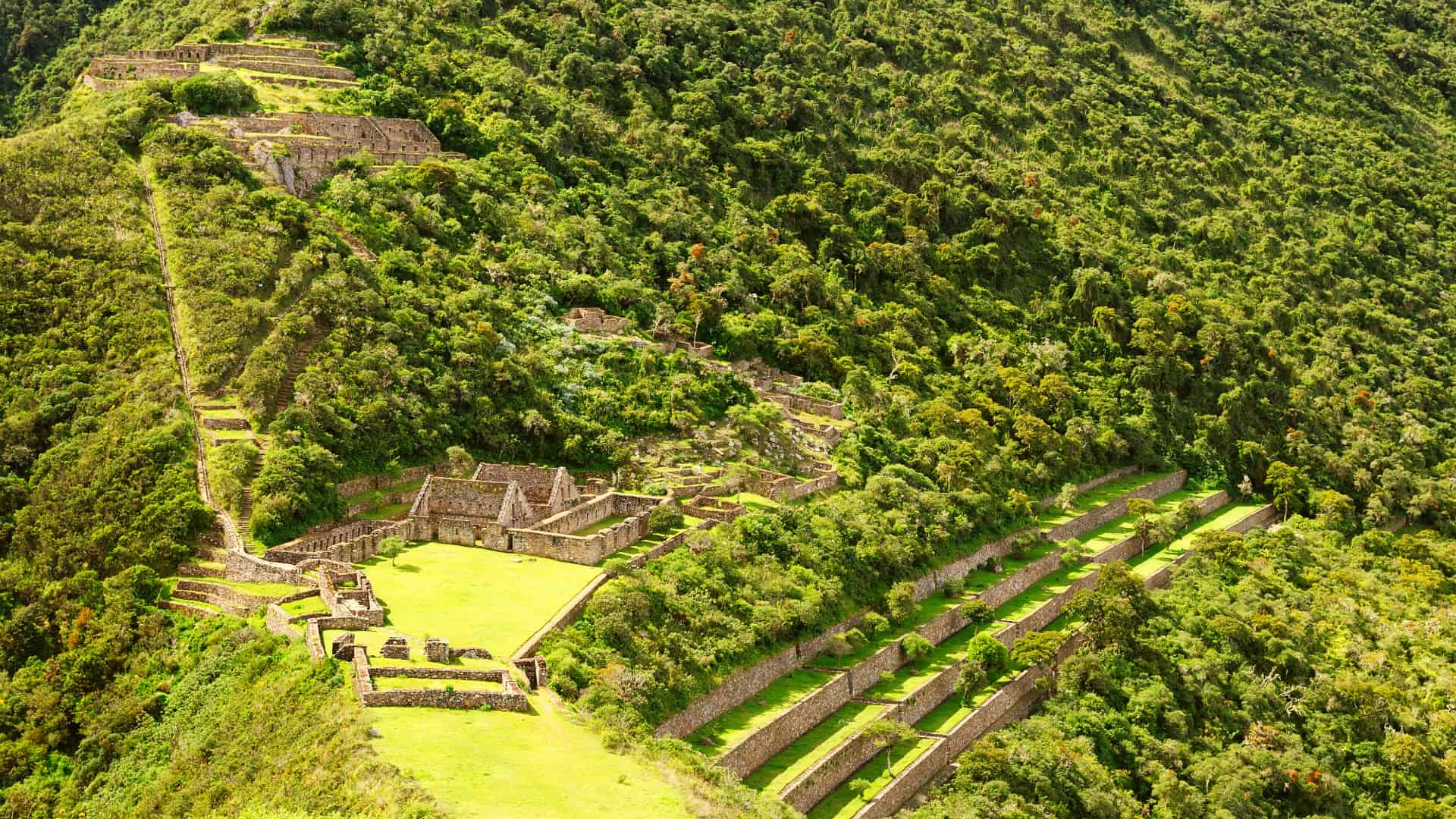
How to get to Choquequirao: you can only get there on foot. From Cusco it is about 4 hours by road to San Pedro de Cachora and Capuliyoc, in Apurímac, then at least 2 days of hiking, down to the Apurímac River and up to the ruins at about 3,050 m (10,000 ft). No road or cable car reaches it.
As local guides from Cusco, we explain the access step by step, the logistics, the best season and whether you should go on your own or with a tour. For the day-by-day details of the route, read our post on the Choquequirao trek.
Short answer: how to get to Choquequirao
- On foot only: no vehicle reaches the ruins.
- Starting point: San Pedro de Cachora (Abancay, Apurímac) and the Capuliyoc viewpoint, where the trail begins.
- From Cusco: about 4 hours by vehicle to Cachora and Capuliyoc.
- Hike in: at least 2 days, via Chiquisca, Playa Rosalina, Santa Rosa and Marampata.
- Whole trip: 4 days is the usual plan, with a full day to explore the ruins.
Where is Choquequirao?
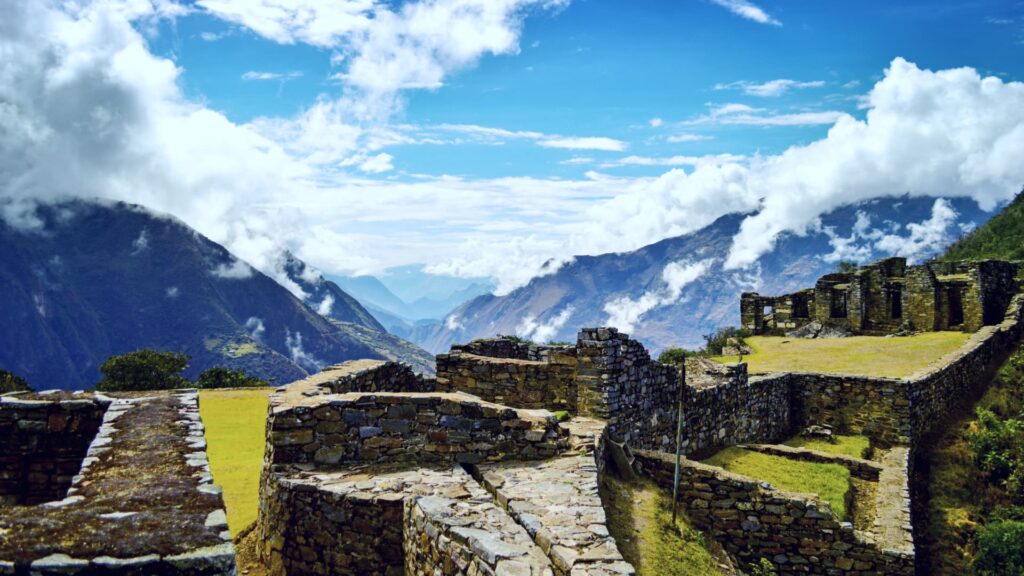
Choquequirao is in the Apurímac region, on the border with Cusco: on the Cusco side it belongs to the province of La Convención, and on the Apurímac side to the province of Abancay. The ruins sit at about 3,050 m (10,000 ft) on a slope above the deep canyon of the Apurímac River.
Although the site is close to Cusco as the crow flies, the canyon forces you to drive around to the Apurímac side. That is why the usual access is from the village of San Pedro de Cachora, not from Cusco city or the Sacred Valley.
How to get to Choquequirao from Cusco, step by step
The journey combines a drive and an out-and-back hike on the same trail:
- Cusco – Cachora: about 4 hours by vehicle toward Apurímac, leaving very early.
- Cachora – Capuliyoc: from the village you continue by vehicle to Capuliyoc (about 2,900 m / 9,500 ft), the viewpoint where the hike starts, with views of the canyon and snow-capped peaks.
- Capuliyoc – Playa Rosalina: a long descent via Chiquisca to the Apurímac River, at about 1,500 m (4,900 ft). You cross the river here.
- Playa Rosalina – Marampata – Choquequirao: the big climb via Santa Rosa to Marampata (about 2,850 m / 9,350 ft) and the last stretch to the ruins.
This table sums up each section and how we organize it on our tour. We don’t give exact distances because they vary by source; what matters is the elevation change:
| Section | How | Reference altitude | On our tour |
|---|---|---|---|
| Cusco – Cachora – Capuliyoc | By vehicle, about 4 h | Capuliyoc: about 2,900 m (9,500 ft) | Day 1, early start |
| Capuliyoc – Chiquisca | On foot, downhill | Descent into the canyon | Day 1, camp at Chiquisca |
| Chiquisca – Playa Rosalina | On foot, downhill; river crossing | Apurímac River: about 1,500 m (4,900 ft) | Day 2, early |
| Playa Rosalina – Santa Rosa – Marampata | On foot, steep climb | Marampata: about 2,850 m (9,350 ft) | Day 2, the hardest section |
| Marampata – Choquequirao | On foot, final stretch | Ruins: about 3,050 m (10,000 ft) | Day 2, camp near the ruins |
On our itinerary, day 3 is devoted entirely to exploring the ruins, with the night in Marampata, and on day 4 we hike back the same way to Capuliyoc, where the vehicle to Cusco is waiting. We arrive in the city between 6:00 and 7:00 p.m.
Is there a cable car to Choquequirao?
Not yet. The Choquequirao cable car is a Peruvian government project that is not operating. Mincetur, Peru’s tourism ministry, estimates it could be ready around 2028–2029, but the date has already been pushed back several times, so don’t plan a trip around it.
Today, and throughout the 2027 season, the only way in is on foot. For many travelers that is exactly the appeal: Choquequirao gets few visitors and still feels like a place to explore.
Should you go to Choquequirao on your own or with a tour?
Both options are possible. The difference is how much of the logistics you want to handle yourself:
| On your own | With our tour | |
|---|---|---|
| Transport | You arrange it to Cachora and Capuliyoc | Private, from Cusco to Capuliyoc and back |
| Gear and food | You carry your things or hire support locally | Tents, sleeping pads, kitchen, porters, muleteers and all meals |
| Entrance | You pay it | Included |
| Guide | None, unless you hire one | Professional guide in English, Spanish or Portuguese |
| Safety | Up to you | First-aid kit and emergency oxygen |
Going on your own gives you more freedom, but it requires multi-day hiking experience, good fitness and either carrying your gear or hiring help for it. With a tour you only have to walk: our Choquequirao trek costs US$450 per person. It does not include a sleeping bag or trekking poles (both can be rented in Cusco), travel insurance or tips.
Guide’s tip: arrive in Cusco 2 or 3 days before the hike to acclimatize. You can book the 4-day Choquequirao trek by paying only 40% online; the balance is paid when you arrive in Peru.
Best time to visit Choquequirao
The best time is the dry season, from April to October: the trail is firmer and the canyon views are usually clearer. In the rainy season, from November to March, the path can be slippery or blocked by landslides, and both the descent and the climb become slower.
Keep in mind that the altitude changes a lot along the way: the bottom of the canyon is much warmer than Capuliyoc or the ruins, where nights are cool. To plan the rest of your trip, see our guide to the best time to visit Cusco.
What to pack for Choquequirao
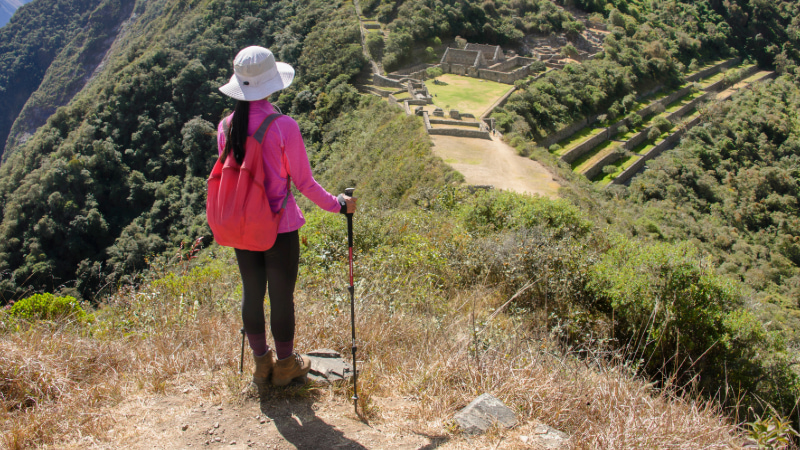
- Footwear: broken-in hiking boots with a good grip for the long descents.
- Layers: light clothes for the heat in the canyon and warm layers for the nights.
- Sleeping bag: not included in the tour, but you can rent one in Cusco.
- Trekking poles: a big help for your knees; also available to rent in Cusco.
- Sun protection: hat, sunglasses and sunscreen.
- Insect repellent, a rain poncho and a headlamp.
- Water and snacks between meals, plus cash in soles for personal expenses.
Choquequirao vs. Machu Picchu
Many travelers weigh one against the other. The big difference is access: you reach Machu Picchu by train and bus, or on foot along the Inca Trail; you reach Choquequirao only with a demanding multi-day hike. In return, Choquequirao has few visitors and a much stronger sense of discovery.
If you want a classic trek that ends at Machu Picchu, see our guide to the Inca Trail to Machu Picchu. For the site’s history, its sectors and the famous stone llamas, read our post on the Choquequirao ruins, and if you are drawn to less-visited places, discover more lesser-known Inca sites.
FAQ: how to get to Choquequirao
Can you drive to Choquequirao?
No. Vehicles go as far as Capuliyoc, via Cachora, and from there the whole way is on foot. There is no road to the ruins.
How many days do you need for Choquequirao?
The hike in takes at least 2 days, plus the return. The most comfortable plan is 4 days and 3 nights, with a full day at the ruins.
Is the Choquequirao cable car open yet?
No. Mincetur estimates it for 2028–2029, but the date has already been postponed several times. In 2027, the only way to get there is on foot.
Do you need a ticket or permit to visit Choquequirao?
Yes, you pay an entrance fee to the archaeological site. Unlike the Inca Trail, you don’t need a permit months in advance: with us you can book the trek up to 2 days before departure. Check the current price before you go; on our tour the entrance is already included.
Is it hard to get to Choquequirao?
Yes, it is a demanding hike: a long descent to the Apurímac River and a steep climb to Marampata. You need good fitness and should arrive acclimatized. Before the trek, you can spend a few days in the Sacred Valley of Peru, which lies lower than Cusco: about 2,800–3,000 m (9,200–9,800 ft), compared with about 3,400 m (11,150 ft) in the city.
Can you visit Choquequirao without a guide?
Yes, if you have multi-day hiking experience and arrange the transport, food and gear yourself. With a guide you understand the ruins better and have support if you get tired or the weather turns.
Plan your trip to Choquequirao
Choquequirao rewards the effort: two days of canyon, river and climbing to reach an Inca citadel with almost no crowds. Choose the dry season if you can, arrive acclimatized and don’t count on the cable car.
If you’d like to go with a local guide, with transport, camping and meals taken care of, book our 4-day, 3-night Choquequirao trek by paying 40% online and the balance when you arrive in Peru.