 English
 Español
 Português


Lake Titicaca is a vast Andean lake shared by Peru and Bolivia, at about 3,810 m (12,500 ft) above sea level, and it is often described as the highest navigable lake in the world. From Puno you can visit the Uros floating islands and Taquile Island, two living cultures that make the trip from Cusco worthwhile.
We are local guides based in Cusco, and we also run tours in Puno. Here we explain what to see, how to get there from Cusco, how many days to plan and how to prepare for the altitude.
What Is Lake Titicaca?
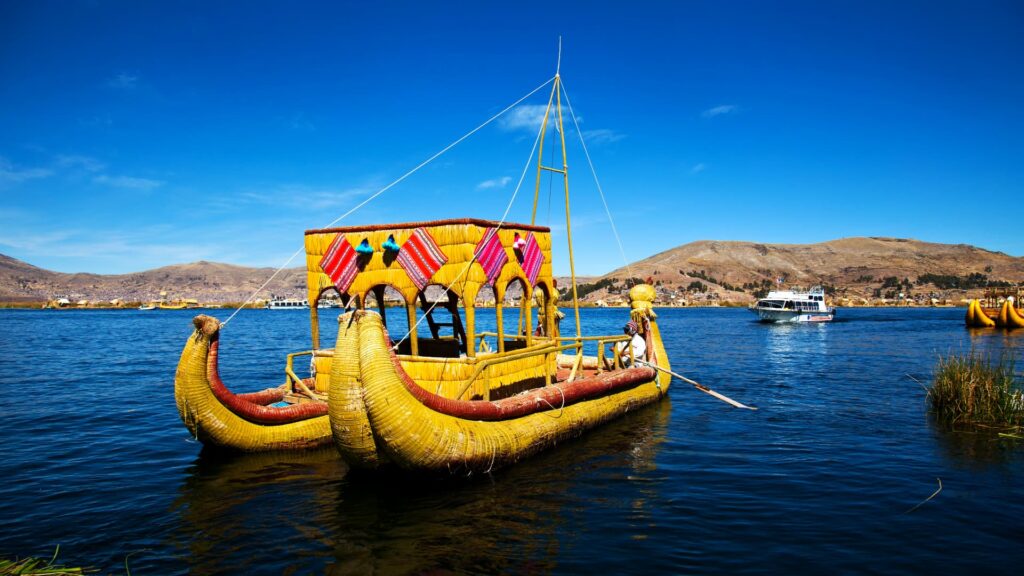
Titicaca is a large lake on the altiplano, the wide high plateau of the Andes in southern Peru and Bolivia. Because of its altitude, it is often described as the highest navigable lake in the world: motorboats link Puno with the islands, and the Uros still sail their traditional totora reed boats.
For Andean peoples, the lake is much more than scenery. According to legend, Manco Cápac and Mama Ocllo, children of the Sun god, rose from its waters and walked north until they founded Cusco. It is a myth, not a historical fact, but it explains the special place Titicaca holds in Inca history.
Today, Quechua and Aymara communities live on its shores and islands, and they keep their language, traditional dress and customs alive.
Where Is It and How High Is It?
The lake sits on the border between Peru and Bolivia, and most of its surface lies on the Peruvian side, in the Puno region. The city of Puno, on the lakeshore, is the starting point for visits from Peru: boats to the islands leave from its port.
The lake lies at about 3,810 m (12,500 ft), higher than Cusco (about 3,400 m / 11,150 ft). That is why it is best to arrive in Puno after a few days in Cusco, already acclimatized. You will find the details below.
Lake Titicaca Islands: Uros, Taquile and Amantaní
The lake has natural islands as well as man-made ones. These are the three best known on the Peruvian side.
Uros Islands: the Floating Reed Islands
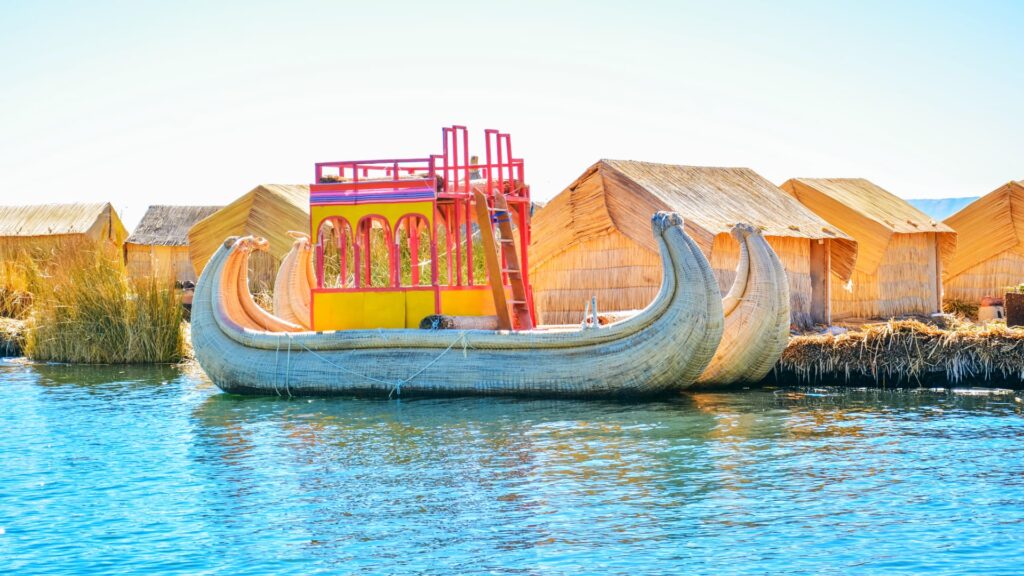
The Uros Islands are artificial floating islands made of totora, an aquatic reed that grows in the lake. They do not last on their own: the islanders keep adding fresh layers of reeds, so the islands need constant maintenance.
They are about 30–40 minutes by boat from the port of Puno. During the visit, the islanders themselves show you how they build their islands and how they also use totora for their houses and boats. Both of our Puno tours include a stop at the Uros.
Taquile Island: Textiles Recognized by UNESCO
Taquile is a natural, inhabited island about 2–2.5 hours by boat from the Uros. It is famous for its textile art, which UNESCO recognizes as Intangible Cultural Heritage. The weavings are not just crafts: they are part of the clothing islanders wear every day.
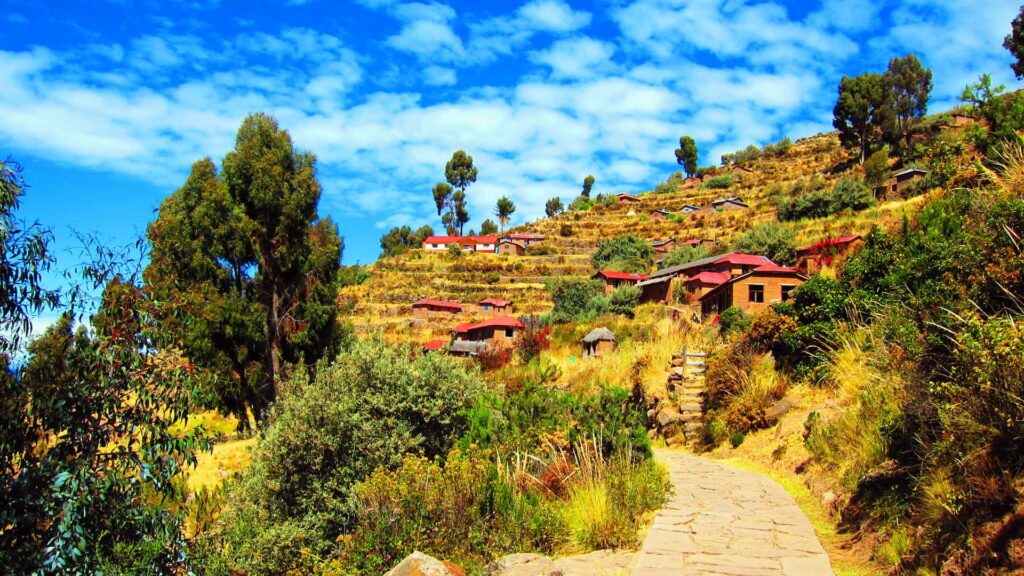
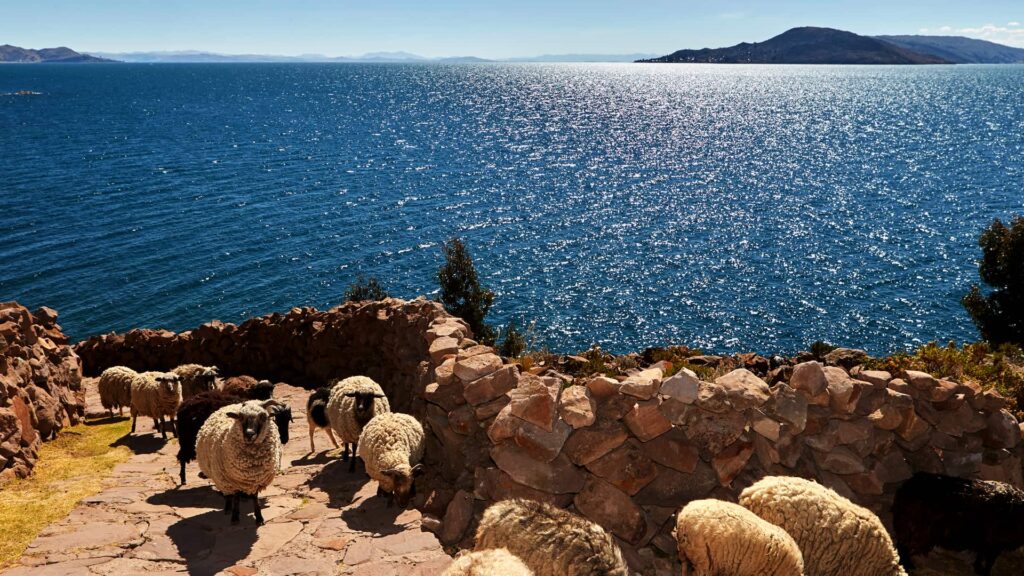
You explore the island on foot, along stone paths between farming terraces and stone arches, with wide views of the lake and the mountains. On our 2-day Uros and Taquile Islands tour you sleep in a local family’s home, where you are served dishes such as fried trout and quinoa (learn more about Andean food). You can also visit the island’s Community Museum.
Amantaní Island
Amantaní is another natural island, the largest on the Peruvian side and less visited than Taquile. It is known for homestays with local families. Our 2-day tour does not go to Amantaní: you spend the night on Taquile.
Sillustani: Funerary Towers by Lake Umayo
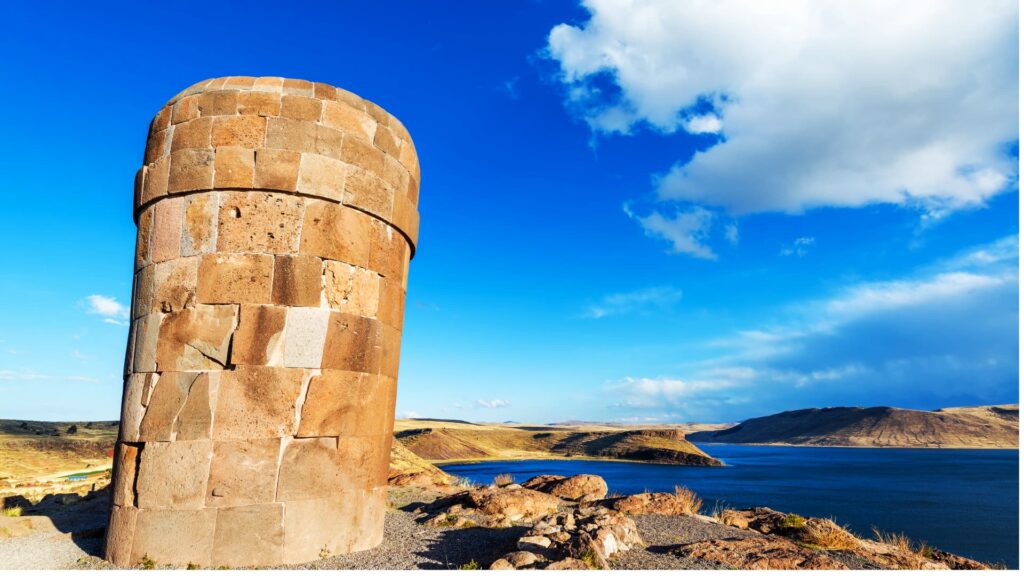
Sillustani is not on Lake Titicaca but on the shore of Lake Umayo, near Puno. It is an ancient burial ground with funerary towers called chullpas, built by pre-Inca cultures such as the Kollas. The site overlooks the lagoon and the altiplano.
It pairs very well with the islands: the Uros show life on the lake today, and Sillustani shows the region’s pre-Inca past. Our Sillustani and Lake Titicaca one-day tour combines both: first you travel by road to Sillustani, then you sail to the Uros, with a typical Peruvian lunch included.
How to Get to Lake Titicaca from Cusco
To reach the lake, you first need to get to Puno. From Cusco you have three options:
| Option | Approximate time | What to know |
|---|---|---|
| Bus | 6 to 10 hours, depending on the service | The most common option. Some tourist buses make sightseeing stops along the way. |
| Train | About 10.5 hours | PeruRail’s Titicaca train is a scenic journey, but it only runs a few days a week. |
| Plane | Flight + 1 hour by road | You fly into Juliaca airport, about 1 hour from Puno. The usual connection is from Lima; direct flights from Cusco are uncertain. |
We do not list schedules or fares because they change often: check them with the transport company and look up current flight routes before you buy.
How Many Days Do You Need in Puno?
It depends on what you want to see. One full day covers the essentials; two days let you experience the islands at a slower pace. Here is how our two tours compare:
| 1-day tour | 2-day tour | |
|---|---|---|
| Tour | Sillustani and Lake Titicaca | Uros and Taquile Islands |
| What you visit | Sillustani and the Uros Islands | Uros Islands and Taquile Island |
| Transport | Road to Sillustani and boat to the Uros | Boat Puno – Uros – Taquile – Puno |
| Overnight | Back in Puno in the afternoon | 1 night in a local home on Taquile |
| Meals | Typical Peruvian lunch | Lunch and dinner on day 1, breakfast with your host family, and lunch on day 2 on Taquile |
| Guide | Professional guide in English, Spanish or Portuguese | Professional guide |
| Price | US$55 | US$95 |
| Best for | Short on time, interested in archaeology | Living culture and a night on the island |
You can do both, but keep in mind that both stop at the Uros. If you choose only one, the 1-day Sillustani and Lake Titicaca tour is ideal if you are short on time, and the 2-day Uros and Taquile tour is best if you want to see island life up close. If you plan to combine Puno with Cusco and Machu Picchu, take a look at our Peru travel packages.
Book with 40%: you can book either of our Puno tours by paying just 40% online. The balance is paid when you arrive in Peru.
Best Time to Visit Puno and Weather
The dry season runs from April to October: sunny days, clear skies and very cold nights. It is the most comfortable time to sail and walk around the islands.
From November to March is the rainy season: the landscape is greener, but there are more clouds and rain. You can travel all year round, always with warm clothes. In any month, the sun on the lake is intense, even when the air is chilly. To plan the rest of your trip, read our guide to the best time to visit Cusco.
Altitude and Acclimatization in Puno
The lake is at about 3,810 m (12,500 ft), roughly 400 m (1,300 ft) higher than Cusco. The sensible plan is to reach Puno after a few days in Cusco, already acclimatized, not the other way around. Some tips:
- Take it easy on day one: walk slowly and rest when you arrive.
- Stay hydrated: drink water often and eat light meals.
- No rush on Taquile: from the dock you walk uphill along paths to the main square.
- Listen to your body: if you have a strong headache, dizziness or shortness of breath, tell your guide.
We explain the symptoms and how to prevent them in our post on how to prevent altitude sickness in Peru. And if you wonder how locals cope, read about why people from Cusco don’t suffer from altitude sickness.
What to Pack for Puno and the Islands
- Layers: a warm jacket or fleece for mornings and evenings, plus a light layer for midday.
- Hat, gloves and scarf: especially if you sleep on Taquile, because the nights are very cold.
- Sun protection: sunscreen, sunglasses and a hat; the sun is strong on the boat and on the islands.
- Rain jacket or poncho: essential from November to March.
- Comfortable shoes: with good grip for Taquile’s stone paths.
- Water and snacks: extra drinks and snacks are not included on the tours.
- Cash in soles: for handicrafts and tips, which are not included.
- A small backpack: for the 2-day tour, with what you need for one night.
Frequently Asked Questions
Can you see Lake Titicaca in one day?
Yes. In one day you can visit Sillustani and the Uros Islands and be back in Puno in the afternoon. Taquile needs more time: it is about 2–2.5 hours by boat from the Uros, which is why we visit it on the 2-day tour.
Do the Uros Islands really float?
Yes. They are artificial islands made of layers of totora reeds that float on the lake. The islanders renew them constantly to keep them in shape, and during the visit they show you how they do it.
Is it worth spending the night on Taquile?
If you are interested in culture, yes. Staying with a local family lets you share meals, explore the island without rushing and learn about its textile tradition and customs up close. It is a simple, authentic experience, not a hotel.
Is it cold at Lake Titicaca?
Yes, especially at night and early in the morning, above all from April to October. During the day the sun is intense. Bring warm clothes and sun protection in any season.
Should I visit Puno before or after Cusco?
After. Puno is higher than Cusco, so ideally you acclimatize in Cusco for a few days first and then travel to the lake. If you fly into Juliaca straight from sea level, take your first day very easy.
How much do your Puno tours cost?
The 1-day tour to Sillustani and the Uros Islands costs US$55, and the 2-day tour to the Uros and Taquile Islands costs US$95. Both can be booked with 40% online, and the balance is paid when you arrive in Peru.
Plan Your Visit to Puno
Titicaca brings together reed islands, textiles recognized by UNESCO and pre-Inca funerary towers. Arrive acclimatized from Cusco, dress warmly and set aside at least one full day for the lake.
If you are short on time, book the Sillustani and Lake Titicaca one-day tour; if you want to sleep on an island, choose the 2-day Uros and Taquile Islands tour. Either way, you pay only 40% online and the rest when you arrive in Peru.


