English
 Español
 Português


Pachamama means Mother Earth in the Andean worldview: the force that gives food, water and life. Andean people honor her together with the apus, the sacred mountains that protect each region, through respect and offerings. In Cusco you will see these beliefs in coca leaf offerings, stone cairns on high passes and great festivals.
We are local guides from Cusco, and this culture is part of our daily life. Here we explain what the apus and Pachamama are, what a k’intu or a despacho is, why there are piles of stones on mountain passes, what the chakana means and which tours let you experience all of this up close.
What Is Pachamama? The Andean Worldview Explained
In the Andean worldview, nature is not just scenery. Mountains, earth, water, the sun and animals are alive and deserve respect. People are part of that whole and must keep a balanced relationship with it: you ask permission, you give thanks and you give back some of what you receive. Pachamama, Mother Earth, is at the center of that relationship.
This way of seeing the world goes back long before the Incas, who made it a central part of their state and religion. After the Spanish arrived it blended with the Catholic faith, and today the two live side by side in many festivals. For the historical background, read our post on Inca economy, engineering and religion.
And it is not a thing of the past: the Andean worldview is still alive in the communities of Cusco, in how they work the land, raise their animals and celebrate. One of its pillars is ayni, reciprocal work, roughly “today for you, tomorrow for me.” Families help each other with farm work, and that help is returned when the other family needs it.
The Apus, Sacred Mountains of the Andes (Ausangate, Salkantay, Vinicunca)
The apus are the sacred, protective mountains, the guardian spirits of the Andes. They watch over the people, animals and crops of their territory. That is why local families respect them and make offerings to them, for example before a journey.
The great guardian of the region is Apu Ausangate, a snowcapped peak of about 6,380 m (20,940 ft), the highest mountain in the Cusco region. It is considered the protector of Rainbow Mountain (Vinicunca), which lies in its surroundings. Learn more in our guide to Ausangate, Peru and in our post on Vinicunca’s history and its guardian apus.
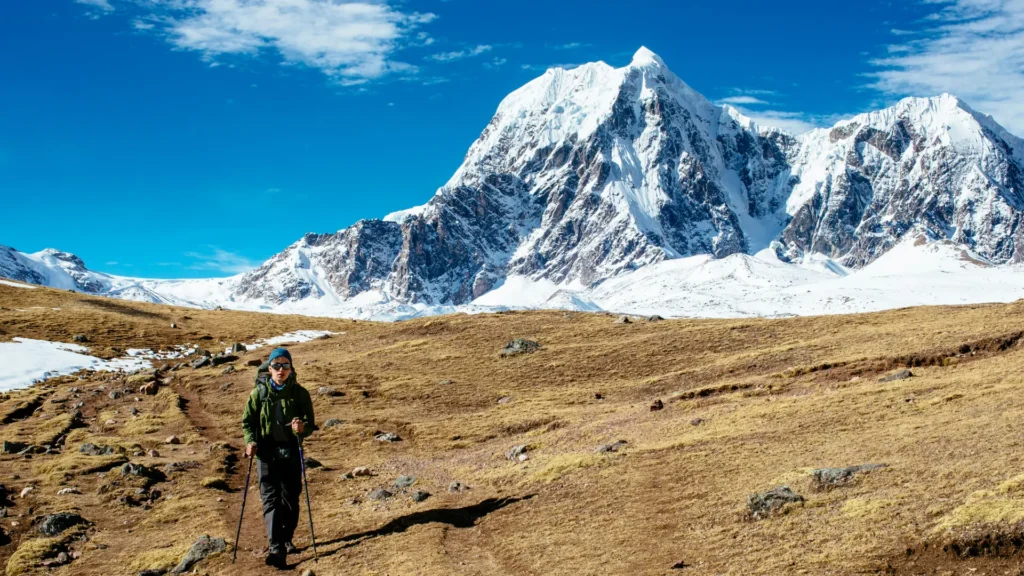
Salkantay, the great snowcapped peak you hike past on the alternative route to Machu Picchu, is also an apu.
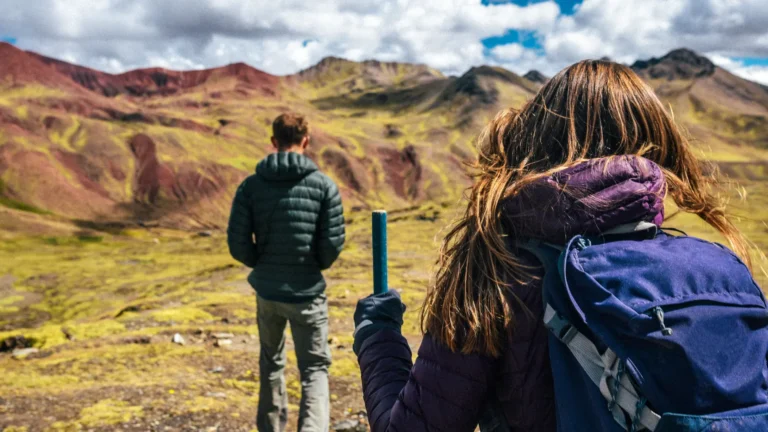
If you want to stand in front of an apu, the easiest way is our one-day hike to the Ausangate 7 Lakes, which starts in the herding community of Pacchanta, at the foot of the glacier. And if you are heading to Vinicunca, read our Rainbow Mountain Peru guide first.
Pachamama and Offerings: K’intu and Despacho
Pachamama is Mother Earth. She provides food, water and a place to live, which is why she is respected together with the apus. In daily life, that respect is expressed through offerings: small gestures to give thanks, ask permission or ask for protection.
The simplest offering is the k’intu: a few carefully chosen coca leaves offered with respect to Pachamama and the apus. Sharing coca is also a gesture of friendship between people. We explain it in our guide to coca tea in Peru, where you will also see the place the leaf holds in Andean culture.
A fuller offering is the despacho, also called a payment to the earth (pago a la tierra). It is a ceremony dedicated to Pachamama and the apus, prepared by an Andean ritual specialist called a paqo. A despacho includes coca leaves, seeds, sweets and other items that are arranged with care and offered with respect.
August is traditionally considered the month of Pachamama. If you are ever invited to witness a despacho, follow it quietly, listen to the person leading it and ask before taking photos.
Apachetas: The Stone Cairns of the Trail
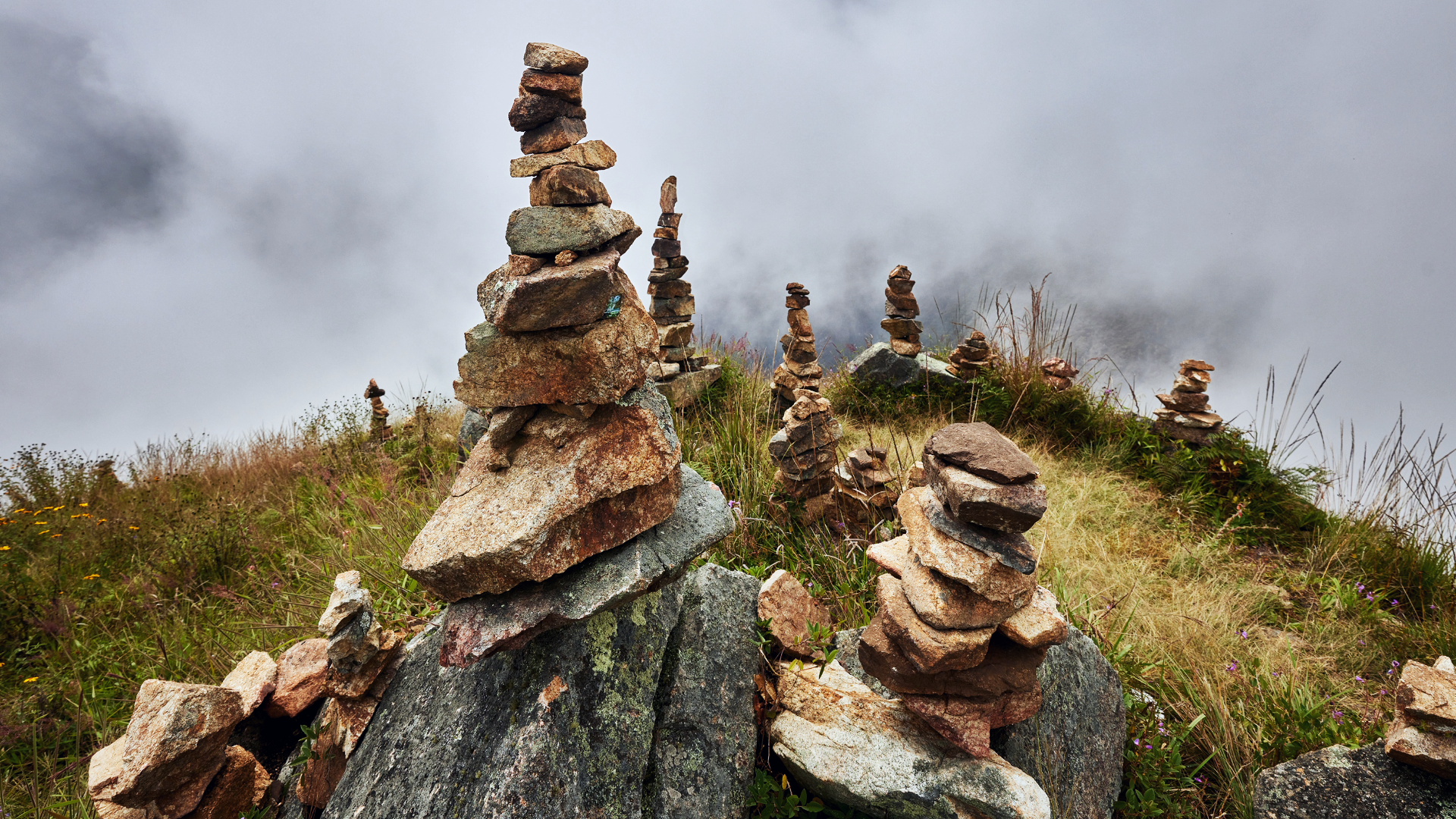
Apachetas are piles of stones built on high passes and mountain trails. When hikers reach one of these spots, they usually leave a stone as an offering and to ask for protection on the way. Over time, stone by stone, the cairn grows.
They are common on the passes of Cusco’s high mountain routes, such as Salkantay or Ausangate. When you reach one, take a moment to give thanks for the trail behind you.
One important rule: never move or take stones from an apacheta. For the people who built it, every stone is an offering, not a souvenir or a prop for a photo.
The Three Andean Worlds and the Chakana
The Andean worldview divides the universe into three worlds, and each one has an animal that represents it:
- Hanan Pacha, the upper world: represented by the condor. It is the realm of the sky and the higher powers.
- Kay Pacha, this world: represented by the puma. It is where people, animals and plants live.
- Uku Pacha, the world below: represented by the serpent. It is the inner world, what lies beneath the earth.
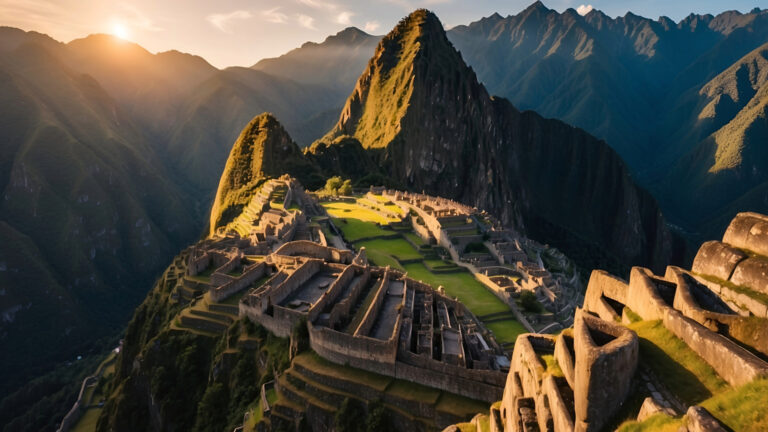
These animals appear in stone, in textiles and in dances. At Machu Picchu, for example, there is the Temple of the Condor. We tell you about it in our guide to the Andean condor.
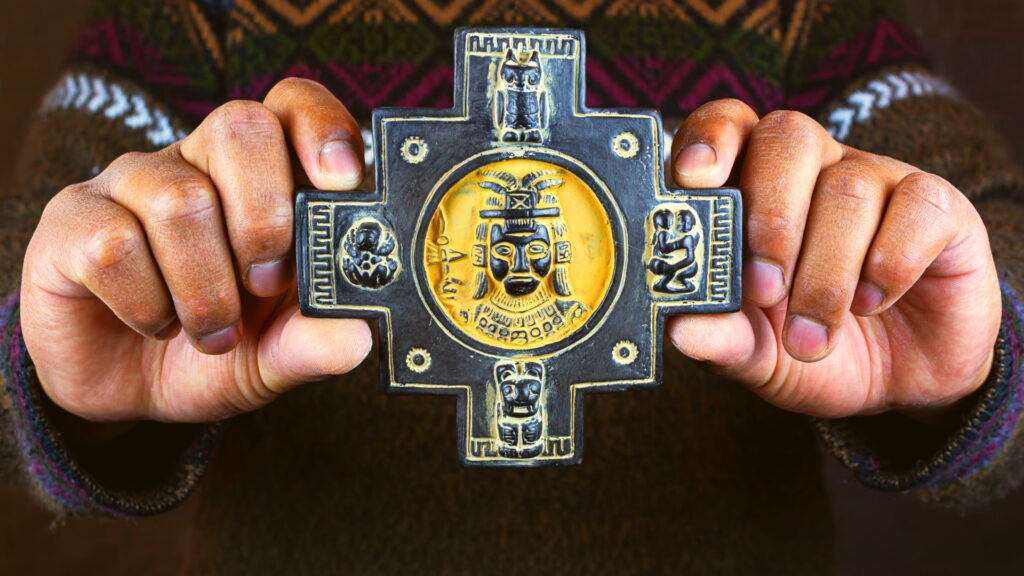
The chakana is the stepped Andean cross, one of the great symbols of the Andean worldview. Its shape has many readings; one of the most widespread interprets it as a representation of the order of the universe and of the union between the upper world, this world and the world below. You will see it on ceramics, textiles, jewelry and souvenirs in Cusco’s markets.
Andean Festivals: Inti Raymi and Qoyllur Rit’i
Inti Raymi is the Festival of the Sun. It is held every June 24 in Cusco, with a great reenactment on the esplanade of Sacsayhuamán. The Sun, Inti, was the main deity of the Incas, and his great temple in Cusco was the Qorikancha. We explain how to visit both sites in our guide to Coricancha and Sacsayhuamán.
Qoyllur Rit’i is a sanctuary and pilgrimage near Apu Ausangate, one of the most important in the Andes. UNESCO recognizes it as intangible cultural heritage. It takes place before the feast of Corpus Christi, so its date changes every year. Pilgrims from communities across the southern Andes arrive with music and dances, and the festival blends the Catholic faith with respect for the apus.

Cusco has many other celebrations throughout the year. Check the calendar in our post on Cusco festivals and, if you want your trip to match one, write to us before you book your dates.
Where to Experience Andean Culture in Cusco
The best way to understand the Andean worldview is to go where it is lived. These are the tours where your guides explain this culture in its own setting:
| Experience | Where | Tour | From US$ |
|---|---|---|---|
| Stand before Apu Ausangate, among alpaca and llama herding communities | Pacchanta, at the foot of Ausangate | Ausangate 7 Lakes tour (1 day) | US$60 |
| Circle the great apu of the region, across passes and herding communities | From Tinki to Pacchanta | Ausangate Trek (5 days) | US$600 |
| The apus of Vinicunca, under the protection of Ausangate | Rainbow Mountain | Rainbow Mountain tour (1 day) | US$50 |
| Hike beside Apu Salkantay all the way to Machu Picchu | Salkantay route | Salkantay Trek (5 days) | US$550 |
| Meet the weaving communities | Patacancha and Willoc, Lares route | Lares Trek (4 days) | US$450 |
| Qorikancha, the Inca Temple of the Sun | Cusco city | Cusco City Tour | US$40 |
| Stay with a family in their home | Taquile Island, Lake Titicaca | Uros and Taquile Islands (2 days) | US$95 |
| Inca terraces and temples, and towns with traditional life | Pisac and Ollantaytambo, Sacred Valley | Sacred Valley VIP (1 day) | US$90 |
On the Lares route, the families of Patacancha and Willoc keep traditional weaving alive, with designs passed down through generations. It is one of the best ways to see Andean community life up close, and our Lares Trek to Machu Picchu passes through their villages before reaching the citadel.
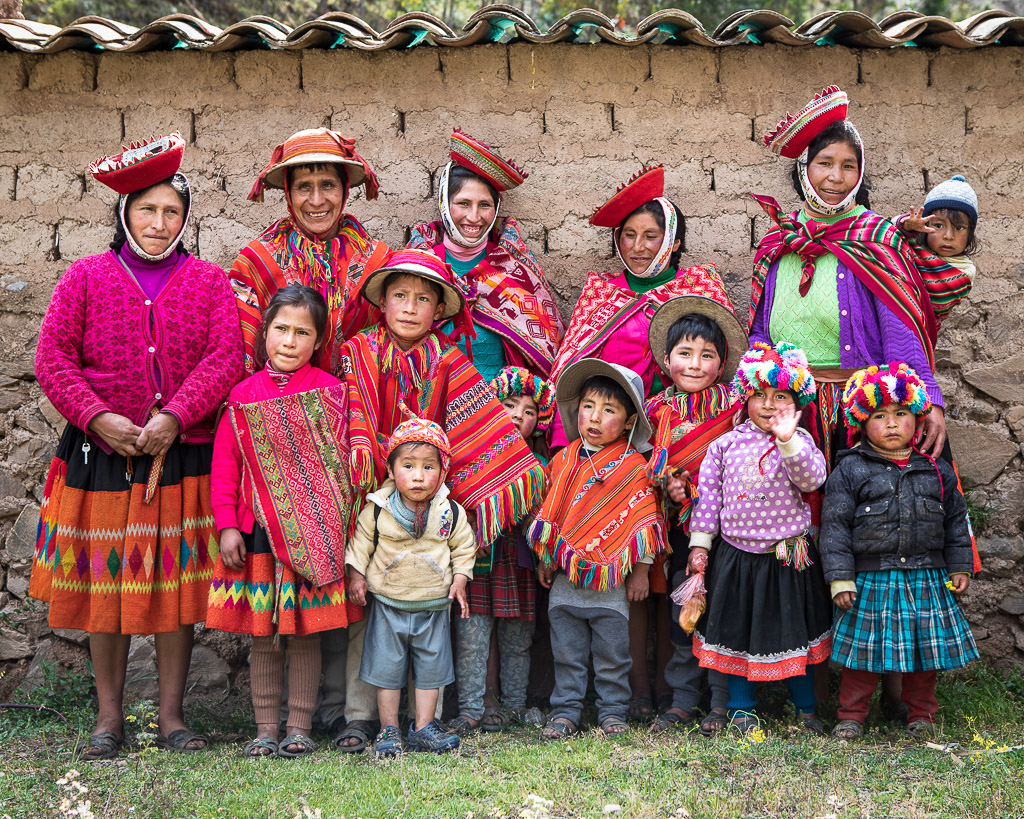
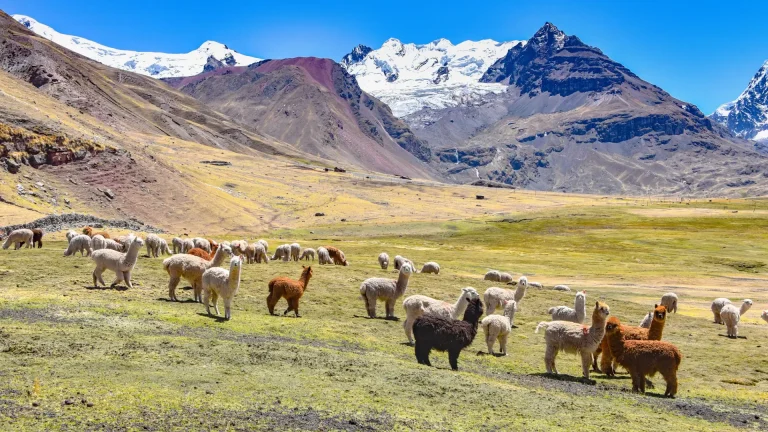
Around Ausangate, the communities of Tinki and Pacchanta live from herding alpacas and llamas; we cover this in our guide llama vs alpaca. On Lake Titicaca, the families of Taquile welcome travelers into their homes on our 2-day tour. And in the Sacred Valley, Pisac and Ollantaytambo show how the Incas joined their temples to the landscape.
Book with 40%: every tour in this table, from the City Tour to the Ausangate Trek, is booked by paying just 40% online. The balance is paid when you arrive in Peru.
How to Respect Pachamama and Andean Traditions
Andean communities welcome travelers generously. These simple gestures help make your visit welcome too:
- Do not move or take stones from an apacheta: each one is an offering.
- Ask permission before photographing a ceremony or a person. If the answer is no, respect it.
- Take part as an attentive guest: if you are invited to an offering, watch, follow the instructions and do not interrupt.
- Receive coca with the gesture it deserves: if someone offers you leaves, accept them gladly or decline kindly.
- Look after the mountain: leave no trash on the trails or at the lakes; for an apu, respect starts there.
- Buy from the maker: textiles bought directly from families support their communities.
You will find more ideas for traveling responsibly in our post on sustainable tourism in Cusco.
Frequently Asked Questions
What does Pachamama mean?
Pachamama is Mother Earth in the Andean worldview. She gives food and life, which is why she is respected and receives offerings, together with the apus, the protective mountains.
What is a despacho or payment to the earth?
It is an offering ceremony to Pachamama and the apus, prepared by an Andean ritual specialist, the paqo. It includes coca leaves, seeds, sweets and other items, offered with respect to give thanks and ask for protection.
Can I leave a stone on an apacheta?
Hikers usually leave a stone as an offering and to ask for protection on the way. If you do, do it respectfully and with a stone from that place. What you should never do is move or take stones from the cairn.
When are Inti Raymi and Qoyllur Rit’i?
Inti Raymi is held every June 24 in Cusco, with its great reenactment at Sacsayhuamán. Qoyllur Rit’i takes place before Corpus Christi and its date changes every year, so check it before you plan your trip.
Which tour is best to experience Andean culture?
It depends on your time. In one day, the City Tour takes you to the Qorikancha and the hike to the Ausangate lakes puts you in front of an apu. With more days, the Lares Trek passes through weaving communities and the Taquile tour lets you sleep in a family’s home.
Book Your Andean Experience in Cusco
The apus, Pachamama and the apachetas are best understood by walking through the Andes with someone who grew up among them. Pick the experience that appeals to you most in the table and live it with local guides from Cusco.
All our tours are booked with just 40% online, and the rest is paid when you arrive in Peru. If you are not sure which one to choose or want to combine several, write to us and we will help you plan your trip.