English
 Español
 Português


Coca tea, called mate de coca in Peru, is an infusion of coca leaves in hot water, with an herbal, slightly bitter taste often compared to green tea. In Cusco it is part of daily life and many hotels offer it on arrival. It is legal in Peru, its effect is mild, like coffee, and it is not cocaine.
We are local guides based in Cusco, and coca tea is part of our everyday life. In this guide we explain what it is, how it is made, the place of the coca leaf in Andean culture, what muña is and what every traveler should know before drinking it: the law, flying home and drug tests.
What Is Coca Tea?
In Peru, “mate” is the word for almost any herbal infusion. Coca tea is made with the dried leaves of the coca plant, a shrub grown in the Andean and Amazonian valleys. The leaves are steeped in hot water, just like tea.
The coca leaf contains alkaloids in a very low concentration. That is why its effect is gentle and mildly stimulating, and many people compare it to a cup of coffee or tea. Coca tea is not cocaine: cocaine is a drug extracted from the leaf through an illegal chemical process, which has nothing to do with steeping a few leaves in hot water.
In the Andes, coca is traditionally used to cope with altitude and tiredness, and also as an aid to digestion after a meal. In Cusco you will find it in hotels, cafés, restaurants and markets, and it is common to be offered a cup as soon as you check in.
What Does It Taste Like and How Is It Made?
The flavor is herbal, grassy and a little bitter. Many travelers compare it to green tea. You can drink it plain or sweetened with sugar or honey, as you prefer.
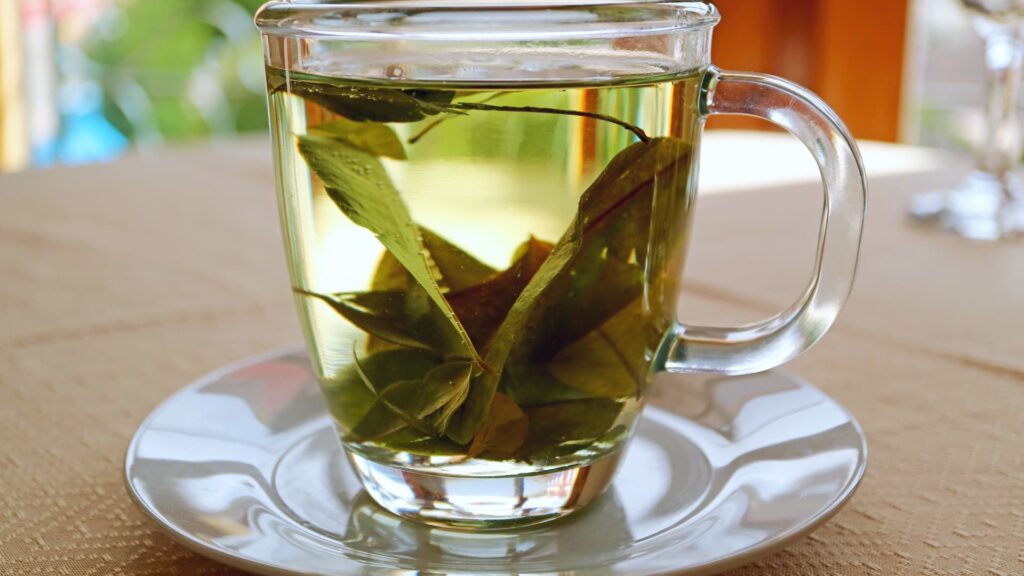
To make it with loose leaves, put a few whole leaves in a cup, pour hot water over them and let them steep for a few minutes. You can drink it with the leaves still in the cup. With tea bags (called filtrantes in Peru) it is even easier: use them like any other tea bag.
These are the most common ways to consume the coca leaf in Cusco:
| Form | How it is used | Where to find it | Good to know |
|---|---|---|---|
| Loose leaves | A few whole leaves in hot water, steeped for a few minutes. | Hotels, cafés, restaurants and markets. | The most traditional way to drink it; the flavor is stronger. |
| Tea bags (filtrantes) | Like any ordinary tea bag. | Hotels, supermarkets and shops. | Handy to carry in your daypack while you travel around Peru. |
| Chewed coca | The leaves are chewed slowly, not swallowed. | Markets and Andean communities. | The traditional Andean way; in Cusco it is called chacchar. |
In Cusco’s markets and shops you will also see coca candies and coca flour. They are sold as souvenirs or for everyday use, but keep in mind what we explain below about taking them home.
Does Coca Tea Help with Altitude?
Coca tea is traditionally used to cope with altitude, and many travelers feel it helps them through the first days. But it does not replace acclimatization: what really matters is going up gradually, resting, drinking water and listening to your body.
We won’t repeat here what we already cover in other guides. To understand how the body adapts, read why Cusco locals don’t get altitude sickness. For symptoms and how to prepare, see our guide to altitude sickness in Peru, and to check the altitude of every destination, our Cusco elevation guide.
If you are pregnant or breastfeeding, have blood pressure or heart problems, or take any medication, ask your doctor before drinking coca tea or traveling to high altitude.
The Coca Leaf in Andean Culture
For Andean peoples, coca is much more than a drink. It has been used for centuries and is still part of daily life in the communities of Cusco. The traditional way to consume it is to chacchar: chewing the leaves slowly and keeping them in the mouth while working in the fields or on a long walk.
The coca leaf is also sacred. It is offered in ceremonies to the Pachamama, Mother Earth, and to the apus, the guardian mountains. One of the best-known offerings is the k’intu: a few carefully chosen coca leaves, whole and in good condition, gathered together and offered with respect.

Sharing coca is also a gesture of friendship and respect. Offering a few leaves to someone is a way to greet them, start a conversation or say thank you. If someone in a community offers you coca leaves, you can accept them gladly or decline politely: what matters is the gesture.
Coca is part of a culture that also shows in the food, the textiles and life on the high puna. If you are curious, read our guides to Andean food in Cusco and llamas, alpacas and vicuñas.
Muña: the Mint of the Andes
Muña is known as “Andean mint”. It is an aromatic shrub that grows in the Andes, with a fresh scent very similar to mint. In Cusco it is made into an infusion, just like coca tea, and it is a good choice if you prefer a drink without coca.
Muña tea is traditionally used for digestion and for mild stomach upset, which is why people often drink it after a big meal. Muña candies are sold too: on our South Valley of Cusco tour we recommend bringing some for the road.
A curious fact: in the countryside, muña is traditionally placed among stored potatoes to protect them from pests. It is one example of how Andean families make use of the plants around them.
Is Coca Tea Legal? Can I Bring It Home?
In Peru, the coca leaf in its natural form and coca tea are legal. You can buy and drink them freely throughout your trip in the country.
Leaving Peru with them is a different matter. Many countries prohibit bringing in coca leaves or coca tea bags, for example the United States and much of Europe. Our advice is simple:
- Do not pack coca leaves or tea bags when you leave Peru, even as a gift or a souvenir.
- Check coca candies and coca flour too: they are made with coca, so the same restrictions may apply.
- Look up the rules of your country and of any country where you have a layover before flying home.
Enjoy coca tea while you are in Peru and leave the leaves here. If you want a taste of the Andes to take home, ask in the shops for other herbal infusions.
Will Coca Show Up on a Drug Test?
Yes, it can. Drinking coca tea can cause a positive result on urine tests for cocaine for a few days. It does not matter that the effect of the tea is mild or that you drank it legally in Peru: the result can still come back positive.
If your job, your sport or your license requires drug testing, keep this in mind before your trip. The safest choice is to avoid coca in all its forms (tea, leaves, candies or flour) and choose other infusions, such as muña.
Tips for Drinking It in Cusco
These tips will help you enjoy coca tea with no surprises:
- One cup on arrival: accept the tea your hotel offers and have another cup during the first days, if it agrees with you.
- Drink water too: coca tea does not replace water. At altitude it is a good idea to stay well hydrated all day.
- Careful at night: like any stimulant, it is better not to drink it before bed if it keeps you awake. In the evening, muña is a good alternative.
- Start with an easy day: the Cusco City Tour is a good first day without much effort, and the South Valley is a gentle route to keep acclimatizing.
- Save the high excursions for later: Rainbow Mountain reaches 5,200 m (17,060 ft) and Humantay Lake 4,200 m (13,780 ft). Do them once you have spent a few days in Cusco.
- Listen to your body: if you feel unwell, rest and tell your guide. Coca tea does not replace acclimatization or medical care.

Book with 40%: all our tours in Cusco, from the City Tour and the South Valley to Rainbow Mountain, can be booked by paying only 40% online. The balance is paid when you arrive in Peru.
Frequently Asked Questions
Does coca tea contain cocaine?
No. Coca tea is an infusion of natural leaves, which contain alkaloids in a very low concentration. Cocaine is extracted from the leaf through an illegal chemical process. The effect of the tea is mild, similar to a coffee or a tea.
Can I drink coca tea at night?
Yes, but remember it is a mild stimulant. If you are sensitive to stimulants or notice it is hard to fall asleep, drink it in the morning or afternoon, and choose muña or another infusion in the evening.
Can I drink it if I am pregnant or take medication?
Ask your doctor first. The same applies if you are breastfeeding or have blood pressure or heart problems. Your doctor is the best person to tell you whether coca tea is right for you and how to prepare for the altitude.
Where can I drink coca tea in Cusco?
Almost everywhere. Many hotels offer it to guests on arrival, and you will find it in cafés, restaurants and markets. The markets also sell loose leaves, tea bags, candies and coca flour.
What is the difference between coca tea and muña tea?
Coca tea has an herbal, slightly bitter taste and a mild stimulating effect; it is traditionally used for altitude and tiredness. Muña tea has a mint-like aroma and is traditionally used for digestion. Muña does not contain coca.
Can I take coca candies home as a souvenir?
They are legal in Peru, but they are made with coca, so they may be banned in your country just like the leaves and tea bags. Before packing them, check your country’s rules.
Plan Your Trip to Cusco
A cup of coca tea when you reach your hotel is one of the first experiences of any trip to Cusco. Take it easy, pair it with water and rest, try muña as well, and remember to leave the leaves in Peru when you fly home.
To plan your days and acclimatize well, take a look at our Peru itinerary. All our tours can be booked with only 40% online, and the rest is paid when you arrive in Peru. If you have questions, contact us and we will help you plan your trip.