English
 Español
 Português


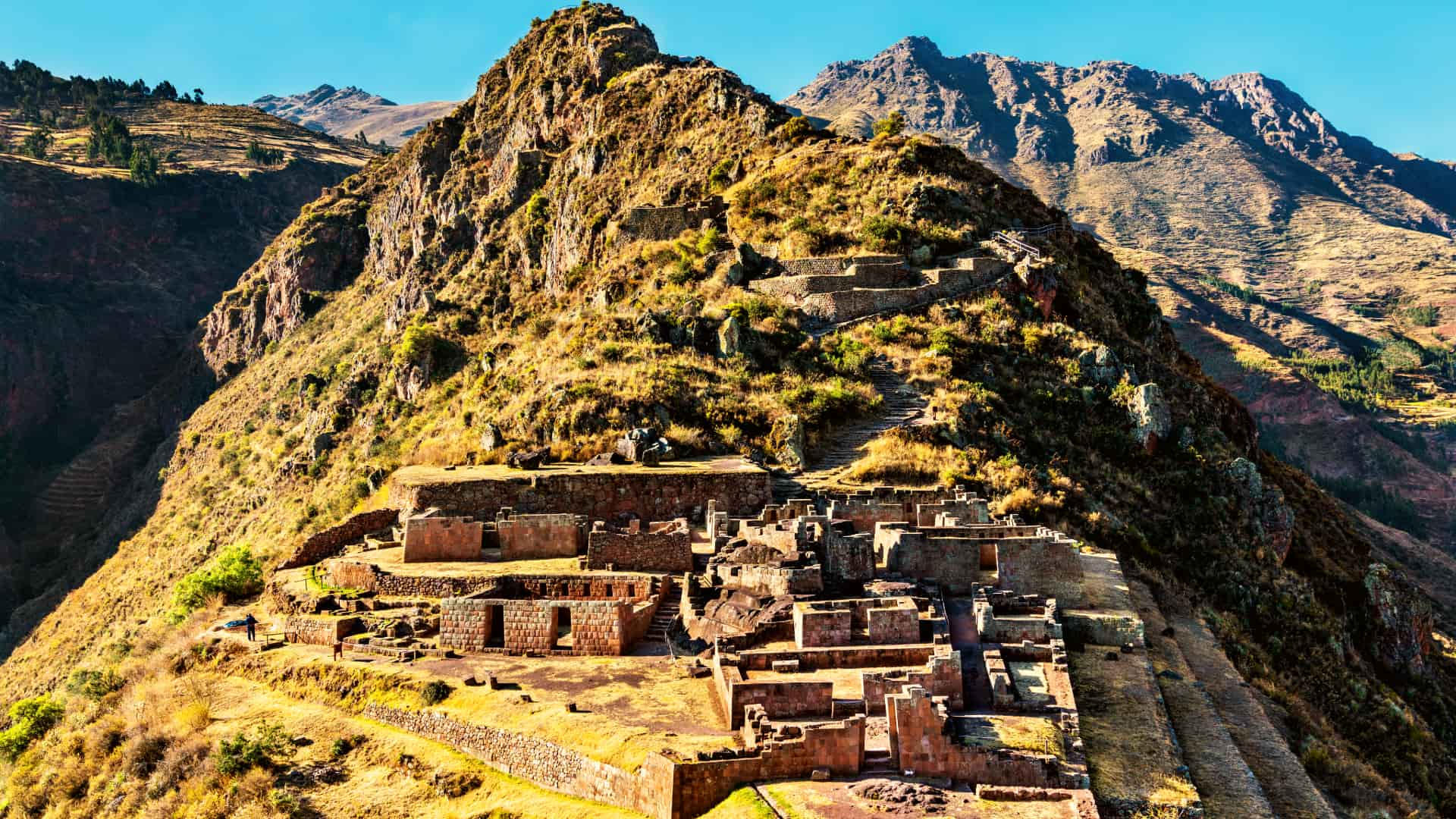
Pisac, Peru, is a town in the Sacred Valley, on the Urubamba River, with two visits in one: up on the mountain, an Inca archaeological site with curving terraces and stone temples; down below, the town and its famous craft market. It is the first stop on almost every Sacred Valley tour.
We are local guides from Cusco and we take travelers to Pisac all year round. For an overview of the whole valley, start with our Sacred Valley Peru guide. Here we go into detail on Pisac: what to see at the ruins, what to buy at the market, how to get there from Cusco, how tickets work and how much time to spend.
What Is Pisac, Peru?
Pisac lies in the valley of the Urubamba River, which in this stretch is also known as the Vilcanota. For many travelers it is the gateway to the Sacred Valley, which runs from Pisac to Ollantaytambo. That is why almost every valley tour starts here in the morning.
What makes Pisac special is that it has two very different parts, and it is worth seeing both:
- Up on the mountain: the archaeological site, with curving terraces that run down the slope, temples and stone buildings.
- Down in the valley: the town, famous for its craft market of textiles, jewelry and handicrafts.
Like Urubamba and Ollantaytambo, Pisac sits at about 2,800–3,000 m (9,200–9,800 ft), lower than Cusco, which is at about 3,400 m (11,150 ft). Even so, the archaeological site has climbs and stone steps, so take it easy if you have just arrived. Our Cusco elevation guide lists the altitude of the main destinations.
The Pisac Ruins: Terraces, Temples and the Intihuatana
The first thing that strikes you at the archaeological site is the terraces: large agricultural platforms that step down the slope, following the curve of the mountain. The Incas built terraces to farm on steep ground, manage water and keep the soil from sliding. From above you can see how the lines of the terraces trace the shape of the hill, with the Urubamba Valley in the background.
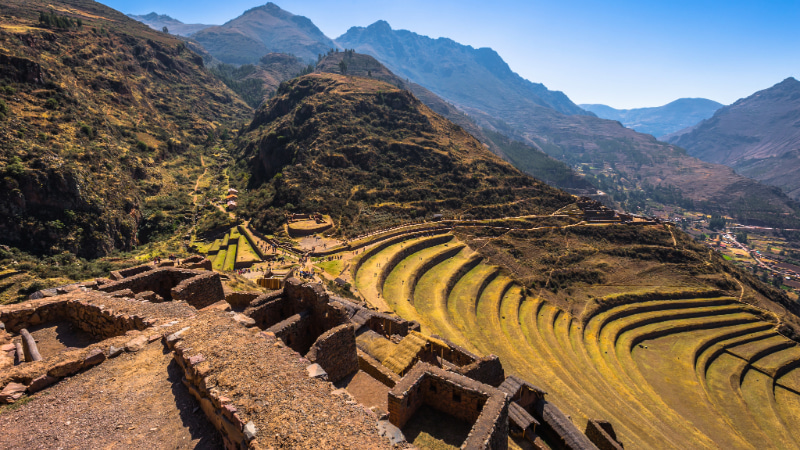
Higher up is the temple sector known as the Intihuatana. Here the walls are made of finely worked stone, with blocks that fit together with great precision, the style the Incas reserved for their most important buildings. In this sector there is a carved rock that is believed to have served as a sundial or ritual stone. The Incas left no written records, so your guide will explain these theories on site for what they are: interpretations.
As you walk through the site you will also see stone buildings spread across the mountain and, if you look at the slope opposite, small openings in the rock. These are tombs carved into the mountainside, visible from the paths of the site. Your guide will point them out and tell you what is known about them.
If you enjoy Inca architecture, another great site awaits you later in the valley: read our post on Ollantaytambo, the living Inca town, the other big stop of the day.
Pisac Market: What to Buy and How to Shop Respectfully
After the ruins you head down to the town, home to the craft market. You explore it on foot: the stalls fill the main square and the nearby streets, and you only need to stroll slowly to see a bit of everything. The market is open every day, with more stalls on some days of the week; ask your guide which day works best for your travel dates.
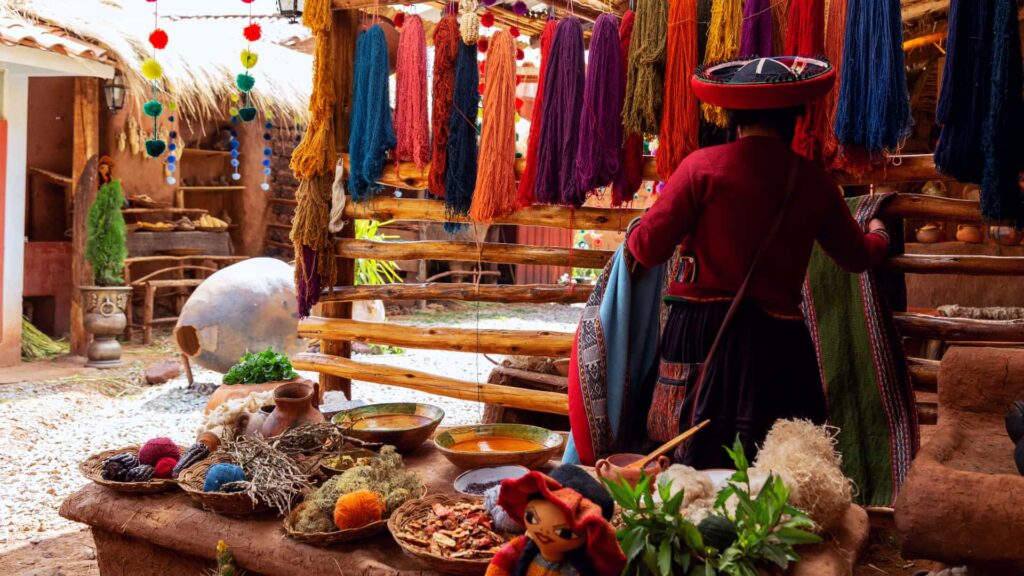
These are the most common items:
- Alpaca textiles: sweaters, scarves, hats and blankets.
- Andean weavings: blankets and wall hangings with traditional designs.
- Ceramics: plates, pots and decorative figures.
- Silver jewelry: earrings, necklaces and rings.
- Musical instruments and all kinds of souvenirs.
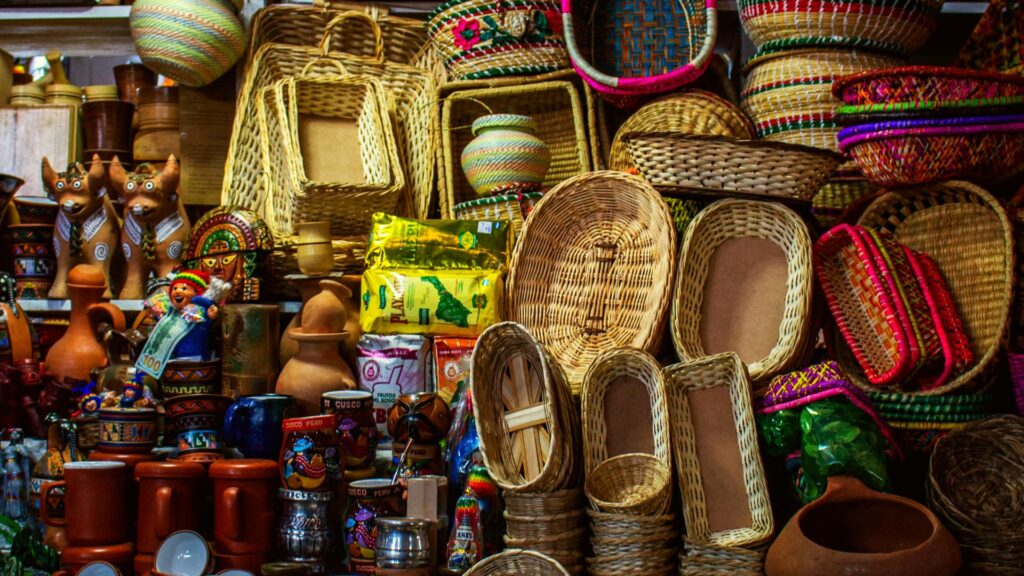
Baskets, ceramic bulls and souvenirs like the ones in this photo can be found in markets all over the Cusco region. What makes a market like this town’s worthwhile is the chance to buy from the person who made the piece. A few tips to shop well and with respect:
- Buy directly from the artisans: that way the money reaches the families who weave and carve.
- Ask where the products come from: who made it, what it is made of and how it was made.
- Do not haggle disrespectfully: asking about the price is fine, but remember that every piece holds hours of work.
- Ask permission before photographing people, especially artisans at their stalls.
- Be wary of “alpaca” that is too cheap: it may be a blend or synthetic fiber. Our llama vs alpaca guide explains how to recognize alpaca fiber.
Shopping this way is a simple way to travel responsibly. We tell you more in our post on sustainable tourism in Cusco.
The town also has clay ovens where bread and empanadas are baked. If you pass one, it is worth trying something fresh from the oven. If you are curious about the region’s cooking, read our guide to Andean food in Cusco.
How to Get to Pisac, Peru from Cusco
There are two ways: on a tour, which combines Pisac with other valley sites in a single day, or on your own, by public transport or taxi. This table helps you compare:
| On a tour (Sacred Valley VIP) | On your own | |
|---|---|---|
| Transport | Pickup at your Cusco hotel at 7:00 a.m. in a luxury vehicle | Public transport or taxi from Cusco |
| Guide | Guide in English, Spanish or Portuguese | No guide, unless you hire one |
| Tickets | Included: Pisac, Ollantaytambo, Moray and Maras | You buy the Cusco Tourist Ticket yourself |
| What else you see | Ollantaytambo, Moray and the Maras Salt Mines | Whatever you arrange yourself |
| Food | Gourmet lunch in Urubamba | On your own |
| Return | Back in Cusco between 6:00 and 7:00 p.m. | Depends on the transport you choose |
With our Sacred Valley VIP tour (US$90) you do not have to worry about schedules, tickets or transfers between towns. If you prefer to go on your own, there is public transport and there are taxis from Cusco; ask at your hotel about the most convenient way to get there.
Along the valley road, between Pisac and Urubamba, lies Calca, another valley town with local life and a market. It is a good glimpse of everyday life in the Sacred Valley away from the busiest sites.
Book with 40%: our Sacred Valley VIP tour, which starts in Pisac, is booked by paying only 40% online. The balance is paid when you arrive in Peru.
Tickets and the Cusco Tourist Ticket
The archaeological site is covered by the Cusco Tourist Ticket (Boleto Turístico del Cusco), the same ticket used at other archaeological sites in the region. The ticket has a Sacred Valley circuit that includes four sites:
- Pisac
- Ollantaytambo
- Chinchero
- Moray
We explain how the ticket works in our Coricancha and Sacsayhuamán guide. We do not list ticket prices because they change. You do not need a ticket to walk around the town and the market.
On our VIP tour the entrance tickets are included: Pisac, Ollantaytambo, Moray and Maras. You do not need to buy anything yourself or stand in line.
How Much Time Do You Need in Pisac, Peru?
Ideally, a morning: that gives you time to explore the ruins without rushing and then head down to the market. That is exactly what we do on the VIP tour, which plans the day like this:
| Time | What you do |
|---|---|
| 7:00 a.m. | Pickup at your Cusco hotel in a luxury vehicle |
| Morning | Pisac: Inca terraces and temples, then the town’s craft market |
| Midday | Gourmet lunch in Urubamba |
| Afternoon | Ollantaytambo, Moray and the Maras Salt Mines |
| 6:00–7:00 p.m. | Arrival in Cusco |
If you go on your own, you can stay longer in town, but you will not see as many sites in one day. To get to know the two afternoon stops before you go, read our guide to the Maras Salt Mines and Moray. And if you have already seen Pisac and only those two places are left, the Maras Moray tour (US$30) takes half a day.
Tips for Your Visit
- Comfortable shoes: the archaeological site has climbs, stone steps and uneven ground.
- Cash in soles: for shopping at the market and for restrooms that charge a fee.
- Sun protection: sunscreen, sunglasses and a hat; there is little shade on the terraces.
- Layers: mornings are cool and it is often warm at midday.
- Respect at the market: buy from the artisans, ask where things come from and ask before taking photos.
- Water: bring a bottle, especially for the climb through the ruins.
If you have extra days in Cusco, the Cusco City Tour (US$40) is a good way to get to know the city, and the South Valley of Cusco tour (US$45) shows you another side of the region, with fewer crowds. To plan your days well, see our Peru itinerary.
Frequently Asked Questions
How much does it cost to visit Pisac on a tour?
Our Sacred Valley VIP tour costs US$90 per person. It includes hotel pickup, a guide, a gourmet lunch in Urubamba and entrance to Pisac, Ollantaytambo, Moray and Maras. You book with 40% online and pay the balance when you arrive in Peru.
What days is the Pisac market open?
The market is open every day, with more stalls on some days of the week. Ask your guide which day suits your travel dates.
Do I need the Cusco Tourist Ticket to enter the ruins?
Yes. The archaeological site is covered by the Cusco Tourist Ticket, whose Sacred Valley circuit includes Pisac, Ollantaytambo, Chinchero and Moray. On our VIP tour the entrance tickets are already included.
Is Pisac higher than Cusco?
No. The town is at about 2,800–3,000 m (9,200–9,800 ft), lower than Cusco, which is at about 3,400 m (11,150 ft). That makes the Sacred Valley a good option for your first days.
Can I go on my own from Cusco?
Yes, there is public transport and there are taxis from Cusco. Keep in mind that you will need to buy your Cusco Tourist Ticket and plan the rest of the day yourself.
What is worth buying at the market?
Alpaca textiles, weavings, ceramics, silver jewelry, instruments and souvenirs. Buy directly from the artisans and be wary of “alpaca” garments that are too cheap.
Plan Your Day in the Sacred Valley
Inca ruins on the mountain, a colorful market in town and the gateway to the Sacred Valley: that is why almost every valley tour starts here. Come early, walk slowly among the terraces and leave time to talk with the artisans.
Book our Sacred Valley VIP tour by paying only 40% online and the rest when you arrive in Peru. Then continue your trip with our 2-day Machu Picchu tour. Any questions? Write to us and we will get back to you.