 English
 Español
 Português


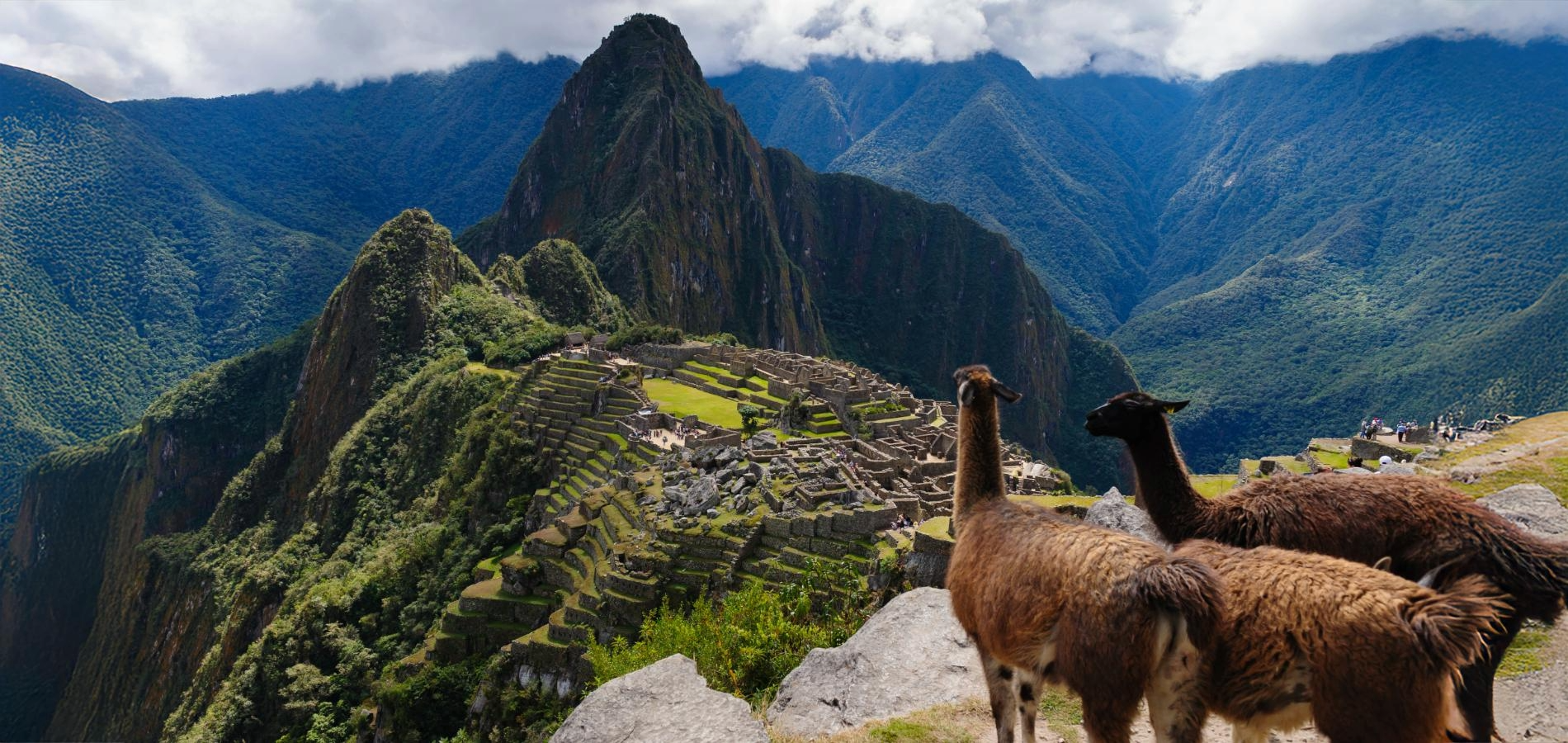
Llama vs alpaca is easy once you know what to look for: the llama is bigger, with long, curved, banana-shaped ears and a long face; the alpaca is smaller, with short, straight ears and a woolly, rounded face. Llamas are used as pack animals, while alpacas are raised for their soft fiber.
We are local guides based in Cusco, and on many of our routes through the Andes we pass herds of llamas and alpacas. In this guide we explain how to tell them apart, what vicuñas and guanacos are, why these animals mattered to the Incas, how to buy genuine alpaca textiles and where to see them in Peru.
Llama vs Alpaca: What Is the Difference?
Four South American camelids live in the Andes: two domestic ones, the llama and the alpaca, and two wild ones, the vicuña and the guanaco. They are relatives of the camel, but they have no hump. Genetic studies indicate that the llama descends from the guanaco and the alpaca from the vicuña, and that both were domesticated in the Andes thousands of years ago.
At first glance they look alike, but size, ears and face give them away:
| Llama | Alpaca | |
|---|---|---|
| Size | Larger; the biggest of the four South American camelids. | Smaller than the llama. |
| Ears | Long and curved, shaped like bananas. | Short and straight. |
| Face | Long, with little wool. | Rounder and “fluffier”. |
| Wool | Coarser. | Fine, soft and warm. |
| Main use | Pack animal for light loads; also wool and meat. | Raised mainly for its fiber. |
| Breeds or types | — | Huacaya (fluffy fleece, the most common) and suri (long fleece in locks). |
| Wild ancestor | Guanaco | Vicuña |
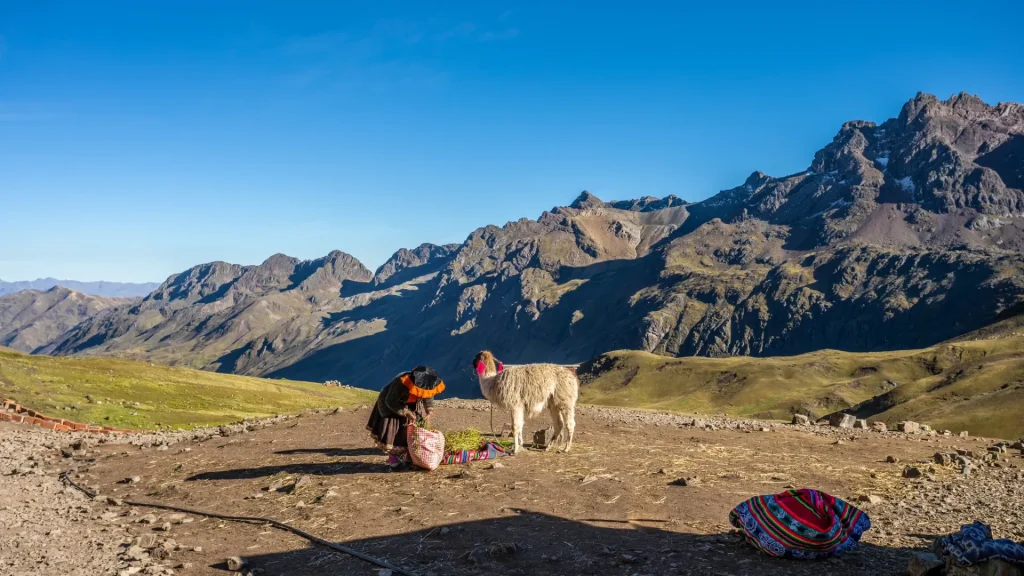
A guide’s trick: look at the ears. If they are long and curved, it is a llama. If they are short and the head looks like a pompom of wool, it is an alpaca.
Peru has the largest alpaca population in the world. Most are huacaya, with the fluffy fleece that makes them look like stuffed toys; suri alpacas, with long locks hanging down their sides, are less common and always catch travelers’ attention.
As for temperament, llamas and alpacas live in herds and are calm, curious animals. Yes, they spit, but mostly at each other, over food or to settle who is in charge of the group. They rarely spit at people unless they feel bothered.
Vicuñas and Guanacos: Peru’s Wild Camelids
The vicuña is the smallest and most delicate of the four camelids. It is wild: it does not live with herders but roams freely on the puna, the high Andean plateau. It is agile and wary, and usually moves away when people approach.
Its fiber is among the finest in the world and is highly prized. That is why the vicuña was once endangered by hunting. Today it is protected by law and its population has recovered. It is also a national symbol: it appears on Peru’s coat of arms.
To obtain the fiber without harming the animals, Andean communities keep alive the chaccu, a tradition of Inca origin: villagers surround the wild vicuñas, shear them and then release them back onto the puna. It is a way to use the fiber while protecting the species.
There are plenty of vicuñas in southern Cusco: they are commonly seen on the way to Rainbow Mountain and on the Palcoyo, Pallay Punchu and Ausangate routes. You can also see them on the puna between Arequipa and Chivay, on the way to the Colca Canyon, inside the Salinas and Aguada Blanca National Reserve. The road crosses the Patapampa viewpoint, at about 4,900 m (16,100 ft), and our Colca Canyon tour drives through this area early in the morning.
The guanaco, the fourth camelid, is the rarest in Peru and very hard for a traveler to spot.
Llamas and Alpacas in Inca History
For the Incas, camelids were the backbone of the economy. With no horses or oxen, the llama was the pack animal of the Andes: caravans carried goods between the highlands and the valleys. The alpaca provided fiber for clothing and textiles, which were enormously valued in the Andean world.
Almost nothing went to waste:
- Transport: llamas carried goods along the mountain roads.
- Wool and fiber: for everyday clothing and for the finest textiles.
- Meat: fresh or dried as charqui, which kept for a long time.
- Fertilizer: the dung was used to fertilize the fields.
- Offerings: camelids had a place in religious ceremonies.
The Inca state owned large herds, which were part of its wealth and organization. To learn how the empire worked, read our post on Inca economy, engineering and religion.
Today, many families in the high Andean communities still make a living from herding alpacas and llamas and from weaving. When you see a herd on the puna, there is almost always a family behind it looking after the animals.
Llama vs Alpaca Wool and Vicuña Fiber: Andean Textiles and How to Buy
In the communities around Cusco, alpaca fiber is still spun and woven by hand. It is colored with natural dyes from plants, minerals and insects: cochineal, a tiny insect that lives on cactus, gives the reds. Each design has its own meaning and changes from one community to another.
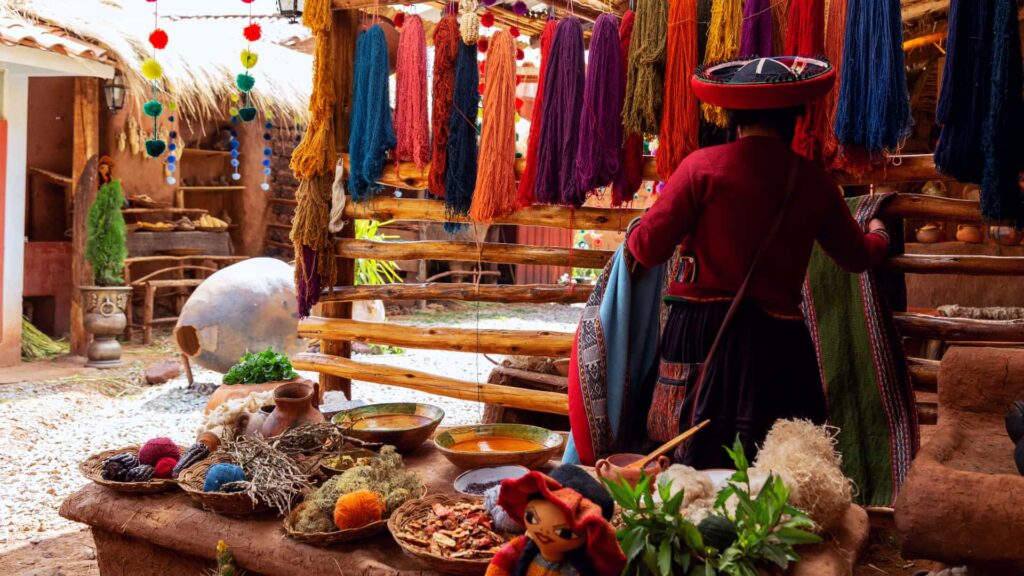
When shopping, you will see labels such as “alpaca”, “baby alpaca” or “vicuña”. This is what they usually mean:
- Alpaca: soft, warm fiber, the most common in quality garments.
- Baby alpaca: usually refers to the finest grade of alpaca fiber, not to fiber from newborn animals.
- Vicuña: one of the finest fibers in the world; garments are scarce and very expensive.
- Llama wool: coarser; used mainly for rustic weavings, blankets and ropes.
Our advice: be wary of “alpaca” garments that are too cheap, because they may be blends or synthetic fiber. Buy from weavers’ associations or trusted shops, where you can see how the work is done and know that the money reaches the families who weave.
Where to See Llamas, Alpacas and Vicuñas in Peru
Many of our day trips from Cusco and Arequipa cross high Andean grazing land. We cannot promise how many animals you will see, and vicuñas are wild, so seeing them is a matter of luck. These are the places where you are most likely to find them:
| Place | What you see | Tour | From |
|---|---|---|---|
| Rainbow Mountain (Vinicunca) | Herds of alpacas and llamas in front of snowcapped peaks, plus wild vicuñas | Rainbow Mountain tour | US$50 |
| Palcoyo | Grazing llamas and alpacas, plus wild vicuñas | Palcoyo tour | US$50 |
| Pallay Punchu | Grazing llamas and alpacas, plus wild vicuñas | Pallay Punchu tour | US$60 |
| Ausangate | Alpacas and llamas in the wetlands at the foot of the glacier, plus vicuñas | Ausangate 7 Lakes tour | US$60 |
| Colca Canyon (puna between Arequipa and Chivay) | Vicuñas and alpacas on the puna | Colca Canyon tour | US$55 |
| Machu Picchu | Llamas grazing inside the citadel | Machu Picchu Full Day | US$300 |
| Downtown Cusco | Women in traditional dress walking with llamas or baby alpacas | On your own | A tip for the photo |
Book with 40%: all our tours to see llamas, alpacas and vicuñas are booked by paying just 40% online. The balance is paid when you arrive in Peru.
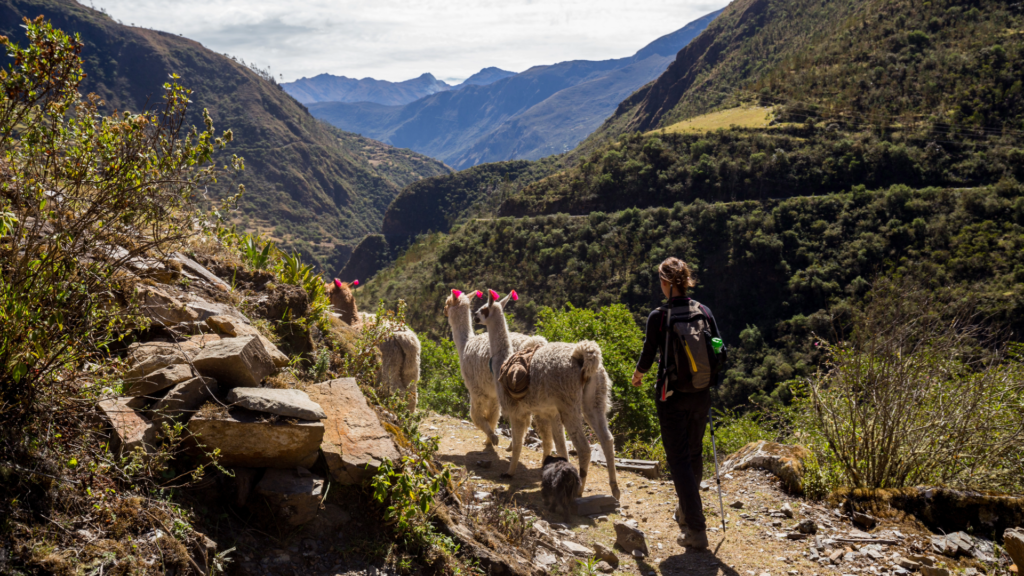
Rainbow mountains. On the way to Rainbow Mountain it is common to see herds of alpacas and llamas with snowcapped peaks behind them, as well as wild vicuñas. Palcoyo and Pallay Punchu, two quieter high Andean routes, cross grazing land where vicuñas are also a common sight.
Ausangate. On the 7 Lakes route, alpacas and llamas graze in the wetlands at the foot of the glacier, and herding communities live in Pacchanta. Read more in our guide to Ausangate.
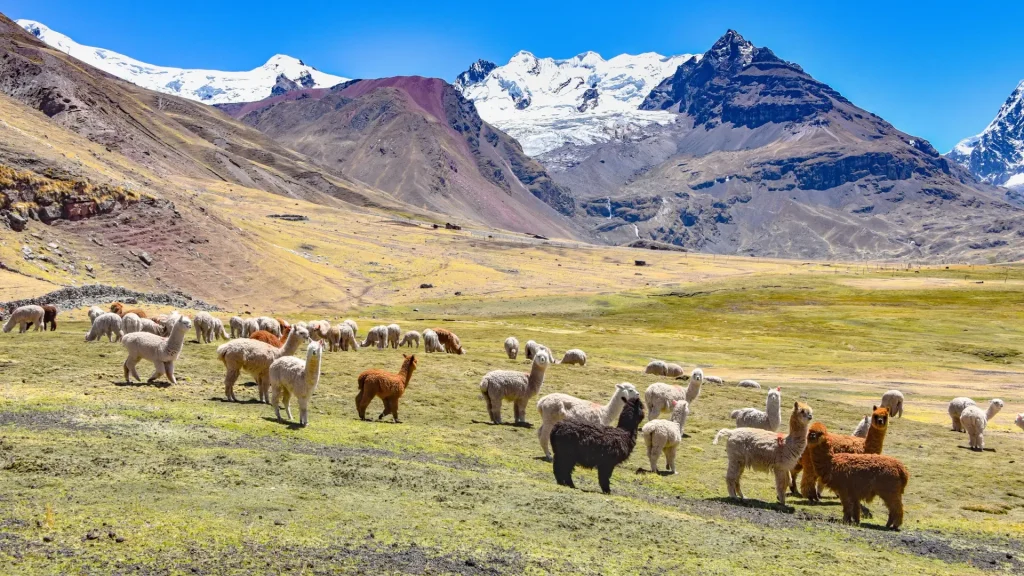
Colca. If you travel to Arequipa, you can also see vicuñas and alpacas on the puna on the way to Colca. The same trip takes you to the Condor Cross, the best viewpoint for the Andean condor.
Machu Picchu and Cusco. Inside the citadel, llamas graze among the terraces: they are part of the scenery, but give them space. In the streets of downtown Cusco, women in traditional dress walk with llamas or baby alpacas and usually ask for a tip for a photo.
How to Photograph Llamas and Alpacas Respectfully
Llamas and alpacas are calm, but they are not pets, and they almost always belong to a family. These tips help make the photo a good experience for everyone:
- Ask first: before touching or photographing an animal, ask its owner.
- If the photo includes a person, ask them too. In Cusco, people who pose with their animals usually ask for a tip: it is part of their income.
- Do not feed them: herders look after what their animals eat, and travelers’ food can make them sick.
- Do not stand behind them: they can get startled and kick.
- Approach slowly and from the front: let the animal see you, and do not chase it if it walks away.
- Use a zoom for vicuñas: they are wild; stay near the vehicle and do not try to get close.
Traveling respectfully also means supporting the communities that raise these animals. Find more ideas in our guide to sustainable tourism in Cusco.
Frequently Asked Questions
Do llamas and alpacas spit at people?
Rarely. They spit mostly at each other, over food or to establish rank in the herd. They usually only spit at a person when they feel bothered or cornered. If you approach calmly and ask the owner first, nothing should happen.
Can you pet an alpaca in Cusco?
Yes, if the owner says it is fine. In downtown Cusco, women in traditional dress walk with llamas or baby alpacas; they usually let you pet them and take a photo in exchange for a tip. Approach slowly and do not stand behind the animal.
Do people eat alpaca meat in Peru?
Yes. Alpaca meat is eaten in Cusco and Puno, for example grilled, and you will find it on the menu at some restaurants. A fun fact: the Quechua word charqui, dried meat, is the likely origin of the English word “jerky”. Discover other dishes in our guide to Andean food in Cusco.
What is baby alpaca?
“Baby alpaca” usually refers to the finest fiber obtained from the alpaca, not to fiber from newborn animals. It is softer than regular alpaca, which is why the garments cost more. Buy it from weavers’ associations or trusted shops.
Where can you see vicuñas near Cusco?
There are plenty of vicuñas in southern Cusco. They are commonly seen on our Rainbow Mountain, Palcoyo, Pallay Punchu and Ausangate tours, on the high puna. Since they are wild, keep your distance and use a zoom to photograph them.
Which camelid appears on Peru’s coat of arms?
The vicuña. On the national coat of arms it stands for the animal kingdom, next to the cinchona tree, which stands for the plant kingdom, and a cornucopia spilling coins, which stands for mineral wealth.
Plan Your Trip to See Llamas and Alpacas
Llamas, alpacas and vicuñas have been part of life in the Andes for thousands of years. Watching them graze in front of a snowcapped peak, meeting the families who raise them and taking home a handmade textile are some of the best memories of a trip to Peru.
To see them from Cusco, choose our Rainbow Mountain tour or the Ausangate 7 Lakes route, where vicuñas are also a common sight, and if you travel to Arequipa, look for them on the puna on the way to Colca. On every tour you pay just 40% online and the rest when you arrive in Peru. If you have questions, contact us and we will help you choose.


