 English
 Español
 Português


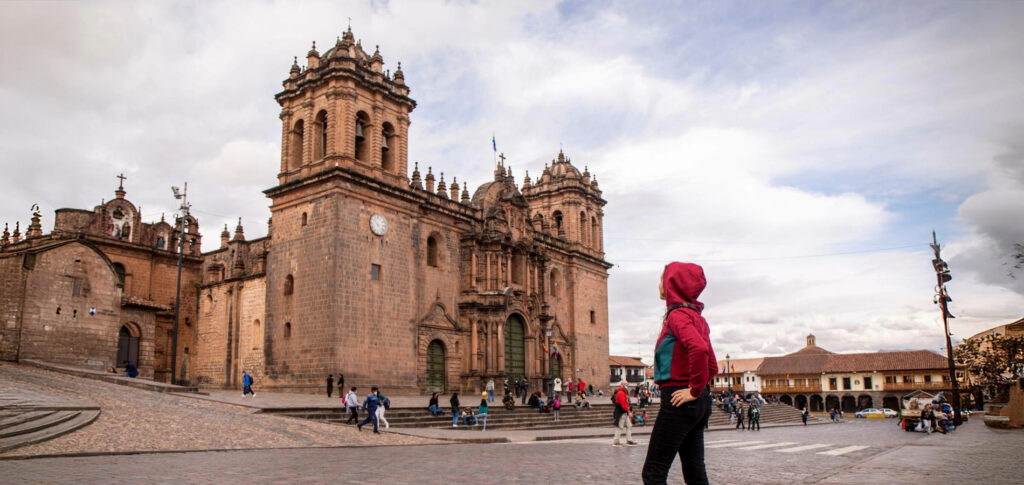
The Cusco elevation is about 3,400 meters (11,150 ft) above sea level. It is one of the highest cities you will visit in Peru: higher than Machu Picchu, at about 2,430 m (7,970 ft), and the Sacred Valley, but well below the rainbow mountains and the high passes of the treks.
We are local guides based in Cusco. In this guide we give you the approximate elevation of every destination we visit, so you can plan your trip from the lowest places to the highest. If you are looking for symptoms and prevention, we cover them in our post on altitude sickness in Peru.
Cusco Elevation: How High Is Cusco, Peru?
Cusco sits at about 3,400 m (11,150 ft) above sea level. The city fills a valley surrounded by hills, so the elevation changes a little from one area to another: neighborhoods that climb the slopes, such as San Blas, are higher than the Plaza de Armas. The Inca complex of Sacsayhuamán, right above the city, is at about 3,700 m (12,140 ft).
Elevation figures vary slightly depending on the source and the exact point measured. That is why we use rounded numbers in this guide: they are for planning your trip, not official measurements.
For reference, above about 2,500 m (8,200 ft) many people start to feel the altitude. Cusco is almost 900 m (2,950 ft) higher than that, and most day trips from the city climb even higher.
Elevation Chart: Cusco and Every Destination We Visit
These are the approximate elevations of the places we visit, grouped by area. For treks, we list the highest point of the route. The “Tour” column shows the tour you can take with us to visit each place.
| Area | Destination | Approx. elevation | Tour |
|---|---|---|---|
| Cusco | Cusco (city) | 3,400 m (11,150 ft) | Cusco City Tour |
| Cusco | Sacsayhuamán | 3,700 m (12,140 ft) | Cusco City Tour |
| Cusco | South Valley, highest point of the tour | 3,600 m (11,810 ft) | South Valley Tour |
| Sacred Valley | Pisac, Urubamba and Ollantaytambo | 2,800–3,000 m (9,190–9,840 ft) | Sacred Valley VIP Tour |
| Sacred Valley | Moray and Maras | 3,500 m (11,480 ft) | Maras Moray Tour |
| Machu Picchu | Aguas Calientes | 2,040 m (6,690 ft) | Machu Picchu 2 Days |
| Machu Picchu | Machu Picchu citadel | 2,430 m (7,970 ft) | Machu Picchu Full Day |
| Machu Picchu | Huayna Picchu | 2,700 m (8,860 ft) | Separate ticket, on request |
| Machu Picchu | Machu Picchu Mountain | 3,060 m (10,040 ft) | Separate ticket, on request |
| Treks | Short Inca Trail, highest point | 2,700 m (8,860 ft) | Short Inca Trail |
| Treks | Choquequirao | 3,050 m (10,010 ft) | Choquequirao Trek |
| Treks | Inca Trail, Dead Woman’s Pass (Warmiwañusca) | 4,200 m (13,780 ft) | Classic Inca Trail |
| Treks | Humantay Lake | 4,200 m (13,780 ft) | Humantay Lake Tour |
| Treks | Lares, highest point | 4,400 m (14,440 ft) | Lares Trek |
| Treks | Salkantay Pass | 4,600 m (15,090 ft) | Salkantay Trek |
| Mountains | Pallay Punchu | 4,800 m (15,750 ft) | Pallay Punchu Tour |
| Mountains | Ausangate lakes | 4,850 m (15,910 ft) | Ausangate 7 Lakes |
| Mountains | Palcoyo | 4,900 m (16,080 ft) | Palcoyo Tour |
| Mountains | Rainbow Mountain (Vinicunca) | 5,200 m (17,060 ft) | Rainbow Mountain Tour |
| Mountains | Palomani Pass (Ausangate, 5 days) | 5,200 m (17,060 ft) | Ausangate Trek |
| Southern Peru | Puno and Lake Titicaca | 3,810 m (12,500 ft) | Uros and Taquile Islands |
| Southern Peru | Sillustani | 3,900 m (12,800 ft) | Sillustani and Lake Titicaca |
| Southern Peru | Arequipa | 2,335 m (7,660 ft) | Arequipa City Tour |
| Southern Peru | Colca Canyon: Chivay / Patapampa viewpoint | 3,600 m (11,810 ft) / 4,900 m (16,080 ft) | Colca Canyon Tour |
| Coast and jungle | Lima | Sea level | — |
| Coast and jungle | Máncora | Sea level | Máncora Beaches |
| Coast and jungle | Tambopata | 200 m (660 ft) | Lake Sandoval Tambopata |
The chart makes two things clear. Machu Picchu, the Sacred Valley and Arequipa are lower than Cusco; the rainbow mountains, Ausangate and the trek passes are much higher. And Puno, on the shore of Lake Titicaca, is even higher than Cusco, which surprises many travelers. We explain more in our Lake Titicaca guide.

Will You Feel the Cusco Elevation When You Arrive?
Yes, most travelers feel it, especially those who fly in from Lima, which is at sea level. The usual signs are getting tired faster on stairs or steep streets and feeling short of breath. Everyone reacts differently, and being fit does not guarantee you won’t feel it.
We Cusqueños have always lived at this height and our bodies are adapted. If you are curious, we explain it in why locals don’t get altitude sickness. For visitors, the key is to give yourself time:
- Take the first days easy: walk slowly, rest and don’t overload your schedule.
- Water and light meals: stay well hydrated and avoid heavy food.
- No alcohol at first: save it for when you are acclimatized.
- Coca tea: the traditional Andean infusion, which you will find in hotels and cafés around the city.
- Medical advice: if you have a pre-existing health condition, talk to your doctor before you travel.
How to Acclimatize to Cusco Elevation: Go from Low to High
The best strategy is to plan your trip so you climb gradually. Since the Sacred Valley and Machu Picchu are lower than Cusco, you can start there and leave the highest excursions for the end. This is the order we usually recommend:
- Sacred Valley (2,800–3,000 m / 9,190–9,840 ft): when you arrive, head down to the valley or explore it in your first days with our Sacred Valley VIP Tour.
- Machu Picchu (2,430 m / 7,970 ft): from the valley you keep going down. On the 2-day Machu Picchu tour you sleep in Aguas Calientes, at about 2,040 m (6,690 ft).
- Cusco (3,400 m / 11,150 ft): back in the city, you have already spent several days in the Andes. Now is the time for the Cusco City Tour, which goes up to Sacsayhuamán, and for Moray and Maras.
- High day trips: next come the Humantay Lake tour (4,200 m / 13,780 ft) or the Rainbow Mountain tour (5,200 m / 17,060 ft). Both leave from Cusco and return the same day.
- Multi-day treks: the Inca Trail, Salkantay, Lares or Ausangate, once you have spent some time at altitude.
If you are traveling through southern Peru, there is another good option: start in Arequipa (2,335 m / 7,660 ft), continue to Puno (3,810 m / 12,500 ft) and reach Cusco already acclimatized. We show routes like this in our 7 to 10-day Peru itinerary.
Local guide tip: if this is your first time at altitude, don’t book Rainbow Mountain, Humantay or a trek for the day after you land in Cusco. Start low, with the Sacred Valley and Machu Picchu, and save the highest places for the end of your trip.
Is Machu Picchu Lower Than Cusco?
Yes. Machu Picchu is at about 2,430 m (7,970 ft), almost 1,000 m (3,280 ft) below Cusco, and the town of Aguas Calientes is at about 2,040 m (6,690 ft). The citadel lies on the edge of the cloud forest, where the air is warmer and more humid than in Cusco. That makes it a comfortable destination for the first days of your trip.
What does rise are the mountains next to the citadel: Huayna Picchu reaches about 2,700 m (8,860 ft) and Machu Picchu Mountain about 3,060 m (10,040 ft). Even so, both are lower than Cusco; the challenge is the steep stone stairs, not the altitude. Each one requires its own limited ticket. If you want to climb, write to us when you book and we will arrange it with your tour.
You can visit in one day with our Machu Picchu Full Day tour, or take it slower and sleep down in the valley with the Machu Picchu tour, 2 days and 1 night.
The Highest Treks and Mountains from Cusco
On these routes, altitude really is the main factor. Here they are from highest to lowest:
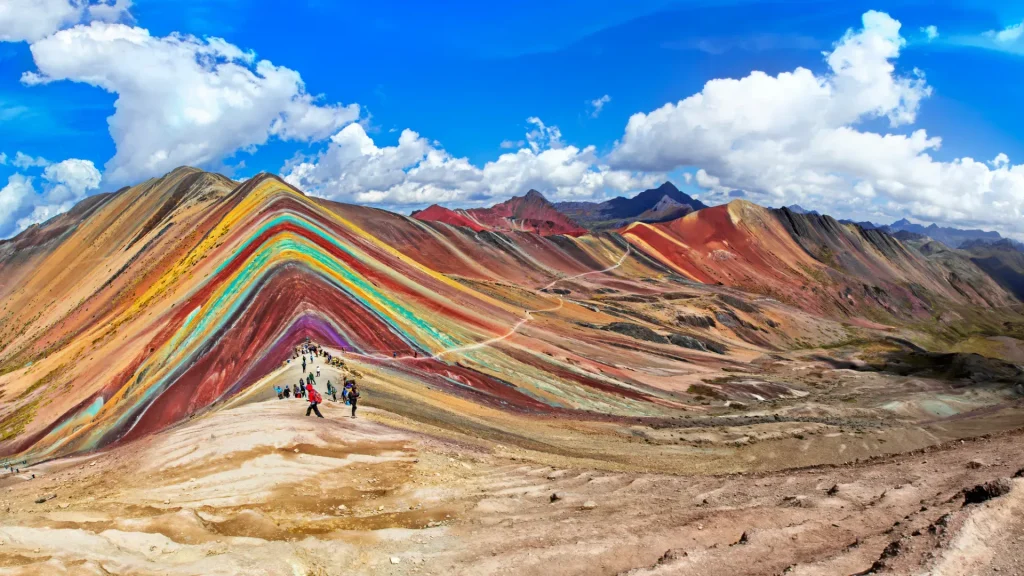
- Rainbow Mountain (Vinicunca), about 5,200 m (17,060 ft): a day trip; you go up and come back to sleep in Cusco. All the details are in our Rainbow Mountain Peru guide.
- Palomani Pass, about 5,200 m (17,060 ft): the highest point of the 5-day route around Ausangate, with high-altitude camps such as Upis, at about 4,400 m (14,440 ft).
- Palcoyo (about 4,900 m / 16,080 ft) and Pallay Punchu (about 4,800 m / 15,750 ft): two other rainbow mountains, also day trips from Cusco.
- Ausangate lakes, about 4,850 m (15,910 ft): a one-day loop hike below the snow-capped peak, from about 4,300 m to 4,850 m (about 14,100 to 15,910 ft).
- Salkantay Pass, about 4,600 m (15,090 ft): the highest point of the Salkantay route; the first night is spent in Soraypampa, at about 3,900 m (12,800 ft).
- Lares, about 4,400 m (14,440 ft): the highest pass on this route through Andean communities.
- Dead Woman’s Pass and Humantay Lake, about 4,200 m (13,780 ft): the highest pass on the classic Inca Trail (explained in our Inca Trail to Machu Picchu guide) and the turquoise lake at the foot of Salkantay.
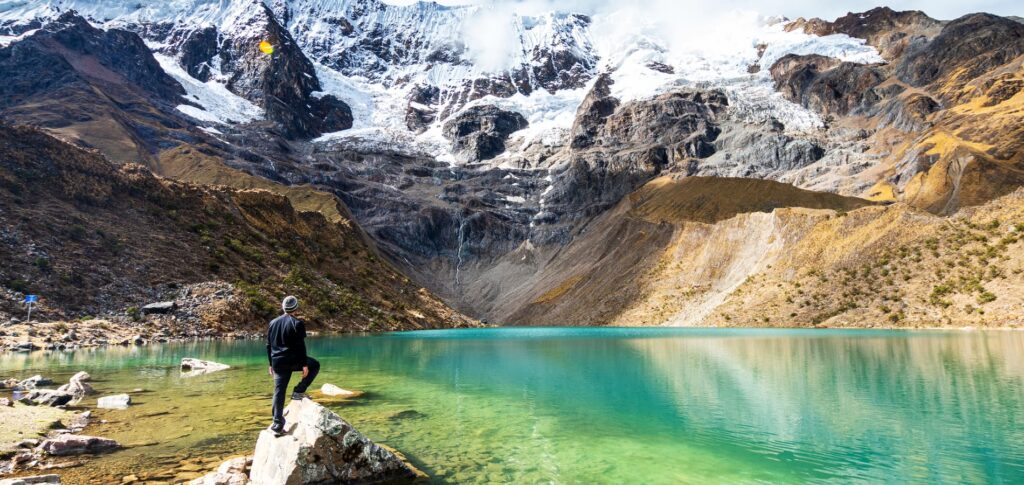
Day trips climb very high, but you come back down to sleep in Cusco that same night. On multi-day treks, by contrast, you sleep at altitude. For those, we recommend arriving in Cusco with a couple of days to spare. To compare routes, take a look at the 5-day Salkantay Trek or the 5-day Ausangate Trek.
Frequently Asked Questions
What is the elevation of Cusco in feet and meters?
Cusco is at about 3,400 m above sea level, which is about 11,150 ft. Sacsayhuamán, above the city, is at about 3,700 m (12,140 ft).
Which is higher, Cusco or Machu Picchu?
Cusco. Machu Picchu is at about 2,430 m (7,970 ft), almost 1,000 m lower. Even Machu Picchu Mountain, at about 3,060 m (10,040 ft), is below the city.
How many days do I need to acclimatize in Cusco?
It depends on each person. We recommend taking the first days easy, or starting in the lower Sacred Valley, and leaving excursions above 4,000 m (13,120 ft) for later.
What is the highest place you can visit from Cusco?
Among our tours, Rainbow Mountain (Vinicunca) and Palomani Pass, on the 5-day Ausangate route, both at about 5,200 m (17,060 ft).
Is Puno higher than Cusco?
Yes. Puno and Lake Titicaca are at about 3,810 m (12,500 ft), roughly 400 m (1,310 ft) above Cusco. If you arrive from Cusco, you will already be fairly well acclimatized.
How do I book your tours?
All our tours are booked by paying 40% online; the balance is paid when you arrive in Peru. Our guides speak English, Spanish and Portuguese.
Plan Your Trip Around the Altitude
Cusco is at about 3,400 m (11,150 ft). From there you go down to Machu Picchu and the Sacred Valley, or up to more than 5,000 m (16,400 ft) at the rainbow mountains. With the chart in this guide, you can plan your trip from low to high and arrive rested for the most demanding excursions.
Start with the Sacred Valley VIP Tour and the 2-day Machu Picchu tour, and finish with the Rainbow Mountain tour. You book with 40% online and pay the rest when you arrive in Peru.


