English
 Español
 Português


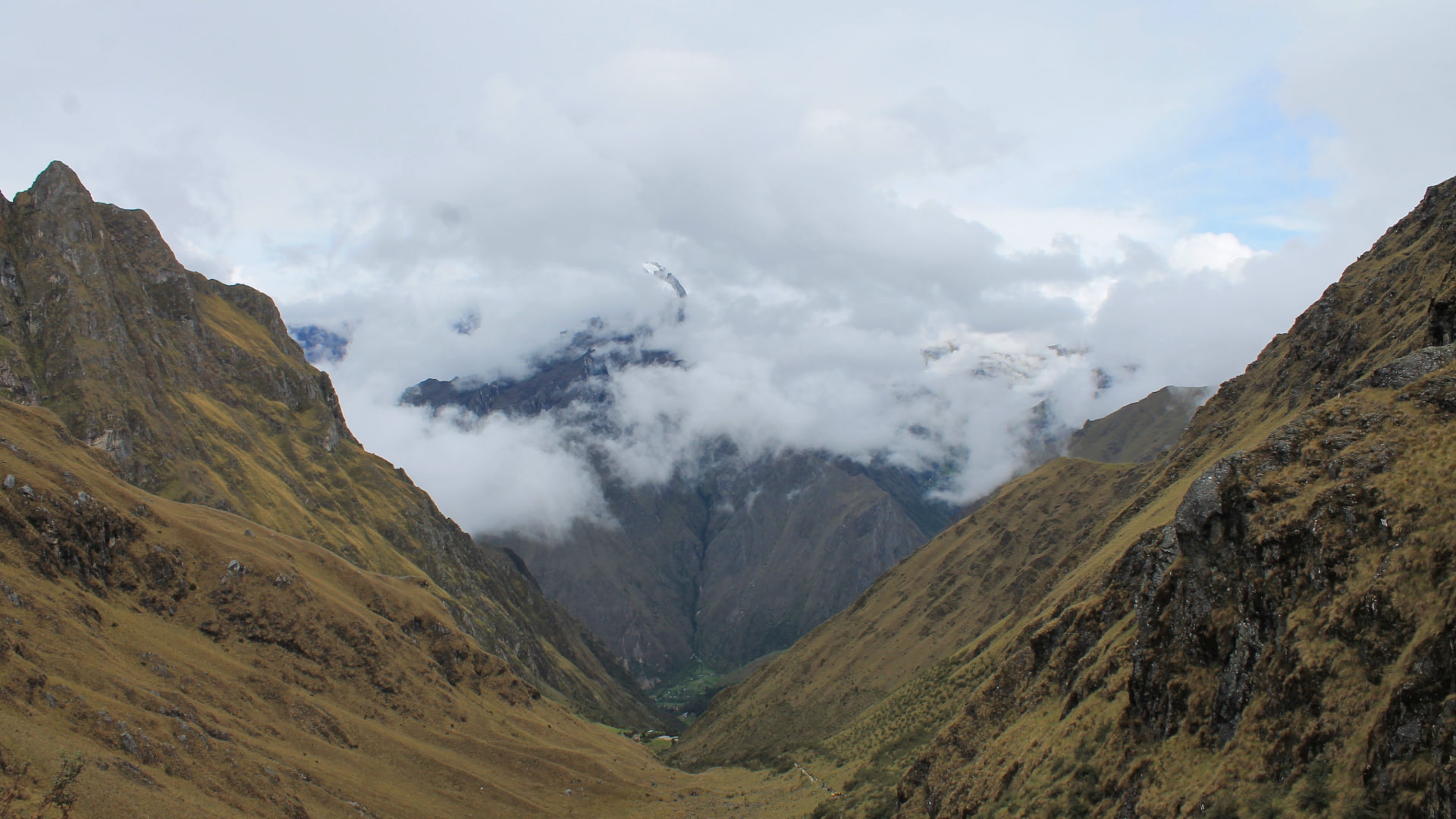
Dead Woman’s Pass, called Warmiwañusca in Quechua, is the highest point of the Classic Inca Trail to Machu Picchu, at 4,215 m (13,828 ft). Hikers cross it on the second day of the trek after a long, steep climb. With good acclimatization, a steady pace and the right gear, most reasonably fit travelers make it to the top.
For many people it is the hardest moment of the Classic Inca Trail, and also one of the most memorable. Reaching the pass tests both body and mind, and the reward is a sweeping view of the Andes and a deeper feeling for the land the Incas walked.

Why Is It Called Dead Woman’s Pass?
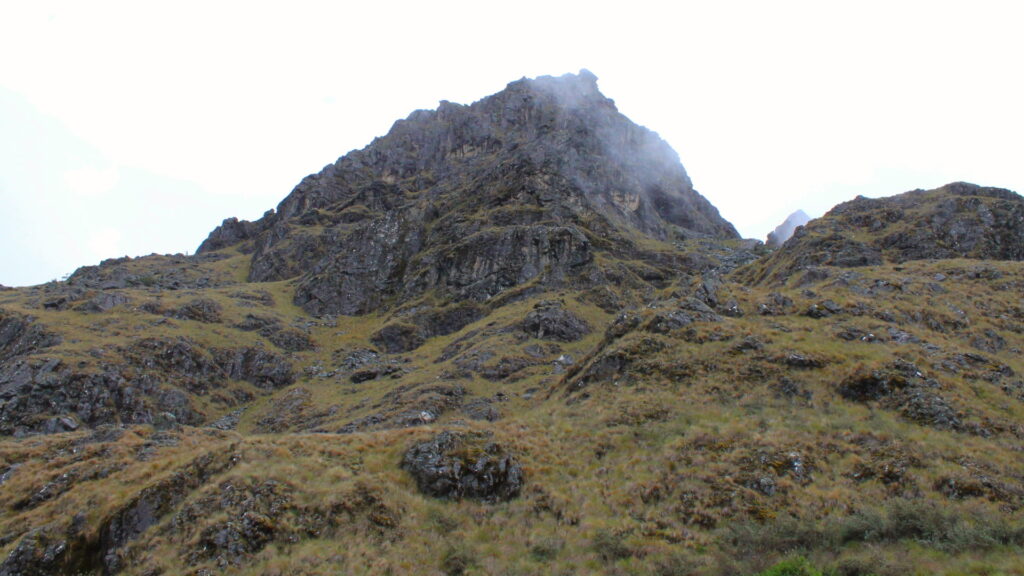
The name Warmiwañusca comes from Quechua and means “dead woman.” It refers to the shape of the mountain, whose outline resembles the profile of a woman lying down. Local stories about protective spirits and ancient offerings are also tied to this place.
As you walk through the pass, you can sense the deep bond that Andean people have with their surroundings, a relationship built on respect and gratitude toward Pachamama, Mother Earth.
How Hard Is the Climb to Dead Woman’s Pass?
This is one of the most demanding sections of the Inca Trail. The path climbs steadily and gets steeper the higher you go, with many stone steps and thinner air near the top. The effort pays off with spectacular views and a real sense of achievement.
You do not need to be an athlete, but you should be in good physical shape and already acclimatized to the altitude before you start. On our treks, travelers stop often to rest and take in the scenery. Speed does not matter: what counts is keeping a steady rhythm and enjoying the journey.
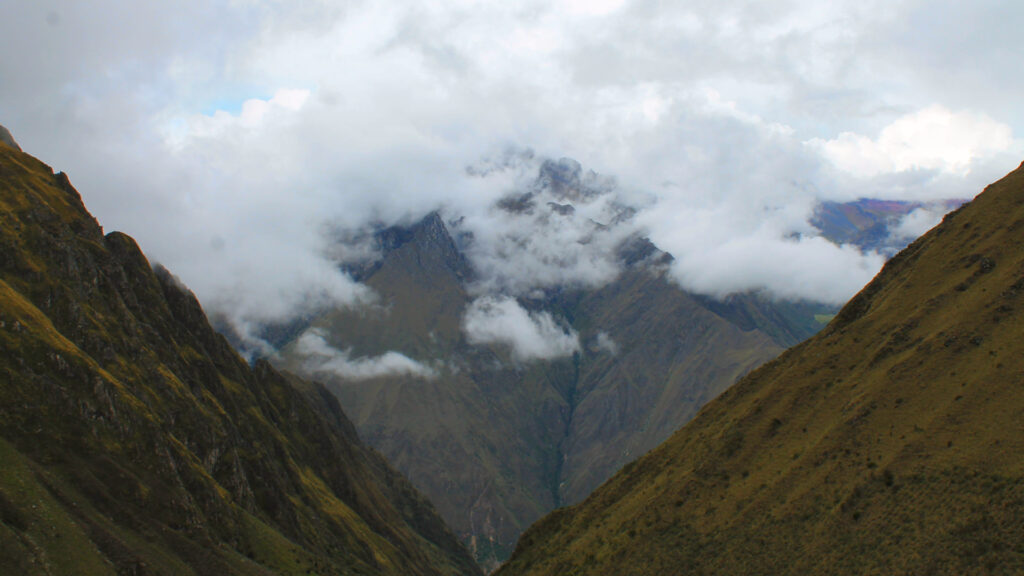
Landscapes and Wildlife on the Way Up
The climb takes you through a striking change of ecosystems, from cloud forest full of bromeliads and orchids to the rocky, high-altitude terrain around the pass.
- Flora: along the trail you will see native species such as Polylepis trees and large ferns, plants well adapted to the harsh conditions of the Andes.
- Fauna: llamas and alpacas can be seen in the surrounding area, along with birds such as the giant hummingbird.
This natural variety makes the route especially rewarding for nature and photography lovers.

How to Prepare for Dead Woman’s Pass
- Acclimatize first: spend a few days in Cusco before the trek to reduce altitude discomfort. A gentle Cusco city tour is a good way to use those days.
- Bring the right gear: thermal layers, good hiking boots and trekking poles, which help a lot on the descent. Sunscreen and a hat are essential.
- Water and snacks: stay hydrated and carry light, energy-rich snacks such as nuts and cereal bars.
- Go with a local guide: a good guide knows the terrain, sets a safe pace and shares the stories behind the trail.
- Respect the environment: carry out your trash and always stay on the marked path to protect this heritage.
Our advice: climb slowly, with short steps and regular breathing, and stop briefly whenever you need to. A steady pace gets you to the top in better shape than a fast start.
What to Do at the Top
- Take photos: the panoramic view over the surrounding valleys and peaks is one of the best on the trail.
- Pause and reflect: the quiet and beauty of the pass make it a good place to connect with nature and with yourself.
- Make an offering to Pachamama: many hikers join in a small gesture of gratitude to Mother Earth, out of respect for the land and Andean culture.
Weather at the pass changes quickly, so be ready for wind, cold and clouds that can roll in and out within minutes.
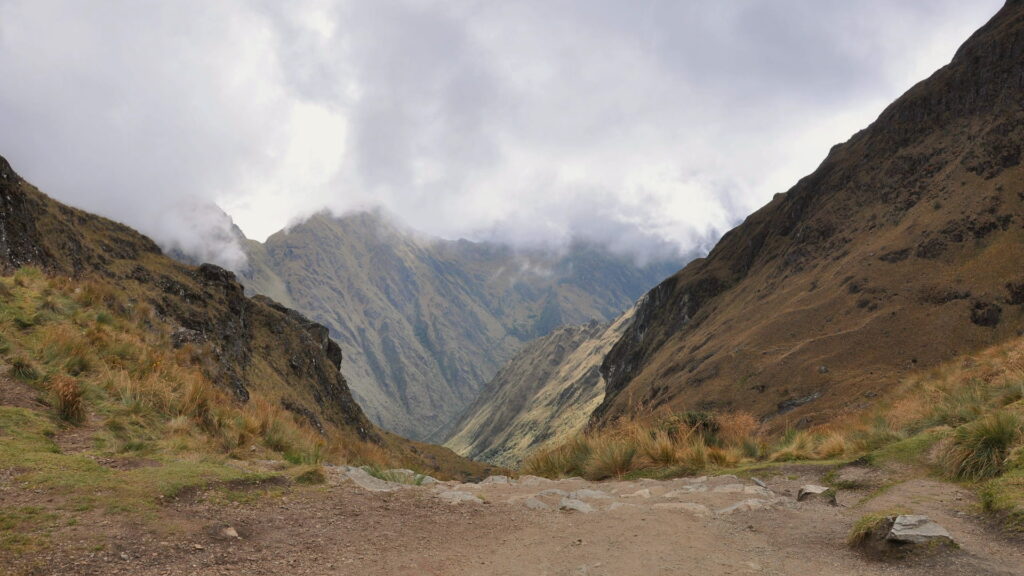
The Descent to the Pacaymayo Valley
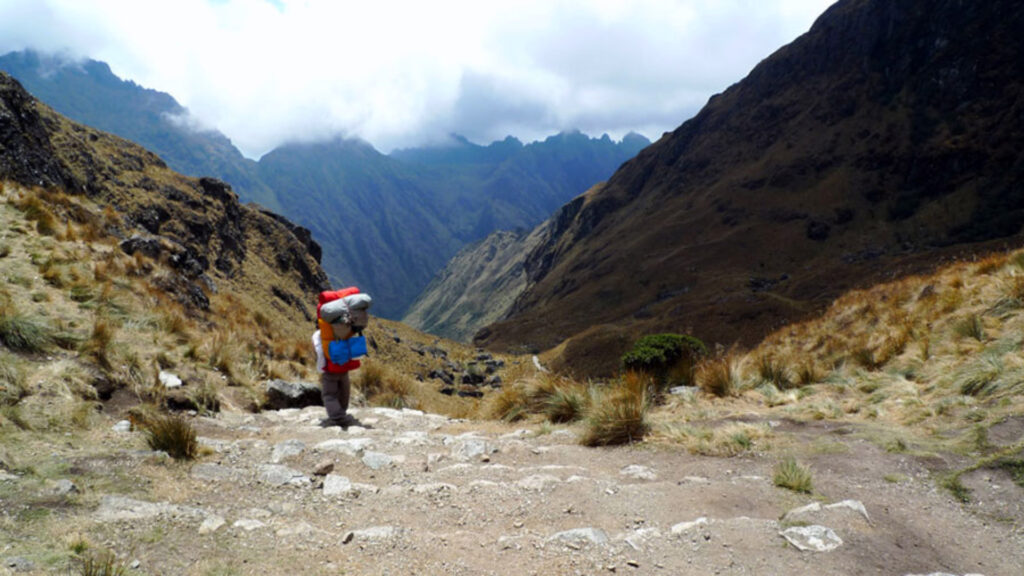
After enjoying the view, the trail drops toward the Pacaymayo Valley. For many hikers this stretch is as hard as the climb, or harder: legs already tired from the ascent must handle a steep, rocky path. Take your time, use your trekking poles and watch your footing on the stone steps.
Approximate elevations. The highest point is marked in red. See the tour from US$650
The Classic Inca Trail day by day. Here is a summary of what this guide covers about each stretch, in the order you walk them:
| Day | Stretch or place | What you will find |
|---|---|---|
| Before the trek | Cusco | A few days to acclimatize to the altitude. A gentle Cusco City Tour (US$40) is a good way to use them. |
| Day 2 | Climb to Dead Woman’s Pass | A long, steep climb with many stone steps and thinner air near the top. You go from cloud forest full of bromeliads and orchids to rocky high-altitude terrain, with Polylepis trees and large ferns; llamas, alpacas and the giant hummingbird can be seen in the surrounding area. |
| Day 2 | Top of the pass, at about 4,215 m (13,830 ft) | The highest point of the Classic Inca Trail. Panoramic views of valleys and peaks, and many hikers make a small offering to Pachamama. The weather changes fast: wind, cold and clouds. |
| After the pass | Descent to the Pacaymayo Valley | A steep, rocky path that many hikers find as hard as the climb, or harder. Use your trekking poles and watch your footing on the stone steps. |
| End of the trail | Machu Picchu | You arrive on foot, along the path the Incas built. It is the goal of our Classic Inca Trail (4 days / 3 nights, US$650). |
Is Dead Woman’s Pass Worth It?
Crossing Warmiwañusca is more than a physical challenge. With every step you follow a path the Incas built centuries ago, and reaching the top is a reminder of how much we can achieve with patience and effort. Each stretch brings you closer to Machu Picchu and to a better understanding of Andean history, nature and your own limits.
If you prefer a shorter hike, the Short Inca Trail follows a different section of the route and does not cross Dead Woman’s Pass, while still reaching Machu Picchu on foot. And if you cannot get a permit, our Salkantay guide covers another route with a high pass that ends at Machu Picchu without an Inca Trail permit.
Ready to take on the highest point of the trail? Book the Classic Inca Trail 4 days / 3 nights with our local team, or contact us with any questions about preparation and dates.