English
 Español
 Português


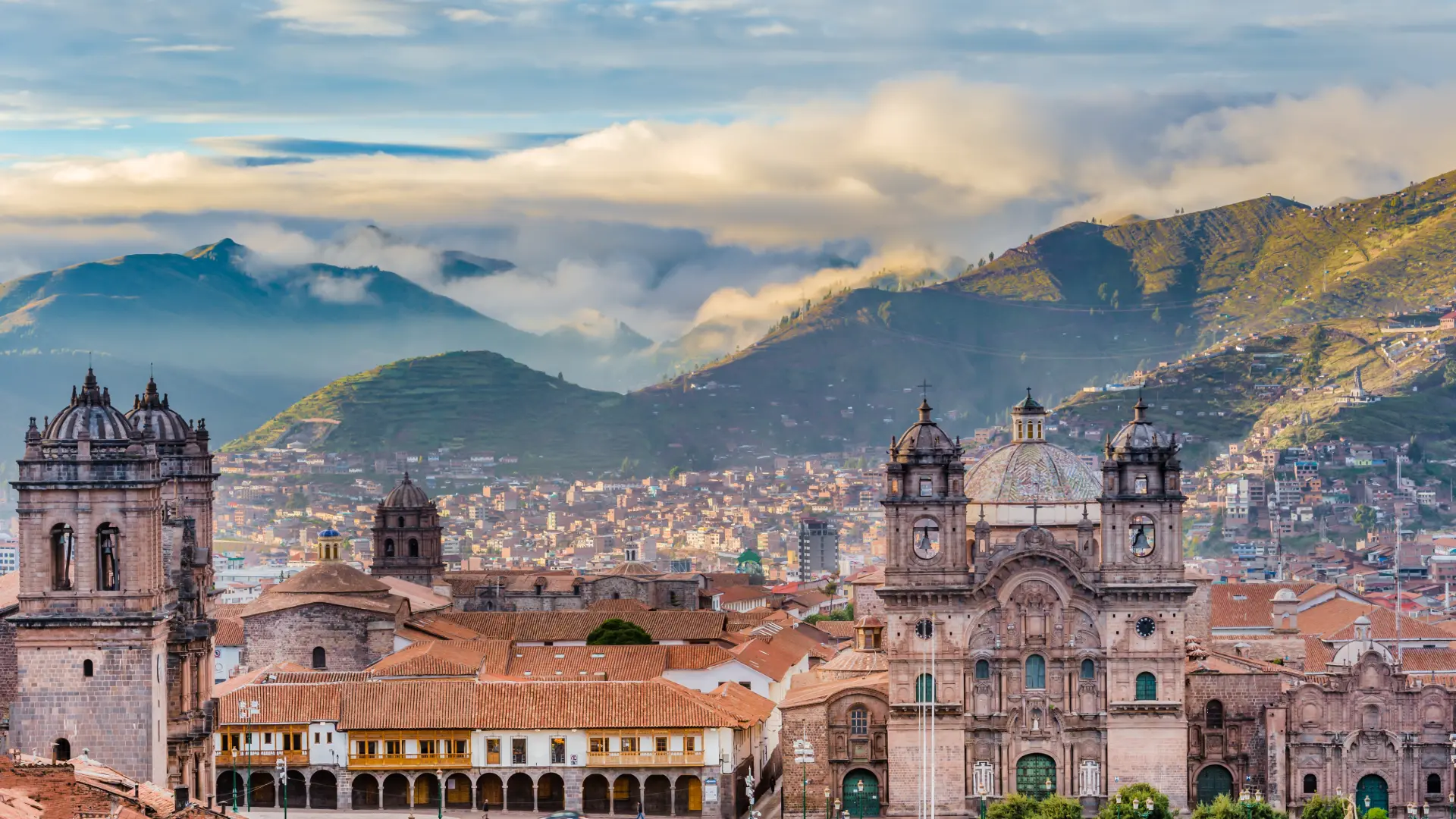
The Plaza de Armas is Cusco’s main square and the heart of its historic center, at about 3,400 m (11,150 ft). In Inca times it was called Huacaypata and was the ceremonial center of the capital of the Tawantinsuyo. Today it is framed by the Cathedral, the Church of La Compañía de Jesús and colonial arcades with wooden balconies.
In short: the square is public and free, and the Cathedral needs a ticket. Our Cusco City Tour starts with the square and the Cathedral, continues to the Qorikancha and Sacsayhuamán with entrance fees and a guide included, costs from US$40, and you book it by paying just 40% online.

Cusco’s main square at a glance
| Fact | Detail |
|---|---|
| Inca name | Huacaypata (also spelled Haukaypata or Aucaypata), joined to the Cusipata square |
| Altitude | About 3,400 m (11,150 ft) |
| Churches | The Cathedral, with the chapels of El Triunfo and La Sagrada Familia, and the Church of La Compañía de Jesús |
| In the center | A fountain topped by a golden statue of Pachacútec |
| Heritage | Part of the City of Cuzco, a UNESCO World Heritage Site since 1983 |
| Entry | Free to the square; the Cathedral needs a ticket |
| With a guide | Cusco City Tour, from US$40 |
History: from the Inca Huacaypata to the Plaza de Armas
In Inca times the square was much larger than today. The Saphi River, now channeled beneath the streets, split it in two: Huacaypata, where the Plaza de Armas is today, and Cusipata, around today’s Plaza Regocijo. It hosted the great festivals, religious ceremonies and military victory celebrations, and the palaces of the Incas stood around it, as our Pachacútec guide explains.
Huacaypata is often translated as “place of weeping”, but scholars do not agree on its meaning or its original form. That is why you will also see it spelled Haukaypata or Aucaypata.
On March 23, 1534, Francisco Pizarro founded the Spanish city of Cusco here. The large Inca space was divided into smaller squares, and churches were built on top of the palaces: the Cathedral on the Kiswarkancha, attributed to the Inca Wiracocha, and La Compañía de Jesús on the Amarucancha, the palace of Huayna Cápac.
The square has also seen hard times. On May 18, 1781, Túpac Amaru II, leader of the great Indigenous rebellion against colonial rule, was executed here, on the same day as his wife, Micaela Bastidas, and part of his family.

What to see in the Plaza de Armas
Cusco Cathedral
It is the largest building on the square. Construction began in 1560 on the Kiswarkancha and took almost a century: the first mass was held in 1654. On either side stand the chapel of El Triunfo, where the square’s first Christian church was built, and the chapel of La Sagrada Familia.
Inside is a large collection of colonial paintings from the Cusco School. The most famous is the Last Supper by Marcos Zapata (1753): in the middle of the table there is a cuy (guinea pig), the Andean dish you will meet in our Andean food guide. One of its towers holds the María Angola bell, cast in 1659.
The Cathedral needs a ticket, and photos may be restricted inside. Our Cusco City Tour includes the entrance and a guide who explains its works.
The Church of La Compañía de Jesús
It is the other great church on the square. The Jesuits built it on the Amarucancha, the palace of Huayna Cápac. The 1650 earthquake destroyed the first church, and the current one, with its stone Baroque facade, was finished in 1668.
The fountain and the statue of Pachacútec
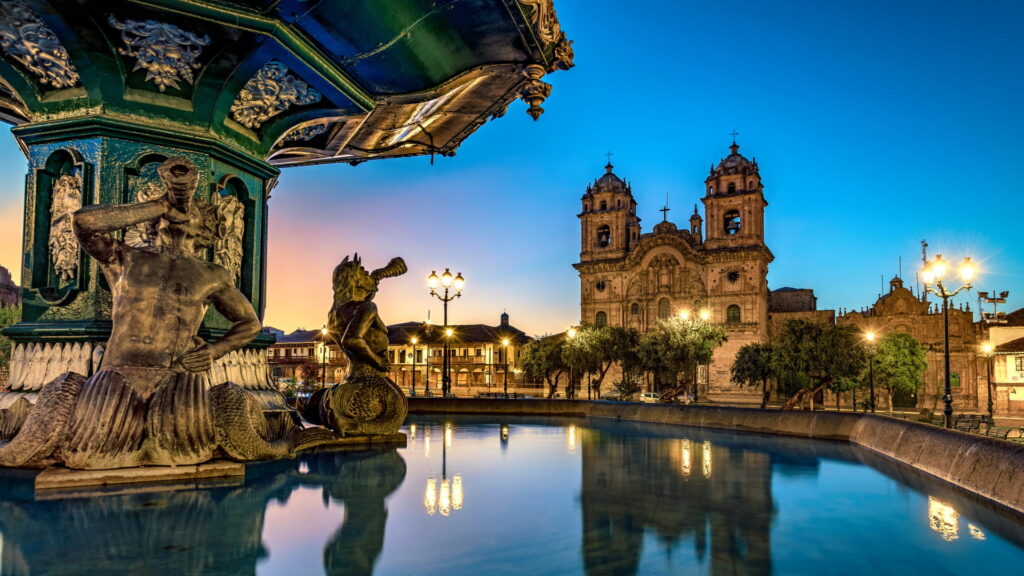
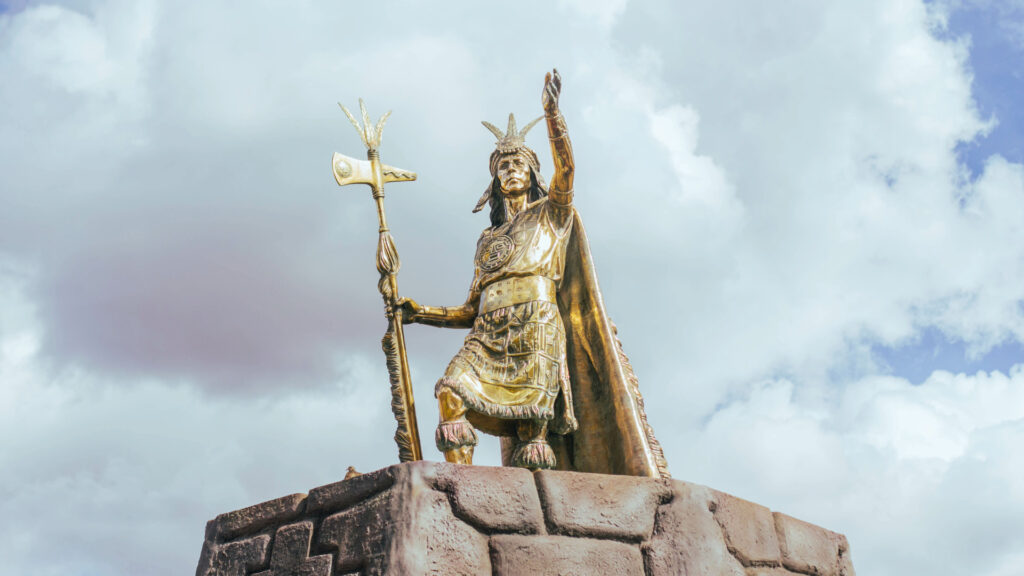
In the middle of the square is a fountain topped by a golden statue of Pachacútec, the Inca who made Cusco the capital of the Tawantinsuyo. It is a usual meeting point and one of the favorite spots for photos.
The arcades and balconies
Colonial arcades with shops, cafés and restaurants run around the square, with wooden balconies above them. From some balconies you can see the whole square with the Cathedral and the hills behind: a good plan for the afternoon of your first day, while you get used to the altitude.
Festivals in the Plaza de Armas in 2027
The square is the stage for Cusco’s great festivals. These are the 2027 dates, the same as in our Cusco festivals guide:
| Festival | 2027 date | What happens in the square |
|---|---|---|
| Holy Week (Holy Monday) | March 22 | The Lord of the Earthquakes (Señor de los Temblores), patron of Cusco, is carried in procession through the historic center |
| Corpus Christi | May 26 and 27; octave on June 3 | Saints and virgins from the parishes arrive in procession and stay in the Cathedral for several days |
| Inti Raymi | June 24 | Second stage of the ceremony, mid-morning; free to watch, standing |
| Santurantikuy | December 24 | A fair of handicrafts, local products and nativity figures |
Tips for visiting the Plaza de Armas
- Entry: the square is public and free, day and night.
- Altitude: you are at about 3,400 m. On your first day walk slowly, drink water and leave the climbs for later; more in our altitude sickness guide.
- When to go: mornings are usually quieter, and at dusk the churches are lit up. During the big festivals it fills with people.
- Your belongings: in crowds, wear your backpack in front and keep your phone close; more in Is Peru safe?.
- Meeting point: if you don’t want to wait at your hotel, you can also meet the City Tour group in the square; we arrange it when we confirm your booking.
What to see near the Plaza de Armas
| Place | How to get there from the square | More information |
|---|---|---|
| Qorikancha, the Temple of the Sun | A few blocks away, on foot | Coricancha and Sacsayhuamán |
| San Blas neighborhood, via Hatun Rumiyoc street and the 12-angled stone | On foot, uphill | Cusco travel tips |
| San Pedro Market | On foot | Things to do in Cusco |
| Sacsayhuamán | Above the city; by transport or walking uphill | Coricancha and Sacsayhuamán |
Tours from Cusco to round out your visit
You can walk around the square in a short time. To see the rest of the city and its surroundings, these are our closest tours:
| Tour | Duration | Price | Pay online (40%) |
|---|---|---|---|
| Cusco City Tour | About 5 hours, in the afternoon | US$40 | US$16 |
| Maras Moray Tour | Half day | US$30 | US$12 |
| South Valley Tour | 1 day | US$45 | US$18 |
| Sacred Valley VIP | 1 day | US$90 | US$36 |
| Machu Picchu Full Day | 1 day | US$300 | US$120 |
Book with 40%: all our tours are booked by paying just 40% online; the balance is paid when you arrive in Peru. The City Tour runs in the afternoon, is low difficulty and includes hotel pickup.
Frequently asked questions
What was Cusco’s main square called in Inca times?
Huacaypata, also spelled Haukaypata or Aucaypata. Together with Cusipata it formed a large ceremonial square, much bigger than today’s.
Do you have to pay to enter the Plaza de Armas?
No. The square is public and free. What you pay for is the Cathedral entrance, which is included in our Cusco City Tour.
Which churches are on the Plaza de Armas?
The Cathedral, with the chapels of El Triunfo and La Sagrada Familia, and the Church of La Compañía de Jesús.
How much time do I need to visit it?
A short walk is enough to see the square. If you want to go inside the Cathedral and learn its history, it is best with a guide, as on the City Tour, which lasts about 5 hours and continues to the Qorikancha and Sacsayhuamán.
What is the golden statue in the middle of the square?
It is Pachacútec, the Inca who made Cusco the capital of the Tawantinsuyo. It stands on the central fountain; his story is in our Pachacútec guide.
Want to see the square and the Cathedral with a local guide? Book your Cusco City Tour by paying 40% online, or contact us and we will help you plan your days in Cusco.