English
 Español
 Português


The South Valley of Cusco is the area southeast of the city, along the road to Puno, home to Tipón, Pikillacta and Andahuaylillas. In one morning you see Inca water engineering, a Wari city older than the Incas and a colonial church known as the “Sistine Chapel of the Americas”.
We are local guides from Cusco and we run this route all year round. In this guide we explain what you will see at each stop, how the visit works, how tickets and the Cusco Tourist Ticket apply, how it compares with the Sacred Valley and what to eat along the way.
What Is the South Valley in Cusco?
When people in Cusco talk about the South Valley, they mean the towns and sites southeast of the city, along the highway that runs toward Puno. It is a quieter route than the Sacred Valley, with farm fields, small towns and three stops that each tell a different chapter of Andean history.
- Tipón: an Inca site famous for its terraces, canals and fountains.
- Pikillacta: a city of the Wari culture, which spread across the Andes before the Incas.
- Andahuaylillas: a town with the colonial church of San Pedro Apóstol, famous for its murals and gilded altars.
The sites are between 40 minutes and 1.5 hours by vehicle from Cusco, so the whole visit fits into half a day. It is a good choice for an acclimatization day, for travelers who have already seen the Sacred Valley, or for anyone who wants to see more than the Inca legacy.
Tipón: Inca Water Engineering
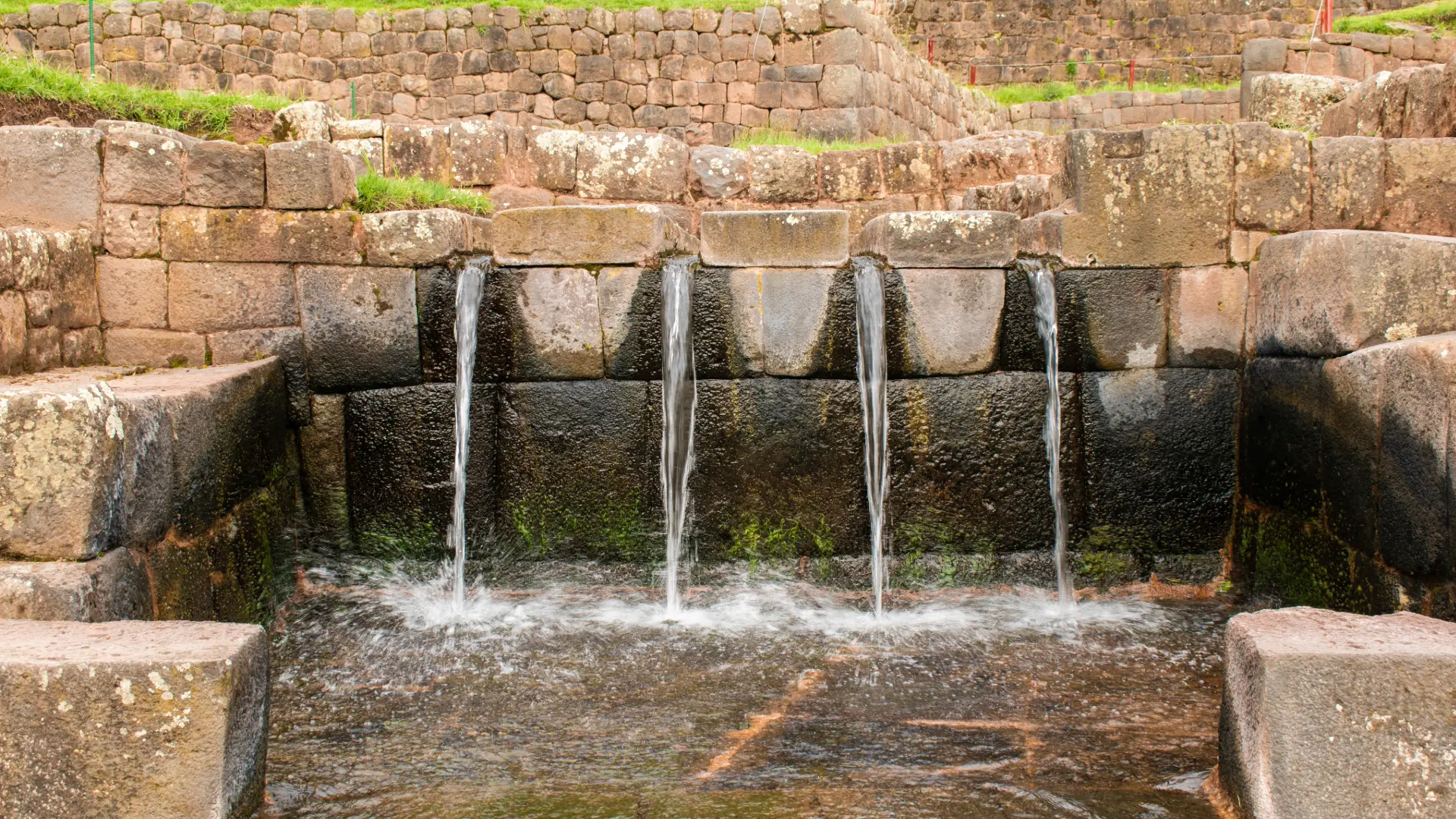
Tipón is one of the best places in Cusco to understand how the Incas managed water. The site is made up of large terraces framed by stone walls and crossed by canals and fountains that still carry water from a spring. The most impressive part is that the system still works: water flows through the same stone channels the Incas designed.
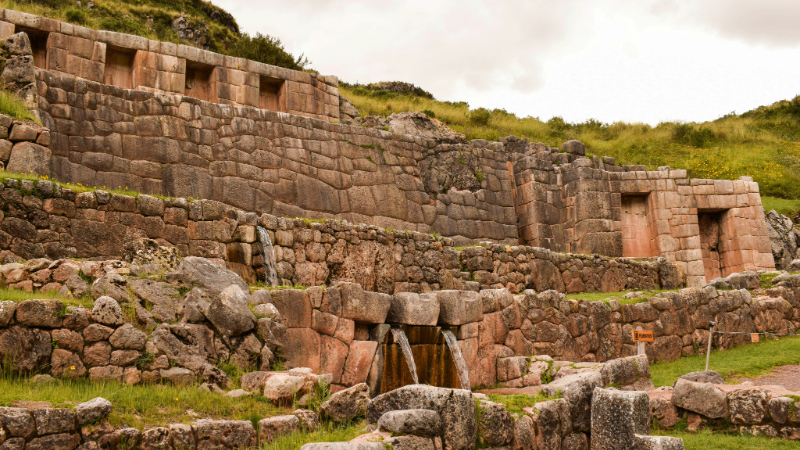
Tipón is believed to have been a retreat or an agricultural center for the Inca elite. The Incas left no written records, so your guide will explain these theories on site for what they are: interpretations. What you can see clearly is the care that went into the canals, the small waterfalls and the way the terraces follow the slope.
If this topic interests you, our post on Inca economy, engineering and religion explains how the empire worked and why farming and water mattered so much.
Pikillacta: The Wari City Before the Incas
Pikillacta changes the idea that everything in Cusco is Inca. It is a city of the Wari culture, an Andean culture that spread across much of the Andes before the Inca Empire existed. Visiting it helps you understand that the Incas did not start from scratch: they inherited roads, techniques and ways of organizing society from earlier peoples.
What stands out most is its planning. The city is laid out in rectangular compounds, with high walls, plazas and narrow streets that form a kind of grid. Walking between the walls, you can feel how carefully it was designed. Your guide will help you compare its style with the Inca sites you see on the same route.
On the way, near Pikillacta, you can see Huacarpay Lagoon, and the Rumicolca gateway is also nearby. You see them from the vehicle; the tour does not stop at either place.
Andahuaylillas: The “Sistine Chapel of the Americas”
The last stop is the town of Andahuaylillas and its colonial church of San Pedro Apóstol (Saint Peter the Apostle). From the outside it looks like a simple Andean village church, but inside it is a surprise: walls and ceilings covered in murals, paintings and gilded altars. That is why it is known as the “Sistine Chapel of the Americas”.

Its art blends Catholic tradition with Andean elements, something very typical of colonial art in Cusco. With a guide you will learn to read some of those images and spot details that are easy to miss on your own. You can take photos inside the church, but without flash, to protect the paintings.
How to Visit the South Valley of Cusco
The easiest way is on a tour, because the three sites are spread out along the highway. Our South Valley of Cusco tour takes about 5.5 hours: it leaves Cusco at 8:30 a.m. and returns around 2:00 p.m. The route follows this order:
| Stop | What you will see | Approx. time |
|---|---|---|
| Departure from Cusco | Drive southeast along the road to Puno | 8:30 a.m. |
| 1. Tipón | Inca terraces, canals and fountains that still carry water | First stop, in the morning |
| 2. Pikillacta | Wari city with rectangular compounds, high walls, plazas and narrow streets | Mid-morning |
| 3. Andahuaylillas | Colonial church of San Pedro Apóstol, with murals and gilded altars | Last stop, before heading back |
| Return to Cusco | End of the tour in the city | Around 2:00 p.m. |
The tour includes tourist transportation, a guide in English, Spanish or Portuguese, entrance fees to Tipón, Pikillacta and the Andahuaylillas church, and water. Lunch is not included. We run it all year, in groups of 8 to 12 people.

The difficulty is easy: short walks, suitable for children and older travelers, although some sites have uneven ground and stone steps. The highest point is about 3,600 m (11,800 ft), only a little higher than Cusco, which sits at about 3,400 m (11,150 ft). Even so, we recommend spending at least 24 hours in Cusco before you go. Our Cusco elevation guide lists the altitude of the main destinations.
The best time is the dry season, from May to October, when skies are clearer. In the rainy season the landscape is greener and the route can still be done. What to bring:
- Cash in soles: for lunch, the restrooms that charge and any purchases.
- Sun protection: sunscreen, sunglasses and a hat.
- A light jacket: mornings in the Andes are cool.
- Comfortable shoes: for the terraces and uneven ground.
- A rain poncho: if you travel in the rainy season.
There are restrooms at every stop; some charge a small fee.
Book with 40%: you can reserve our South Valley of Cusco tour by paying only 40% online. The balance is paid when you arrive in Peru.
Tickets and the Cusco Tourist Ticket
Before you go, it helps to know how tickets work on this route:
- Tipón and Pikillacta: they are part of the Cusco Tourist Ticket (Boleto Turístico del Cusco), the same ticket used at other archaeological sites in Cusco. We explain how it works in our guide to Coricancha and Sacsayhuamán.
- Andahuaylillas church: it has a separate entrance fee that is not part of the Tourist Ticket.
On our tour all entrance fees are included: Tipón, Pikillacta and the Andahuaylillas church. You do not need to buy anything on your own or wait in line. We do not list ticket prices because they change.
If you have more days in Cusco, the Cusco City Tour (US$40) is a good complement for getting to know the city and its temples, and it pairs well with a morning in the South Valley.
South Valley Cusco or Sacred Valley?
This is one of the questions we hear most. The two valleys are different and do not compete: if you have time, both are worth it. This table helps you choose:
| South Valley | Sacred Valley VIP | |
|---|---|---|
| Price | US$45 | US$90 |
| Duration | About 5.5 hours | Full day |
| What you visit | Tipón, Pikillacta and Andahuaylillas | Pisac, Ollantaytambo, Moray and the Maras salt mines |
| Periods you see | Wari, Inca and colonial | Mostly Inca |
| Lunch | Not included | Included |
| Best for | A relaxed morning with fewer crowds | Seeing the best of the Sacred Valley in one day |
If you want a full day, the Sacred Valley VIP tour covers the main sites of the Urubamba valley. To plan it, read our Sacred Valley Peru guide. And if you only have half a day free, there is also the Maras Moray tour (US$30).
Planning the whole trip? Our Peru itinerary shows how to split your days between Cusco, Machu Picchu and other destinations.
What to Eat Along the Route
The South Valley is also known for its food. These are some of the dishes the towns on the route are known for:
- Roast guinea pig (cuy al horno): Tipón is known for this traditional Andean dish.
- Oropesa bread: the town of Oropesa is known for its bread.
- Saylla chicharrón: Saylla is known for its fried pork.
The tour does not include lunch. There are local restaurants along the route, and since you are back in Cusco around 2:00 p.m., you can also have lunch in the city. Bring cash in soles. To learn more about traditional dishes, read our guide to Andean food in Cusco.
Frequently Asked Questions
How much does it cost to visit the South Valley?
Our South Valley tour costs US$45 per person and includes transportation, a guide, water and entrance fees to Tipón, Pikillacta and the Andahuaylillas church. You book with 40% online and pay the balance when you arrive in Peru.
How long does the South Valley visit take?
About 5.5 hours. We leave Cusco at 8:30 a.m. and return around 2:00 p.m., so you have the afternoon free.
Is it suitable for children and older travelers?
Yes. The difficulty is easy and the walks are short. Just keep in mind that some sites have uneven ground, so comfortable shoes are a good idea.
Do I need the Cusco Tourist Ticket?
Tipón and Pikillacta are part of the Tourist Ticket, and the Andahuaylillas church has a separate fee. If you go with us, you do not need to buy anything: all entrance fees are included.
Can I take photos inside the Andahuaylillas church?
Yes, but without flash, to protect the murals and paintings.
When is the best time to go?
The dry season, from May to October, has the clearest skies. In the rainy season the landscape is greener. The tour runs all year.
Plan Your Visit to the South Valley
In a single morning, the South Valley shows you three chapters of Andean history: Wari planning at Pikillacta, Inca mastery of water at Tipón and the colonial art of Andahuaylillas. It is a relaxed, easy route with fewer crowds, ideal for your first days in Cusco.
Book our South Valley of Cusco tour by paying only 40% online and the rest when you arrive in Peru. Have questions? Write to us and we will get back to you.