English
 Español
 Português


The Tambopata National Reserve is a protected natural area in the Peruvian Amazon, in the Madre de Dios region, near the city of Puerto Maldonado. It is lowland rainforest, extremely biodiverse and easy to reach by plane from Lima or Cusco, which makes it one of the most accessible ways to experience the Amazon rainforest in Peru.
We are local guides based in Cusco, and we also run trips to Tambopata. In this guide we explain how to get there, which animals you can see, how it compares with Manu, how many days you need and how to prepare for the jungle.
What Is the Tambopata National Reserve?
It is one of the protected areas of the southeastern Peruvian Amazon. It protects lowland forest, rivers, lakes and swamps that are home to a huge variety of birds, mammals, reptiles, fish and insects. That is why it is a favorite destination for travelers who want to see wildlife in its natural habitat.
Right next to the reserve lies Bahuaja-Sonene National Park, another neighboring protected area. When travelers talk about “going to Tambopata”, they usually mean the part of the reserve closest to Puerto Maldonado, with its lodges, rivers and lakes, such as Lake Sandoval.
Unlike Cusco, there are no mountains or high-altitude cold here: the climate is hot and humid, the vegetation is dense and life revolves around the rivers.
Where Is the Tambopata National Reserve and How to Get There from Cusco or Lima
The reserve is in Madre de Dios, in southeastern Peru. The gateway is Puerto Maldonado, the regional capital. From there you continue on to the reserve. These are the ways to reach Puerto Maldonado:
- By plane from Lima: there are flights to Puerto Maldonado. This is the most practical option if your trip starts in the capital.
- By plane from Cusco: there are flights too, ideal if you are combining the jungle with Cusco and Machu Picchu.
- By road from Cusco: the Interoceanic Highway links Cusco with Puerto Maldonado. It is a long journey, only worth it if you have time and don’t mind many hours on a bus.
Keep in mind that transportation to Puerto Maldonado is not included in our tour: transfers start in the city. If you write to us before buying your flight, we will help you coordinate your start date.
Lake Sandoval: Tambopata’s Best-Known Lake
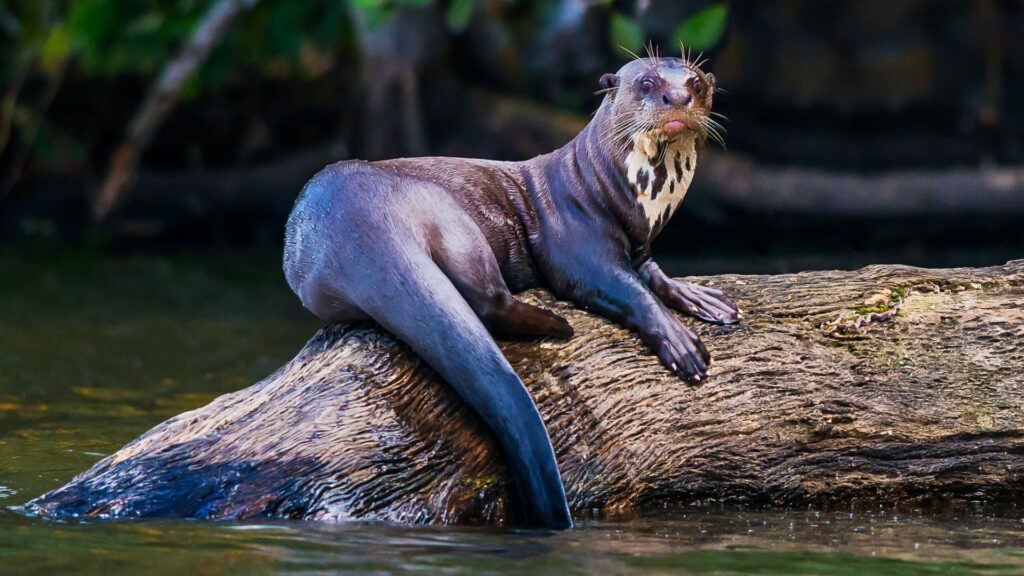
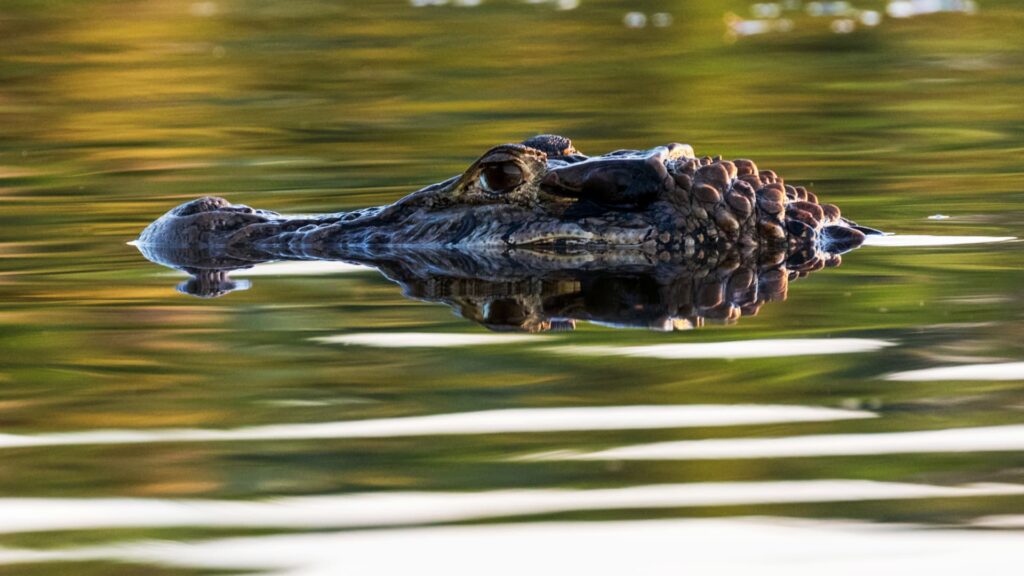
Lake Sandoval lies inside the reserve and is one of its most visited spots, known for its biodiversity. You reach it from Puerto Maldonado by combining a river section with a walk through the forest. Surrounded by palms and vegetation, its calm waters are home to caimans, water birds and, with luck, the giant river otter.
Exploring it by boat is the best way to watch wildlife without making noise. Our 3-day Lake Sandoval tour includes a boat trip on the lake, guided jungle walks, wildlife watching and a visit to local communities.
What Animals Can You See in Tambopata?
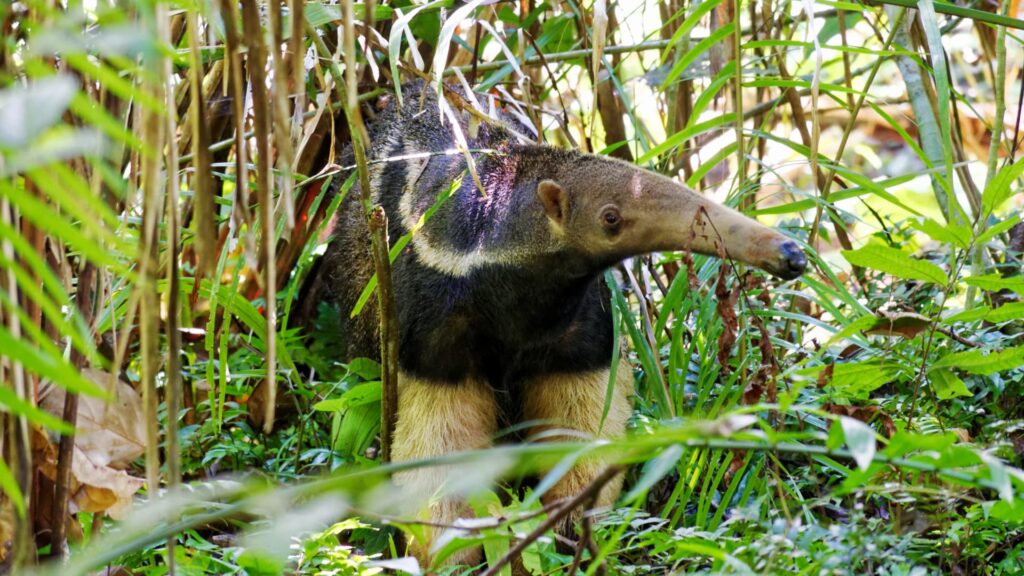
Nothing is guaranteed in the jungle: the animals live in the wild and show up when they want to. Even so, with a guide who recognizes sounds and tracks, your chances of seeing wildlife are good. These are some of the animals you may find:
- Caimans: seen along the shores of lakes and rivers, especially from the boat.
- Capybaras: the world’s largest rodent, usually found close to the water.
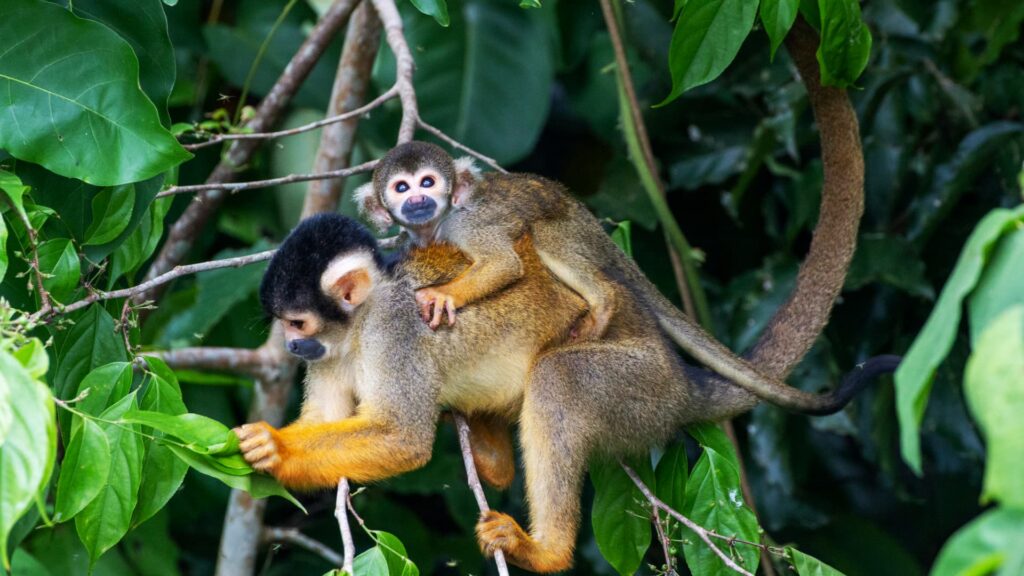
- Monkeys: you will hear them, and often see them, in the treetops.
- Birds: macaws, toucans and many other species; Tambopata is a paradise for birdwatching.
- Giant river otter: spotting one is a matter of luck, but it is one of the highlights of any trip.
Tambopata is also famous for its clay licks (collpas), clay banks where macaws and parrots gather. They are one of the region’s great attractions, but they are not part of our tour, which focuses on Lake Sandoval and its surroundings. Bring binoculars and a camera with a zoom lens: many birds are seen from a distance.
Tambopata or Manu? How to Choose
Many travelers hesitate between the two best-known protected areas of the southern Peruvian Amazon. Here is how they compare:
| Tambopata | Manu | |
|---|---|---|
| Location | Madre de Dios, near Puerto Maldonado | Between Madre de Dios and Cusco |
| Access | By plane to Puerto Maldonado, from Lima or Cusco | More remote, with longer journeys |
| Trip length | Can be visited in a few days | Usually requires more days |
| Best for | A first jungle trip or travelers short on time | Travelers looking for a longer expedition |
| Our tour | Lake Sandoval, 3 days and 2 nights | We don’t go there |
If it’s your first time in the Amazon, or you want to add the jungle to a trip to Cusco, Tambopata is usually the easier option. Our tour goes only to Tambopata and does not visit Manu.
How Many Days Do You Need for Tambopata?
Three days and two nights in the reserve are enough to explore a lake by boat, walk through the jungle and watch wildlife without rushing. If you are coming from Cusco, Tambopata pairs very well with Machu Picchu. Here is a sample itinerary, for reference only:
| Days | Where | What to do |
|---|---|---|
| Days 1–2 | Cusco | Arrival, rest to acclimatize and a visit to the historic center |
| Days 3–4 | Machu Picchu | Trip to Aguas Calientes, visit to the citadel and return to Cusco |
| Day 5 | Cusco and Puerto Maldonado | Flight to Puerto Maldonado; the tour starts on arrival with the transfer to Lake Sandoval and a boat trip |
| Day 6 | Tambopata National Reserve | Walks, wildlife watching and a visit to local communities |
| Day 7 | Tambopata National Reserve | Final walk and return to Puerto Maldonado in the afternoon |
| Day 8 | Puerto Maldonado | Flight back to Lima or Cusco |
For the Andean part, read our guide on how to get to Machu Picchu and our list of things to do in Cusco. After several days at altitude, the lowland jungle is a rest for your body. For the Amazon part, our 3-day Tambopata tour starts in Puerto Maldonado and includes lodging in a jungle house or eco-lodge, 2 breakfasts, 3 lunches and 2 dinners, a specialized guide and the reserve entrance fee, from US$390 per person. If you prefer a ready-made trip, see our Peru travel packages.
Book with 40%: all our tours, including Tambopata, can be booked by paying just 40% online. The balance is paid when you arrive in Peru.
Best Time to Visit the Tambopata National Reserve and Weather
Tambopata is hot and humid all year round. The dry season, from May to October, is the most comfortable: there is less rain and the trails are firmer. From November to April the rains are heavier; the forest is greener, but downpours may mean changing the order of some activities.
During the dry season, sudden cold fronts known as friaje can arrive and lower the temperature for a few days. They don’t always happen, but it is wise to pack a warm layer. If you are combining the jungle with the Andes, also check our guide on the best time to visit Cusco to plan both destinations in one trip.
What to Pack for the Peruvian Jungle
- Light long-sleeved shirts and long pants: they protect you from the sun and from insects.
- Insect repellent and sunscreen: essential for the walks and the boat.
- Rain jacket or poncho: it can rain at any time, even in the dry season.
- A warm layer: in case a friaje arrives.
- Water-resistant footwear: the trails are often wet and slippery.
- Headlamp: at the lodges, electricity only runs for a few hours a day.
- Binoculars and camera: for birds and animals seen from a distance.
- Water, passport and some cash: some local communities don’t accept cards.
Health and Safety in the Peruvian Amazon
Before traveling to the jungle, it is a good idea to talk to a doctor about recommended vaccines, such as yellow fever. They can advise you based on your situation. We also recommend getting travel insurance, which is not included in the tour.
Good news: the whole route is below 400 m (1,300 ft) above sea level, so there is no altitude sickness in Tambopata. Cusco, on the other hand, sits at about 3,400 m (11,150 ft). If you are traveling through the Andes, read our guide on how to prevent altitude sickness in Peru.
In the reserve, always walk with your guide, because it is easy to get disoriented in the jungle. Don’t swim in the lake because of the caimans, don’t feed the animals and don’t leave any trash. Cell signal is limited, so let your family know before you head in.
Frequently Asked Questions
Is there altitude sickness in Tambopata?
No. It is lowland rainforest and the whole route is below 400 m (1,300 ft). Many travelers visit precisely to rest after the altitude of Cusco.
Is the flight to Puerto Maldonado included in the tour?
No. You get to Puerto Maldonado on your own, by plane from Lima or Cusco, or by road. From there we take care of the transfers to the reserve and back.
Will we see the macaw clay licks on the tour?
The clay licks are an attraction of the region, but they are not part of our tour. During the trip you may see macaws and other birds at Lake Sandoval and in the jungle.
Is there electricity and cell signal at the lodges?
At the lodges, electricity only runs for a few hours a day and signal is limited. Bring a headlamp and a power bank, and enjoy the chance to disconnect.
Do I need to be in good shape?
You don’t need a high level of fitness. The difficulty is moderate: the walks are at a relaxed pace, although the ground can be wet. We travel in groups of 6 to 12 people.
How do I book a trip to Tambopata?
You pay 40% online to secure your spot and the balance when you arrive in Peru. Write to us before buying your flight so we can choose the start date together.
Plan Your Trip to the Peruvian Amazon
Tambopata is the easiest way to experience the Peruvian jungle: you fly in, there is no altitude, and in just a few days you can explore a lake by boat, walk among giant trees and watch animals in the wild. Come in the dry season if you can, pack long sleeves and repellent, and remember that the tour starts the same day you land in Puerto Maldonado.
Once you have your dates, book our Lake Sandoval tour in Tambopata and combine it with Cusco and Machu Picchu. You pay just 40% online and the rest when you arrive in Peru.