 English
 Español
 Português

- Duration 4 days / 3 nights
- Difficulty Challenging
- Group size 8 to 12 people
- Max. altitude 3,050 m (10,007 ft)
- Travel style Adventure, trekking
- Departure Cusco
Our Choquequirao trek takes 4 days and 3 nights: we leave Cusco early in the morning and return to the city on day four, between 6:00 and 7:00 p.m. Private transport, a guide in English, Spanish or Portuguese, camping gear, all meals on the trail and your entrance ticket are included, from US$450 per person.
We hike in groups of 8 to 12 people. Porters and muleteers carry the tents, kitchen and supplies, so you only carry a daypack. Our guides know every section of the Apurímac Canyon and explain the history of each part of Choquequirao as you walk through it.
Where is Choquequirao and how do you get there?
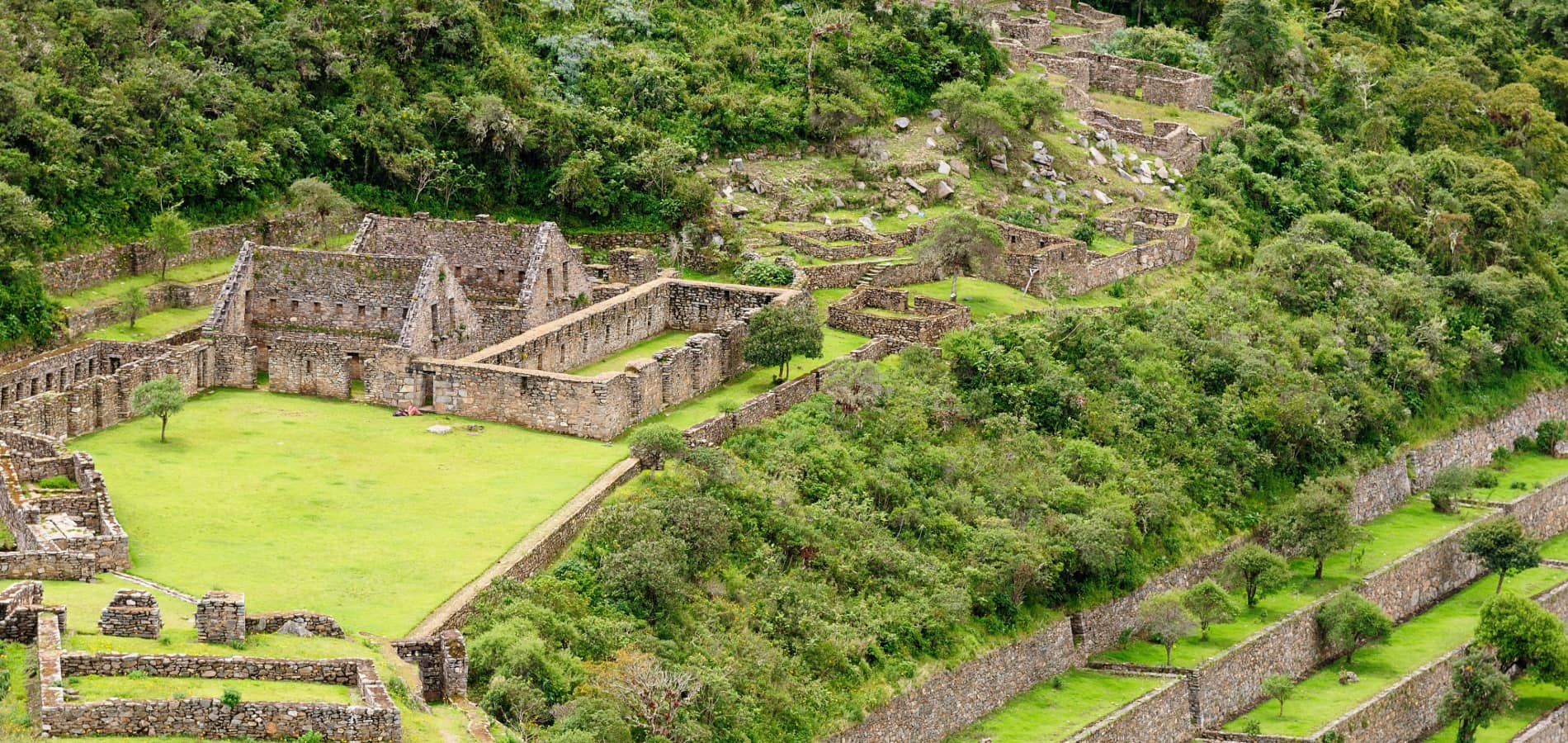
Choquequirao is an Inca citadel built on a steep slope of the Apurímac Canyon, west of Cusco. There is no road to the ruins: today the only way in is on foot. From Cusco we drive about 4 hours by private transport to the village of Cachora and on to Capuliyoc, at 2,900 m (9,514 ft), where the hike begins. To know how hard the hike is and how to prepare, read our Choquequirao difficulty guide.
Choquequirao altitude and elevation changes
The citadel sits at about 3,050 m (10,007 ft) above sea level, slightly lower than Cusco itself at roughly 3,400 m (11,155 ft). The hard part is not the maximum altitude but the elevation change: from Capuliyoc the trail drops to Playa Rosalina on the Apurímac River, at 1,500 m (4,921 ft), then climbs back up to Marampata at 2,850 m (9,350 ft) and on to Choquequirao. Even so, we recommend spending at least 1 day in Cusco before the trek to acclimatize.
The Choquequirao trek day by day
Approximate elevations. The highest point is marked in red. See the tour from US$450
| Day | Route | Night |
|---|---|---|
| Day 1 | Cusco – Cachora – Capuliyoc (2,900 m / 9,514 ft), then downhill to Chiquisca | Camp in Chiquisca |
| Day 2 | Playa Rosalina (1,500 m / 4,921 ft), Apurímac River crossing, climb to Marampata (2,850 m / 9,350 ft) and Choquequirao (3,050 m / 10,007 ft) | Camp near the citadel |
| Day 3 | Full day at Choquequirao: terraces, temples, plazas and the stone llamas | Camp in Marampata |
| Day 4 | Descent to Playa Rosalina, climb to Capuliyoc and drive back to Cusco (6:00–7:00 p.m.) | — |
Day three is the heart of the trip: you have the citadel almost to yourself, with far fewer visitors than Machu Picchu. The full detail of each day is in the itinerary tab.
How hard is the Choquequirao trek?
We rate it as difficult. It covers about 62 km (38.5 miles) round trip, with long descents that are hard on the knees and steep climbs, especially on days two and four. The trail is not technical, but it calls for good fitness and, ideally, some experience on multi-day hikes. We recommend trekking poles and walking at your own pace; your guide adjusts the breaks to the group.
A sleeping bag is not included. If you don’t have one, we can rent you one along with trekking poles.
Best time to hike to Choquequirao
We run this route from April to November, mostly in the dry season (April to October). May to September is high season, when spots fill up faster, so we suggest booking 1 to 2 months ahead. From December to March we don’t operate because of the rains, which make the canyon trail slippery. In any month the sun is strong during the day and nights at camp are cold, so pack layers.
Choquequirao or the Inca Trail?
The Classic Inca Trail ends at Machu Picchu and runs on limited permits that sell out months in advance. Choquequirao is more remote and much quieter, with longer hiking days and no crowds. This trek does not include Machu Picchu, but you can combine it with another trip. To know what you’re about to see, read the history of the Choquequirao ruins.
To plan your trip, read our guide: How to Get to Choquequirao in 2027: Route from Cusco, Cable Car and Tips.
Book with a local Cusco agency
We are a Cusco-based agency and run our own departures to Choquequirao, with our camping equipment, cooks and local muleteers. Book through the form on this page or contact us: we’ll confirm your date and send you the departure time and meeting point, plus a packing list.
Full itinerary
Day 1: Cusco – Capuliyoc – Chiquisca
Departure from Cusco
We leave Cusco early in the morning and travel about 4 hours by private transport to the village of Cachora. From there we continue to Capuliyoc, the starting point of the trek.
Hike to Chiquisca
We start hiking at Capuliyoc (2,900 m / 9,514 ft), with panoramic views of the Apurímac Canyon and snow-capped peaks. The trail descends toward Chiquisca, where we camp for the night. Along the way you may see Andean flora and fauna, including condors in flight.
Day 2: Chiquisca – Playa Rosalina – Marampata – Choquequirao
Climb to Marampata
Early in the morning we descend to Playa Rosalina (1,500 m / 4,921 ft) and cross the Apurímac River. From there the trail climbs steeply to Marampata (2,850 m / 9,350 ft). It is a demanding ascent, but the canyon views make the effort worthwhile.
Arrival at Choquequirao
After a well-deserved rest in Marampata, we continue to Choquequirao (3,050 m / 10,007 ft). We set up camp near the Inca citadel to rest and get ready for the next day’s visit.
Day 3: Exploring Choquequirao
Full day at Choquequirao
We dedicate the whole day to exploring Choquequirao, an Inca citadel that spreads over more than 1,800 hectares. You’ll visit its main sectors: agricultural terraces, temples, plazas and the terraces decorated with stone llamas. With far fewer visitors than Machu Picchu, you can enjoy the peace and mystery of this hidden gem.
Night in Marampata
After the visit we walk back to Marampata, where we camp for the night.
Day 4: Marampata – Chiquisca – Capuliyoc – Cusco
Return to Capuliyoc
We set off early, descending to Playa Rosalina and then climbing to Capuliyoc, where our transport is waiting for us. It is a long day, but the way back offers views just as impressive as the way in.
Return to Cusco
From Capuliyoc we drive back to Cusco by private transport, arriving at about 6:00–7:00 p.m.
What is included
- Private transport from Cusco to Capuliyoc and back
- Professional guide in English, Spanish or Portuguese
- Camping equipment (tents, sleeping mats and kitchen equipment)
- Porters and muleteers to carry the equipment and supplies
- All meals during the trek (breakfast, lunch and dinner)
- Entrance fee to Choquequirao
- First aid kit and emergency oxygen
Not included
- Sleeping bag (we can rent you one)
- Trekking poles (optional; we can rent you a pair)
- Snacks and drinks other than the meals included
- Travel insurance
- Personal expenses
- Tips for guides, porters and cooks (optional)
Frequently asked questions
1. Is acclimatization necessary before the Choquequirao trek?
We recommend spending at least 1 day in Cusco (about 3,400 m / 11,150 ft) before the trek to reduce the risk of altitude sickness. Choquequirao sits at about 3,050 m (10,010 ft), so preparing well lets you fully enjoy this Andean adventure. Read 10 Essential Tips For An Unforgettable Trip to Cusco for more advice.
2. How difficult is the Choquequirao trek?
The Choquequirao trek is challenging, with steep ascents and descents over about 62 km. It is ideal for fit hikers looking for a remote trek to Inca ruins. To compare, take a look at our Classic Inca Trail.
3. Can I rent equipment in Cusco for the Choquequirao trek?
Yes. We rent you sleeping bags and trekking poles, so you have the right gear for the 4 days.
4. What food is provided during the Choquequirao trek?
We provide nutritious Andean meals during the trek: breakfast, lunch and dinner, freshly prepared at camp by our cooks. Vegetarian options are available on request. Learn more about local flavors in Andean Food: Authentic Flavors Not to Be Missed.
5. Do I need to book the Choquequirao trek in advance?
Yes, but not months ahead: you can book up to 2 days before the tour starts. Unlike the Inca Trail, Choquequirao does not require a permit booked months in advance. You book with a 40% online payment and pay the balance when you arrive in Peru.
6. Where is Choquequirao located?
Choquequirao is in the Andes west of Cusco, on a slope of the Apurímac Canyon, and can only be reached on foot from Capuliyoc. Along the way you cross spectacular landscapes to reach this hidden gem. Discover more routes in Alternative Trekking Routes: Choquequirao.
7. What is the history of Choquequirao?
Choquequirao was an Inca city and an important cultural center. During the trek your guide tells you its history as you explore its terraces. Dive deeper into its past with The Inca Empire: The Golden Age of the Andes.
8. What distance does the Choquequirao trek cover?
The trek covers about 62 km round trip, from Capuliyoc to Choquequirao and back. The support of our team makes it manageable.
9. What is the altitude on the Choquequirao trek?
The highest point is Choquequirao, at about 3,050 m (10,010 ft), and the lowest is Playa Rosalina, at about 1,500 m (4,920 ft). We carry emergency oxygen for your safety. Prepare with the tips in 10 Essential Tips For An Unforgettable Trip to Cusco.
10. What makes the llamas of Choquequirao special?
The llamas of Choquequirao are figures made of stone set into the terraces, a unique Inca feature. Your guide shows them to you during the visit and explains their cultural meaning. Discover more Inca wonders in The Inca Empire: The Golden Age of the Andes.
11. How do you pronounce Choquequirao?
Choquequirao is pronounced “Choh-keh-kee-raow.” Your guide will help you with it during the trek.
12. Can I combine the Choquequirao trek with a visit to Machu Picchu?
The Choquequirao trek does not include Machu Picchu, but you can extend your trip. We recommend adding the Short Inca Trail to also visit Machu Picchu. Contact us for details.
13. How does the Choquequirao trek compare with the Inca Trail?
The Choquequirao trek offers a quieter, more remote experience with fewer visitors, over about 62 km of rugged terrain, unlike the busier Classic Inca Trail.
14. What should I pack for the Choquequirao trek?
Pack layers, a hat and sunscreen. We provide the camping gear, but you need to bring a sleeping bag or rent one from us. Get ready with 10 Essential Tips For An Unforgettable Trip to Cusco.
15. What’s the weather like on the Choquequirao trek?
Days are warm in the canyon, with strong sun, and mornings and nights are cold. For safety, we don’t operate during the rainy season (December to March). Find more preparation tips in Alternative Trekking Routes: Choquequirao.
16. Can I take photos during the Choquequirao trek?
Yes! Your guide will take you to terraces and viewpoints that are perfect for photos.
17. Where do we sleep each night on the Choquequirao trek?
We camp all three nights: in Chiquisca on night one, near the Choquequirao citadel on night two and in Marampata on night three. Tents and sleeping mats are included; bring a sleeping bag or rent one from us.
18. Do I have to carry my own gear on the trek?
No. Porters and muleteers carry the tents, kitchen equipment and supplies. You only need a small daypack with water, snacks, warm layers and your camera.
19. How do we get from Cusco to the start of the trek?
We drive about 4 hours by private transport to the village of Cachora and on to Capuliyoc, where the hike begins. The return transport from Capuliyoc to Cusco is also included.
Recommendations and what to bring
Good preparation is key to enjoying the Choquequirao trek. These are our recommendations on what to pack, how to cope with the altitude and which challenges to expect on this Andean trek.
What to bring
- Layered trekking clothing: warm layers (fleece, thermals) for cold nights and light, breathable clothing for hiking during the day.
- Cold-weather accessories: a warm hat, gloves and a scarf for chilly mornings and nights.
- Sun protection: high-SPF sunscreen, good sunglasses and a wide-brimmed hat; the Andean sun is strong.
- Daypack: a small, comfortable backpack (20–30 liters) for water, snacks, your camera and an extra layer. Porters carry the heavy equipment.
- Water and snacks: a reusable water bottle (we provide boiled or filtered water at camp) and high-energy snacks. Our blog 10 Essential Tips For An Unforgettable Trip to Cusco has more packing ideas.
Footwear
- Trekking boots: waterproof, with good ankle support and grip, and already broken in to prevent blisters. The trail is steep, rocky and uneven in places.
Local remedies for the altitude
- Coca tea (mate de coca): widely used in the Andes to ease altitude symptoms; drink it before and during the hike.
- Coca or muña candies: useful to keep your energy up and ease mild symptoms while hiking.
Medication (consult your doctor)
- Acetazolamide (Diamox): some travelers use it to prevent altitude sickness; consult your doctor before your trip.
- Pain relievers: for headaches or mild muscle aches.
Possible issues during the trek
- Altitude sickness: fatigue and headaches are fairly common. Acclimatizing in Cusco beforehand, drinking plenty of water and having coca tea help prevent or ease them.
- Extreme fatigue: the climbs are steep, especially to Marampata and Choquequirao. Listen to your body, go at your own pace and rest when you need to.
- Dehydration: the Andean air is dry and days can be warm. Drink water regularly, at least 2 to 3 liters a day.
- Choose your tour and datePick your date in the booking form.
- Pay 40% onlineSecure card payment. We confirm your booking by email.
- Pay the balance in PeruThe remaining 60% is paid when you arrive.
Keep exploring
You may also like
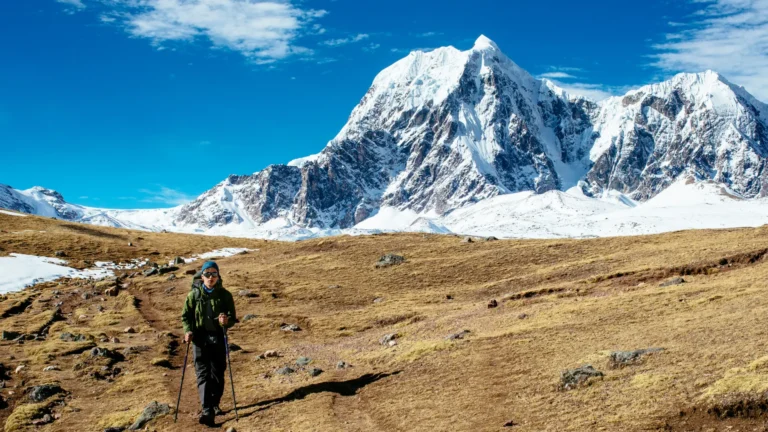
Ausangate 7 Lakes 2027: 1-Day Tour from Cusco
Ausangate 7 Lakes tour from Cusco with hotel pickup, breakfast, lunch, entrance fee and guide. US$60 per person;…
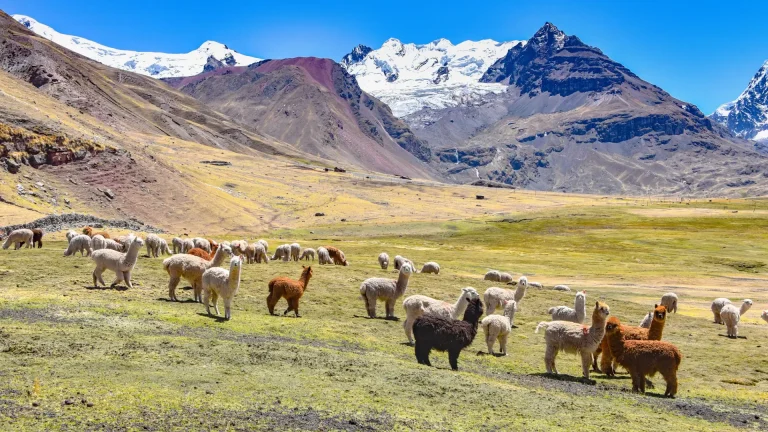
Ausangate Trek 2027 (5 Days / 4 Nights)
5-day Ausangate Trek from Cusco: passes up to 5,200 m, colorful lakes and hot springs. US$600 per person;…
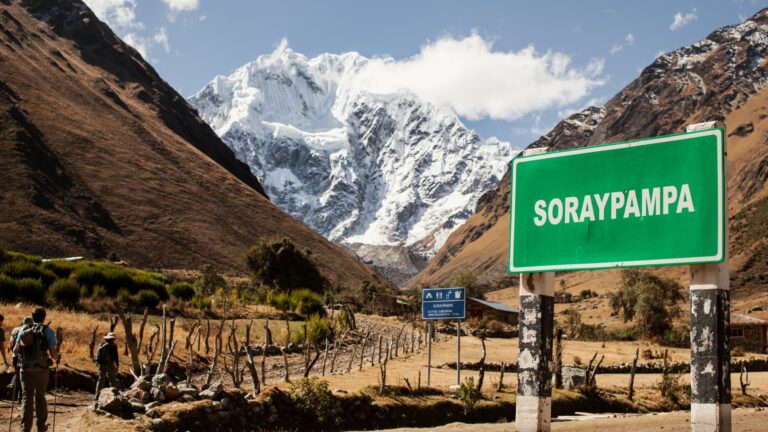
Salkantay Trek to Machu Picchu 2027 (5 Days / 4 Nights)
Salkantay Trek to Machu Picchu in 5 days: Humantay Lake, a 4,600 m pass, Llactapata and the train…