English
 Español
 Português


Cusco’s 12-angled stone is on Hatun Rumiyoc street, in the historic center, one block from the Plaza de Armas. It is a large stone block set into the wall of the palace of the Inca ruler Inca Roca. If you keep walking up the same street you reach the San Blas neighborhood, the artisans’ quarter, with steep streets, white houses with blue balconies and views over the city’s rooftops. You can see both on foot and for free.
In short: the stone and San Blas take a morning at an easy pace. In the afternoon, our Cusco City Tour leaves at 1:30 p.m. and takes you to the Cathedral, the Qorikancha and Sacsayhuamán with entrance fees and a guide included, from US$40. You book it by paying just 40% online.
The 12-angled stone and San Blas at a glance
| Fact | Detail |
|---|---|
| Where the stone is | Hatun Rumiyoc street, one block (about 200 m) from the Plaza de Armas |
| What it is | A 12-angled diorite block in the wall of Inca Roca’s palace |
| Size | About 2 m (6.5 ft) long and about 6 tons |
| Building today | The Archbishop’s Palace and the Museum of Religious Art |
| Protection | Historic Monument since 1972; part of Cusco’s historic center, a World Heritage Site since 1983 |
| San Blas neighborhood | Up Hatun Rumiyoc street, on foot |
| Entry | Free: the stone is on a public street |
| To round out the day | Cusco City Tour, in the afternoon, from US$40 |
What is the 12-angled stone?
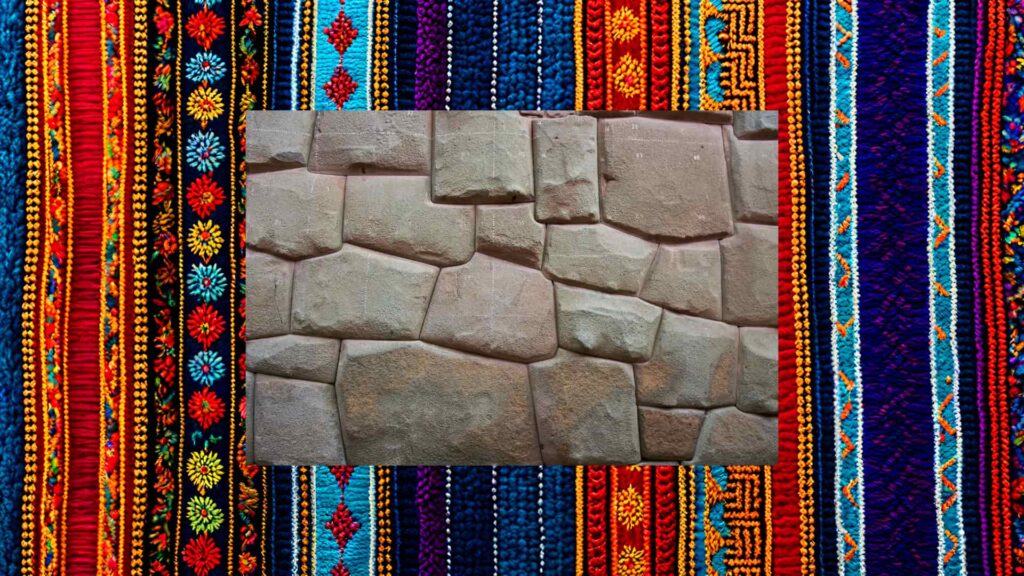
It is a polygonal stone with twelve sides and twelve angles, carved to fit the stones around it without any mortar. It is about 2 meters long, weighs around 6 tons and is made of diorite. The wall it belongs to has stood for more than 600 years, through the earthquakes that have hit Cusco.
The wall was part of the palace of Inca Roca, the sixth ruler of the Inca dynasty. After the Spanish conquest a new building was raised on top of it, and today it is the Archbishop’s Palace, which also houses the Museum of Religious Art. The street is named after the stone: in Quechua, hatun rumi means “big stone”.
Why does it have 12 angles?
No Inca record explains it. Some scholars link it to the 24 panacas, the royal lineages of Cusco, split into 12 of Hanan Cusco and 12 of Hurin Cusco. What is clear is the technique: each angle was carved to lock into the neighboring stone, which is why it is the most famous example of Inca stonework. If you like Inca architecture, the Coricancha and Sacsayhuamán are next on your list.
The 2025 damage and how it is protected today
In the early hours of February 18, 2025, a man struck the stone with a metal object in at least seven spots. Cusco’s culture office described the damage as irreversible, and the man was arrested, as reported by the Andina news agency. Since then the stone has been under permanent watch by the police and city security, and the authorities are studying a glass cover to protect it.
When you visit, look without touching or leaning on the wall: it is protected heritage and damaging it is a crime.
How to get there from the Plaza de Armas
- Route: from the Plaza de Armas, walk up Triunfo street, beside the Cathedral, and keep going straight: the street becomes Hatun Rumiyoc.
- Where to look: the stone is in the Inca stone wall on the side of the Archbishop’s Palace. There are almost always people taking photos of it, so it is easy to find.
- Time: a few minutes on foot from the square; it is one block.
- To continue to San Blas: keep walking up Hatun Rumiyoc to the small square and the church of San Blas.
The San Blas neighborhood
San Blas is one of the traditional neighborhoods of the historic center, on the hillside above the Plaza de Armas. Its streets are narrow, cobbled and full of steps, and because it sits higher than the square, you will feel the climb in your breathing; we explain why in our Cusco elevation guide. During the day it is busy with travelers, cafés, galleries and workshops.
The church of San Blas
On the neighborhood’s square stands the church of San Blas, simple on the outside and known for its carved wooden pulpit, one of the most famous works of colonial art in Cusco. Peru’s Ministry of Culture restored it in recent years, and in 2022 its specialists found late 16th-century wall paintings of the four evangelists, hidden behind the canvases of the presbytery.
The artisans’ quarter
San Blas is known as Cusco’s neighborhood of artists and artisans. Families of religious image makers such as the Mendívil and the Olave worked here, and there are still workshops and shops selling religious figures, ceramics, textiles and paintings. It is a good place to buy a souvenir made in Cusco and see how it is made.
The views from San Blas
From the highest streets and stairways of the neighborhood you can see central Cusco with its red tile roofs, church towers and the hills behind. It is one of the most photographed views of the city, especially in the morning light.
A morning in San Blas and the afternoon on the City Tour
Our Cusco City Tour does not go through San Blas or Hatun Rumiyoc street: it visits the Cathedral, the Qorikancha, Sacsayhuamán, Qenqo, Puca Pucara and Tambomachay. That is why it fits so well with a free morning in San Blas. This is one way to plan the day:
| When | What to do |
|---|---|
| Morning | Walk up from the Plaza de Armas along Triunfo street to Hatun Rumiyoc and the 12-angled stone |
| Mid-morning | Continue to San Blas: the square, the church, the workshops and the views from the upper streets |
| Midday | Walk back down to the center at an easy pace and have lunch |
| 1:30 p.m. | Cusco City Tour: we pick you up at your hotel or you meet the group at the Plaza de Armas |
| 6:30 p.m. | Back in Cusco after Sacsayhuamán, Qenqo, Puca Pucara and Tambomachay |
If you have more days, our 3 days in Cusco guide helps you split your time between the city, the Sacred Valley and Machu Picchu.
Tips for visiting the 12-angled stone and San Blas
- Altitude: it is all uphill. If you have just arrived, walk slowly and rest on the steps; more in our altitude sickness guide.
- Shoes: the streets are cobbled and stepped, so wear comfortable shoes with a good sole.
- Respect the wall: do not touch or lean on the stone or the Inca wall; it is protected heritage.
- Photos: there are usually people around the stone; be patient and wait your turn.
- Your belongings: by day the neighborhood is full of travelers; at night, stick to lit, busy streets. More in Is Peru safe?.
- Tickets: the stone and the streets are free; the church of San Blas and the Museum of Religious Art are visited separately.
Tours from Cusco to round out your visit
The stone and San Blas take a morning. For the rest of your days in Cusco, these are our most requested tours:
| Tour | Duration | Price | Pay online (40%) |
|---|---|---|---|
| Cusco City Tour | About 5 hours, in the afternoon | US$40 | US$16 |
| Maras Moray Tour | Half day | US$30 | US$12 |
| South Valley Tour | 1 day | US$45 | US$18 |
| Rainbow Mountain Tour | 1 day | US$50 | US$20 |
| Sacred Valley VIP | 1 day | US$90 | US$36 |
| Machu Picchu Full Day | 1 day | US$300 | US$120 |
Book with 40%: all our tours are booked by paying just 40% online; the balance is paid when you arrive in Peru. The City Tour runs in the afternoon, is low difficulty and includes hotel pickup, so keep your morning free for San Blas.
Frequently asked questions
Where is the 12-angled stone?
On Hatun Rumiyoc street, in Cusco’s historic center, one block from the Plaza de Armas. It is in the Inca wall of the old palace of Inca Roca, today the Archbishop’s Palace, on the way to the San Blas neighborhood.
Do you have to pay to see the 12-angled stone?
No. It is on a public street and you can see it for free at any time. What you pay for separately is the Museum of Religious Art, inside the palace.
How big and heavy is it?
It is about 2 meters (6.5 ft) long and weighs around 6 tons. It is made of diorite and fits the neighboring stones without mortar.
What happened to the 12-angled stone in 2025?
On February 18, 2025, a man struck it with a metal object in at least seven spots. Cusco’s culture office described the damage as irreversible; today it is under permanent watch and can still be seen from the street.
Does the City Tour go to the 12-angled stone or San Blas?
No. Our Cusco City Tour visits the Cathedral, the Qorikancha, Sacsayhuamán, Qenqo, Puca Pucara and Tambomachay, from 1:30 to 6:30 p.m. The stone and San Blas are one block from the square, so you can see them on your own in the morning of the same day.
Is San Blas higher than the Plaza de Armas?
Yes. The neighborhood is on the hillside, so you walk up steep streets and stairways. If you have just arrived in Cusco, go slowly; more in our Cusco elevation guide.
Want to see the rest of the city with a local guide? Book your Cusco City Tour by paying 40% online, or contact us and we will help you plan your days in Cusco.