English
 Español
 Português


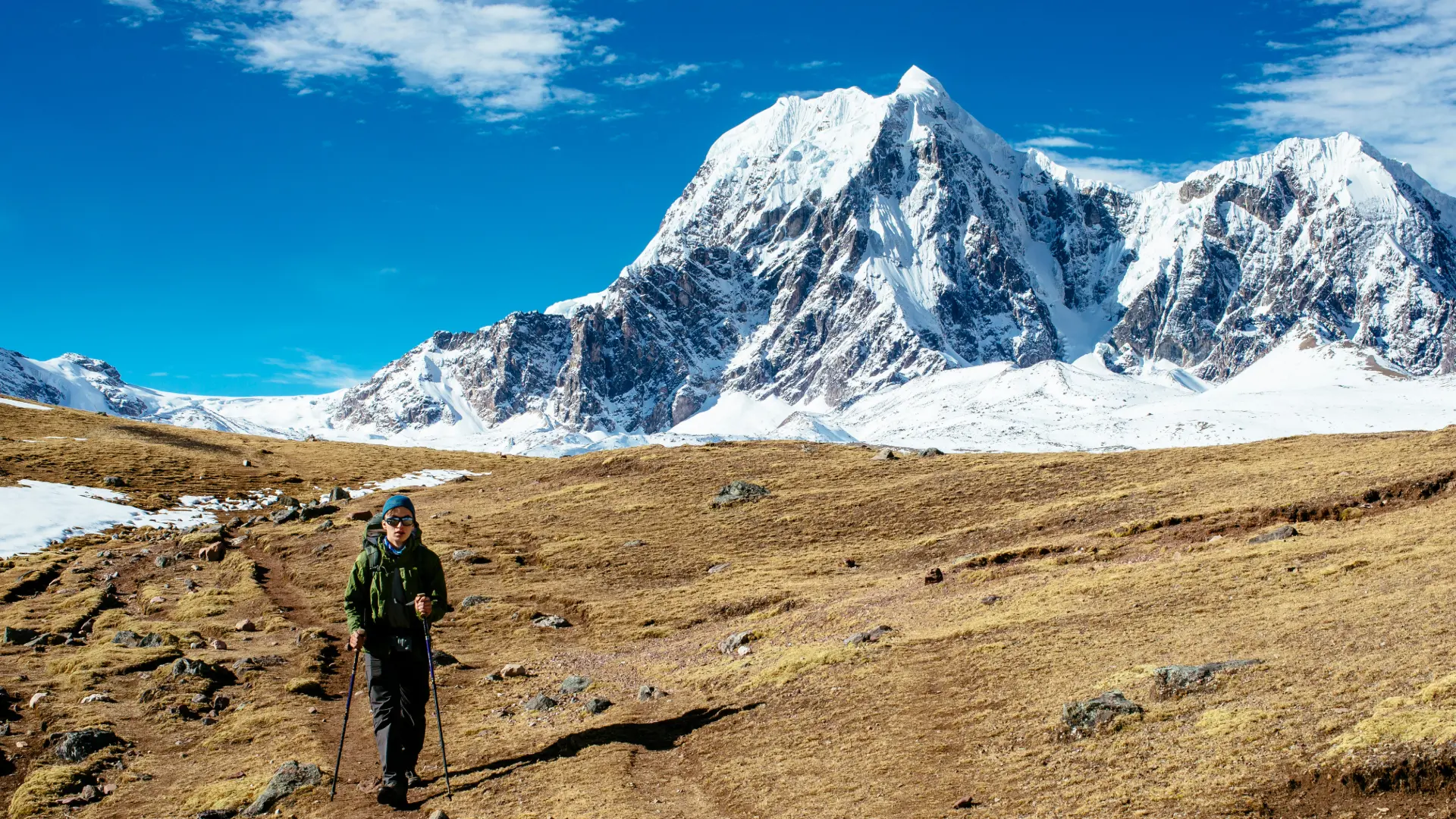
Ausangate, Peru, is the highest mountain in the Cusco region, at about 6,380 m (20,940 ft), and a sacred apu for Andean communities. You can visit it from Cusco on a one-day hike to its colorful glacial lakes or on a five-day trek around the glacier.
We are local guides based in Cusco and we run hikes to Ausangate. Here we explain where it is, how to get there, which option to choose, how to prepare for the altitude and what to pack.
What Is Ausangate, Peru?
Ausangate is the highest summit of the Vilcanota mountain range and of the whole Cusco region. Its height is usually given as about 6,380 m (20,940 ft), although figures vary slightly between sources. It is a glaciated peak surrounded by lakes, high puna valleys and small herding communities.
For Andean people, Ausangate is much more than a view. It is an apu, a sacred, protective mountain that local families respect and make offerings to. When we walk on its slopes, we guides explain this bond and ask you for the same thing the communities ask for: respect for the mountain, for the animals and for the people who live there.
If you have already been to Rainbow Mountain (Vinicunca) or Palcoyo, you have probably seen it: the big white peak on the horizon is Ausangate. You can read about those routes in our guides to Rainbow Mountain and Palcoyo.
Where Is Ausangate in Peru and How to Get There from Cusco
Ausangate lies southeast of the city of Cusco, in the province of Quispicanchi. The hiking routes start from two communities: Tinki, the usual starting point of the trek, and Pacchanta, the starting point of the one-day hike to the lakes.
You get there from Cusco by road. On our day tour, the drive to Pacchanta takes about 3 to 3.5 hours, which is why pickup is before dawn. Going on your own is possible, but not easy: public transportation to the communities is limited, the trails are unmarked in many sections and the weather changes fast at this altitude. That is why most travelers go on a tour that includes transportation and a guide.
In the area you will find:
- Colorful lakes: such as Azulcocha and Otorongo, in turquoise, green and blue tones depending on the light and the minerals.
- Hot springs: in Pacchanta and Upis, perfect after hiking in the cold.
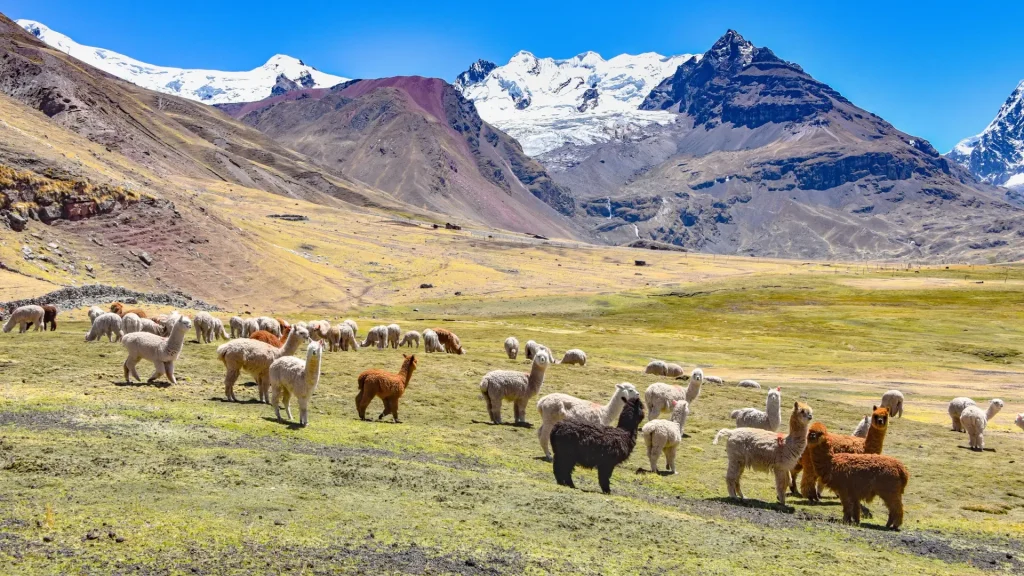
- Alpacas and llamas: they graze in the wetlands at the foot of the glacier.
- Andean communities: Tinki and Pacchanta, where many families herd alpacas and llamas.
7 Lakes in One Day or a 5-Day Trek?
There are two ways to experience Ausangate with us. The first is a one-day loop hike past the lakes; the second is a five-day trek that circles the mountain over passes above 5,000 m (16,400 ft). Here is how they compare:
| 7 Lakes (1 day) | 5-day / 4-night trek | |
|---|---|---|
| Price | US$60 (private from US$108 per person) | US$600 |
| Hiking | Loop, 5 to 6 hours | Several days around the mountain |
| Highest point | About 4,850 m (15,910 ft) | Palomani Pass, about 5,200 m (17,060 ft) |
| Nights | Back in Cusco the same day | Four nights camping |
| Difficulty | Demanding because of the altitude | Hard; you must be well acclimatized |
| Best for | Travelers short on time | Hikers with high-altitude experience |
The one-day hike to the lakes
Our Ausangate 7 Lakes tour is the most practical way to see the glacier up close in a single day. This is how the day goes:
- Pickup in Cusco around 4:00 a.m. and about 3 to 3.5 hours of driving to Pacchanta.
- Breakfast on the way; sometimes in Pacchanta.
- A 5- to 6-hour loop hike between lakes, from about 4,300 m to 4,850 m (about 14,100 to 15,910 ft).
- Lunch and, if you like, a dip in the hot springs (optional, entrance paid separately).
- Return to Cusco around 7:00 p.m.
The five-day trek around the mountain
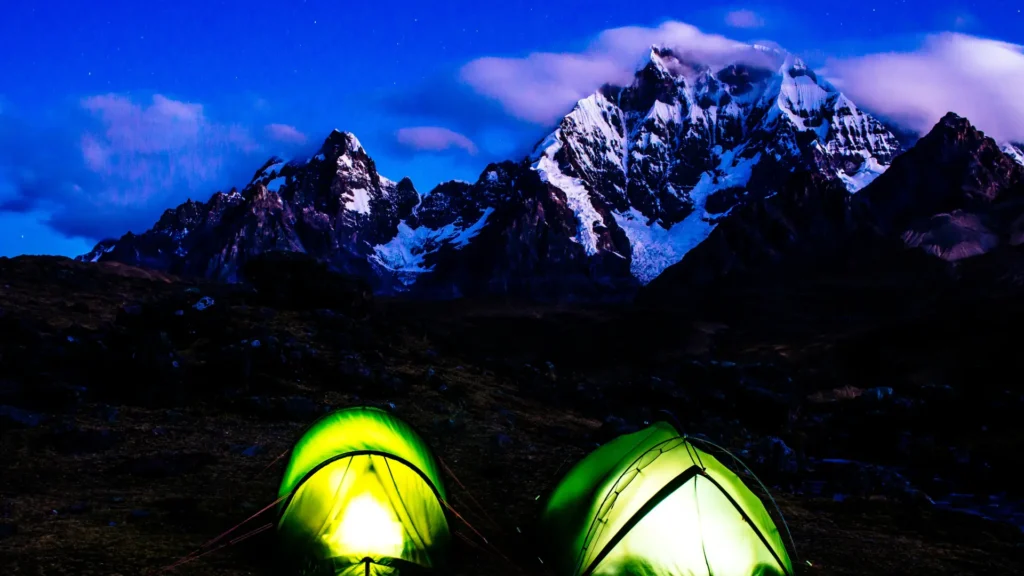
Our Ausangate Trek, 5 days and 4 nights, starts in Tinki, passes Upis and crosses three passes: Arapa, Palomani (the highest point) and Campa, before descending to Pacchanta and returning to Cusco. It is a private-only service for groups of 2 to 10 people (there are no shared departures). We travel with a camping crew, muleteers, pack horses and a cook, so you only carry your daypack. It is a hard route, with below-freezing nights and many hours above 4,400 m (14,400 ft), but it is one of the most spectacular hikes in the Andes. You can see other routes in our treks category.
Book with 40%: our Ausangate tours, both the one-day hike and the five-day trek, can be booked by paying just 40% online. The balance is paid when you arrive in Peru.
Ausangate Peru Altitude and Acclimatization
Everything around Ausangate is very high. These are the approximate altitudes of the main points:
| Place | Approximate altitude | What it means |
|---|---|---|
| Cusco | About 3,400 m (11,150 ft) | A good base to acclimatize before you go. |
| Upis | About 4,400 m (14,400 ft) | On the trek route, with hot springs. |
| Lakes (7 Lakes) | From about 4,300 m to 4,850 m (14,100 to 15,910 ft) | Highest point of the one-day hike. |
| Arapa Pass | About 4,800 m (15,750 ft) | First pass of the trek. |
| Campa Pass | About 5,000 m (16,400 ft) | Last pass before descending to Pacchanta. |
| Palomani Pass | About 5,200 m (17,060 ft) | Highest point of the trek. You climb very slowly. |
| Ausangate summit | About 6,380 m (20,940 ft) | Only for high-mountain expeditions. |
Our advice as guides: spend at least two or three days in Cusco before going to Ausangate. For the five-day trek, ideally do a high-altitude day hike first, such as Rainbow Mountain or the lakes hike itself. Walk slowly, drink water, eat light and tell your guide if you have a strong headache or nausea. We explain the symptoms and how to prevent them in our post on altitude sickness in Peru.
Qoyllur Rit’i and Ausangate Culture
Near Ausangate lies the sanctuary of the Señor de Qoyllur Rit’i, one of the most important pilgrimages in the Andes. It takes place before the feast of Corpus Christi and brings together thousands of pilgrims from communities across the southern Andes, with dances, music and rituals that blend Catholic faith with the worship of the apus. UNESCO recognizes it as Intangible Cultural Heritage of Humanity.
Beyond the festival, living culture shows up in everyday life: families herding alpacas and llamas, colorful weavings and offerings to Pachamama and the apus before a journey. If you are interested in the region’s celebrations, read our guide to Cusco festivals.
Best Time to Visit Ausangate, Peru, and the Weather
The best time is the dry season, from April to October. Days tend to be sunny with clear skies, giving the best views of the glacier and the lakes. In exchange, nights are very cold: at the trek campsites the temperature drops below freezing.
From November to March it rains more often, the trails get muddy and it can snow on the passes. The 7 Lakes day tour runs all year: in those months it rains more and clouds can hide the mountain. The five-day trek is far more enjoyable in the dry season. Check the month-by-month details in our guide to the best time to visit Cusco.
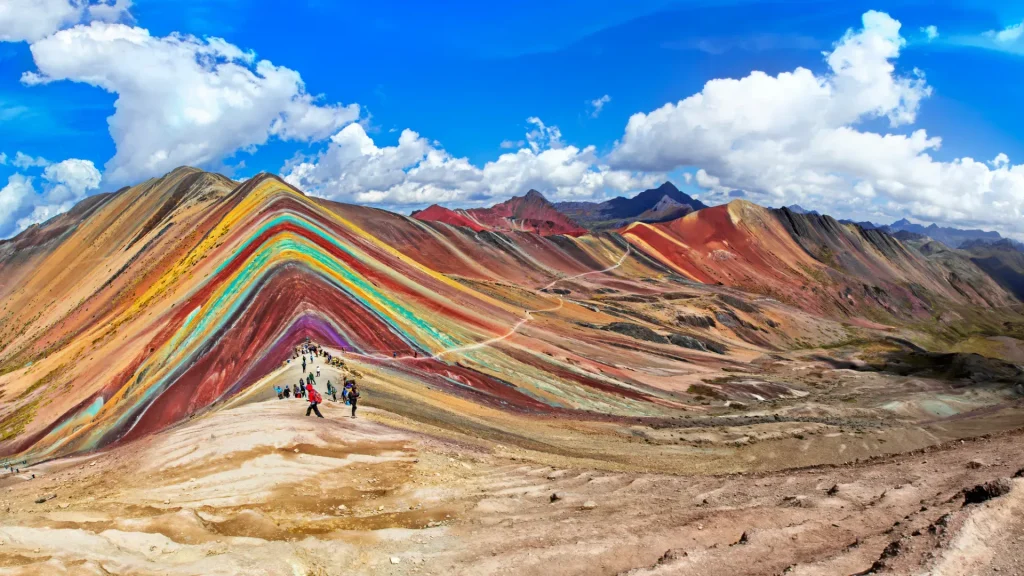
If you are short on time or prefer a less demanding hike, you can see Ausangate from a distance on the Rainbow Mountain tour or the Palcoyo tour, two day trips from Cusco.
What to Pack for Ausangate
- Layers: a thermal base layer, a fleece and a warm jacket; mornings are very cold and the midday sun is strong.
- Waterproof jacket: the weather changes quickly in the mountains.
- Hat, gloves and neck gaiter: essential on the passes and on the trek’s nights.
- Hiking boots: comfortable, broken in and with good grip.
- Trekking poles: a big help on climbs and descents.
- Sun protection: sunscreen, sunglasses and lip balm; the high-altitude sun burns.
- Water and snacks: nuts, chocolate or energy bars for the hike.
- Swimsuit and a small towel: if you want to try the hot springs.
- For the trek: a sleeping bag rated for below-freezing temperatures and a headlamp.
Frequently Asked Questions
How high is Ausangate mountain?
About 6,380 m (20,940 ft), although the figure varies slightly between sources. It is the highest mountain in the Cusco region. On our routes, the day hike reaches about 4,850 m (15,910 ft) and the trek about 5,200 m (17,060 ft) at Palomani Pass.
How hard is the one-day hike to the lakes?
It is demanding mainly because of the altitude: 5 to 6 hours on a loop trail, from about 4,300 m to 4,850 m (about 14,100 to 15,910 ft). If you are acclimatized and in average shape, you can do it at your own pace, with breaks.
Is the five-day trek suitable for beginners?
We do not recommend it as your first high-altitude hike. It is a hard route, with passes from 4,800 to 5,200 m (15,750 to 17,060 ft) and below-freezing nights. Ideally, you should have hiking experience and arrive well acclimatized.
Can you see Ausangate from Rainbow Mountain?
Yes. On a clear day, Ausangate rises in the background from Vinicunca and also from Palcoyo. Both are good options if you want to see it without such a long hike.
Are there hot springs near Ausangate?
Yes, in Pacchanta and Upis. On the day hike, a dip in the hot springs is optional, after lunch.
How much do your Ausangate tours cost?
The one-day Ausangate 7 Lakes tour costs US$60 (private from US$108 per person) and the 5-day, 4-night Ausangate Trek costs US$600. Both can be booked with 40% online, and the balance is paid when you arrive in Peru.
Plan Your Trip to Ausangate
Ausangate brings together glaciers, colorful lakes, alpacas and communities that keep Andean culture alive. Acclimatize for a few days in Cusco, choose the dry season and bring warm clothes. If you are planning your route around the country, check our Peru itinerary to fit these days in.
If you have just one day, book the Ausangate 7 Lakes hike. If you are looking for a big multi-day adventure, the 5-day Ausangate Trek takes you around the mountain. With both, you pay just 40% online and the rest when you arrive in Peru.