 English
 Español
 Português

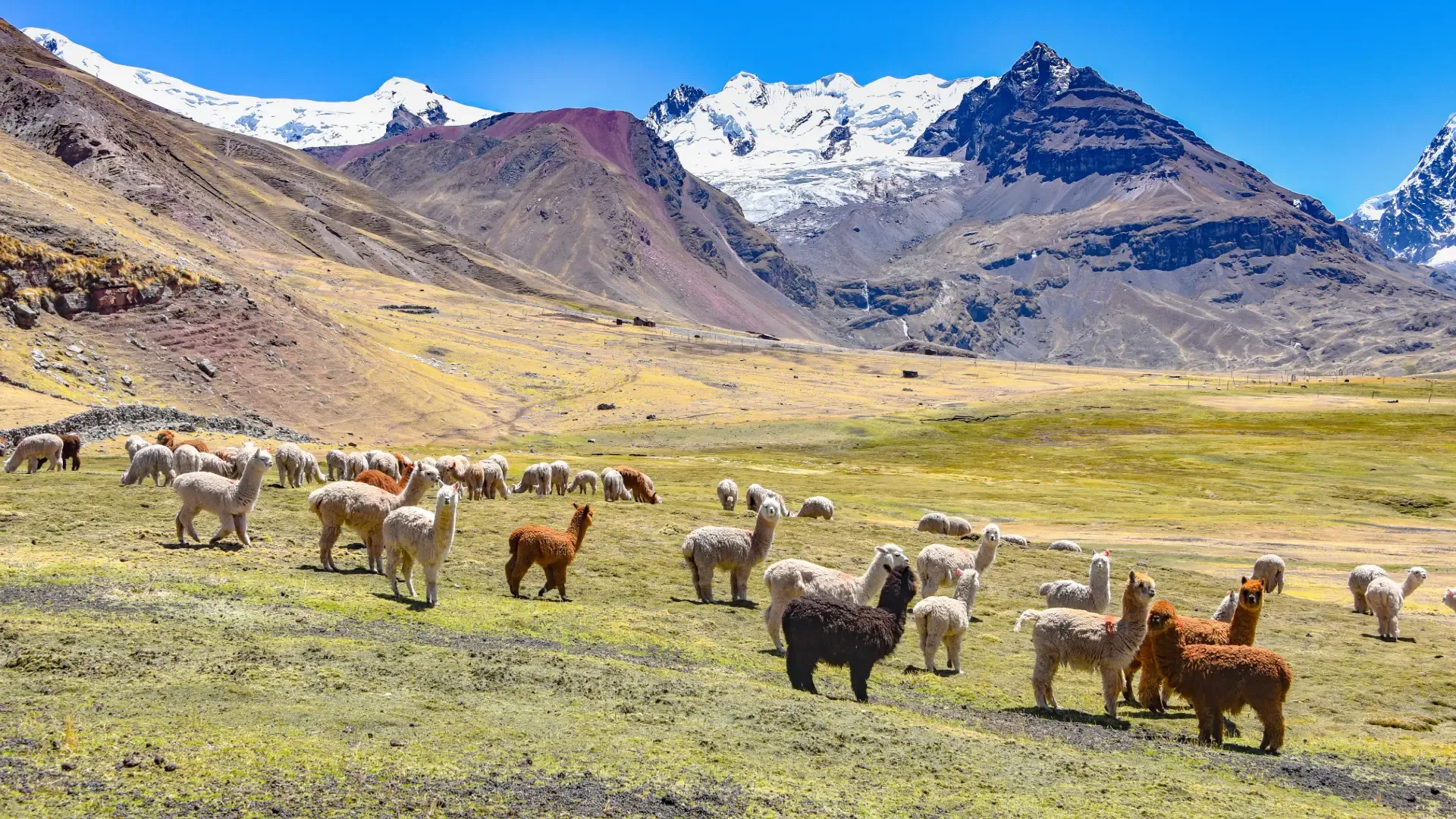
- Duration 5 days / 4 nights
- Difficulty Challenging
- Group size 2 to 10 people (private)
- Max. altitude 5,200 m (17,060 ft)
- Travel style Private, trekking
- Departure Cusco
Our Ausangate Trek is a 5-day, 4-night hike around the snow peak: we pick you up at your Cusco hotel around 5:00 a.m. and you return on the fifth day, arriving in Cusco between 5 and 6 p.m. It costs US$600 per person, with transport, guide, cook, muleteers and camping. You book by paying 40% online and the rest in Peru.
It is one of the highest routes we offer: it crosses three passes between 4,800 and 5,200 m, goes past colorful lakes and has hot springs at Upis and Pacchanta. This is a private-only service for groups of 2 to 10 people (there are no shared or group departures), with a guide in Spanish, English or Portuguese, a cook, muleteers with horses to carry the loads and an emergency horse.
Where is Ausangate and how do you get there?
Ausangate is the great snow peak of the Cusco region that you see in the background from Rainbow Mountain (Vinicunca). The trek starts and ends in Tinki, which we reach by road from Cusco. All round-trip transport is included, so you only need to be ready at your hotel at pickup time.
How high is the Ausangate Trek?
The highest point is Palomani Pass, at about 5,200 m (17,060 ft) above sea level, which you cross on day three. The other two passes, Arapa and Campa, are around 4,800 and 5,000 m, and on the first night you already sleep at Upis, at about 4,400 m. That is why this route is for experienced, well-acclimatized hikers: we recommend spending 3 or 4 days in Cusco before you start. Read our guide to altitude sickness in Peru.
The Ausangate Trek day by day
| Day | Route | Night |
|---|---|---|
| Day 1 | Pickup around 5:00 a.m., drive to Tinki and hike to Upis (about 4,400 m), which has hot springs | Camp in Upis |
| Day 2 | Arapa Pass (about 4,800 m) and colorful lakes at the foot of Ausangate | Camp at Hatun Pucacocha, by Ausangate Lake |
| Day 3 | Palomani Pass (about 5,200 m / 17,060 ft), the highest point and the hardest day | Camp in Sorapata |
| Day 4 | Campa Pass (about 5,000 m) and descent to Pacchanta, which has hot springs | Camp in Pacchanta |
| Day 5 | Hike to Tinki and return to Cusco, arriving between 5 and 6 p.m. | — |
Every day you hike with Ausangate in view, and alpacas and llamas are a common sight along the way. The full detail of each day is in the itinerary tab.
How difficult is the Ausangate Trek?
It is demanding: we rate it as challenging. It means five days in a row at high altitude, with three passes from 4,800 to 5,200 m, and day three, over Palomani Pass, is the toughest. This is not a route for your first trek: it is for hikers with multi-day trekking experience who are well acclimatized. Horses carry the loads, an emergency horse always travels with the group, and your guide carries a first-aid kit and oxygen.
Book with 40%: you pay US$240 per person online to secure your spot and the remaining 60% (US$360) when you arrive in Peru.
When to do the Ausangate Trek, and how cold does it get?
The dry season, from April to October, usually brings clearer skies and better views of the mountain. From November to March it rains more often and clouds can hide the peaks. In any month the nights are very cold, below freezing, so you need a warm sleeping bag (not included; available for rent in Cusco) and thermal clothing. Read more in our guide to the best time to visit Cusco.
Ausangate Trek or the 7 Lakes day hike?
If you are short on time, the Ausangate 7 Lakes tour visits the colorful lakes near Pacchanta in a single day, with a 5 to 6-hour hike up to about 4,850 m. The 5-day trek circles the whole mountain, crosses higher passes and gives you several nights deep in the mountains. And if you want a better-known day hike, the Rainbow Mountain tour is a good way to acclimatize before the trek.
To plan your trip, read our guide: Ausangate Peru 2027: 7 Lakes, Altitude, Qoyllur Rit’i and How to Get There.
Book with a local Cusco agency
We are a Cusco-based agency and run our own Ausangate departures, with guides in Spanish, English and Portuguese, cooks and muleteers. Book through the form on this page: once you make the online payment, we confirm your date and send you the hotel pickup details.
Full itinerary
Day 1: Cusco – Tinki – Upis
Departure from Cusco to Tinki
We pick you up at your Cusco hotel around 5:00 a.m. and drive to Tinki, where the trek begins. Breakfast before departure is not included.
Hike to Upis
We hike to Upis, at about 4,400 m, where there are hot springs. We spend the first night at camp there.
Day 2: Upis – Arapa Pass – colorful lakes
Climb to Arapa Pass
We climb to Arapa Pass, at about 4,800 m, with Ausangate in view.
Colorful lakes
We continue past the colorful lakes at the foot of Ausangate and camp at Hatun Pucacocha, by Ausangate Lake.
Day 3: Palomani Pass
Climb to Palomani Pass
This is the hardest day of the trek. We climb to Palomani Pass, at about 5,200 m (17,060 ft), the highest point of the route. Your guide sets a slow, steady pace.
Descent to the valley
From the pass we descend to the valley and spend the night at camp in Sorapata.
Day 4: Campa Pass – Pacchanta
Climb to Campa Pass
We cross Campa Pass, at about 5,000 m, the last high pass of the route.
Descent to Pacchanta
We descend to the community of Pacchanta, which has hot springs, and camp there.
Day 5: Pacchanta – Tinki – Cusco
Hike to Tinki
On the last day we hike from Pacchanta to Tinki, where our transport is waiting.
Return to Cusco
We drive back to Cusco, arriving between 5 and 6 p.m.
What is included
- Transport Cusco – Tinki – Cusco
- Guide in Spanish, English or Portuguese, and cook
- Muleteers and horses for the loads, plus an emergency horse
- Camping equipment (tents, sleeping mats and dining tent)
- Meals during the trek
- Community entrance fees
- First-aid kit and oxygen
Not included
- Sleeping bag and trekking poles (available for rent in Cusco)
- Breakfast on day 1 before departure
- Travel insurance
- Personal expenses
- Tips
Frequently asked questions
1. How high is the Ausangate Trek?
The highest point is Palomani Pass, at about 5,200 m (17,060 ft) above sea level, which you cross on day three. Arapa and Campa passes are around 4,800 and 5,000 m.
2. How difficult is the Ausangate Trek?
It is challenging. You spend five days at high altitude and cross three high passes, and day three is the hardest. It is for hikers with multi-day trekking experience.
3. How many days should I acclimatize first?
We recommend spending 3 or 4 days in Cusco before you start. A day hike at high altitude, such as Rainbow Mountain, helps prepare your body.
4. How cold are the nights?
Very cold: the nights drop below freezing. Bring a warm sleeping bag, thermal clothing, a warm hat, gloves and a down jacket or similar.
5. How does booking with 40% work?
You pay 40% of the price online (US$240 per person) to secure your spot, and the remaining 60% (US$360) when you arrive in Peru.
6. What does the Ausangate Trek include?
Transport Cusco – Tinki – Cusco, a guide in Spanish, English or Portuguese, a cook, muleteers and horses for the loads, an emergency horse, tents, sleeping mats and a dining tent, meals during the trek, community entrance fees, a first-aid kit and oxygen.
7. Can I rent a sleeping bag and trekking poles?
Yes. The sleeping bag and poles are not included, but you can rent them in Cusco. Write to us before your trip if you need help getting them.
8. How is it different from the Ausangate 7 Lakes tour?
The 7 Lakes tour is a full day from Cusco, with a 5 to 6-hour hike up to about 4,850 m. The 5-day trek circles the mountain and crosses passes of up to 5,200 m.
Recommendations and what to bring
What to bring
- A sleeping bag rated for below-freezing temperatures (available for rent in Cusco)
- Clothing in layers: thermal base layer, fleece, a down jacket or similar and a waterproof jacket
- A warm hat, warm gloves and a scarf or neck gaiter
- Sunscreen, sunglasses and a sun hat for the strong high-altitude sun
- A reusable water bottle and energy snacks
- A swimsuit and small towel for the hot springs
- A headlamp for camp
Recommended footwear
- Waterproof, broken-in trekking boots with good grip
- Spare thermal socks
For the altitude
- Spend 3 or 4 days in Cusco before the trek
- Walk slowly, especially on the passes, and drink water regularly
- Coca tea or coca candies can help with mild symptoms
- If you feel a headache, nausea or dizziness, tell your guide: they carry oxygen and a first-aid kit
- Medication such as acetazolamide only after consulting your doctor
For the cold
- Nights drop below freezing: sleep in dry thermal clothing and a warm hat
- Keep your gloves at hand in the early mornings and on the passes
Cash in soles
- Carry cash in soles for tips, small purchases in the communities and any personal expenses along the route
Keep exploring
You may also like
Ausangate 7 Lakes 2027: 1-Day Tour from Cusco
Ausangate 7 Lakes tour from Cusco with hotel pickup, breakfast, lunch, entrance fee and guide. US$60 per person;…
Salkantay Trek to Machu Picchu 2027 (5 Days / 4 Nights)
Salkantay Trek to Machu Picchu in 5 days: Humantay Lake, a 4,600 m pass, Llactapata and the train…

Lares Trek 2027 (4 Days / 3 Nights)
Lares Trek to Machu Picchu, 4 days and 3 nights from Cusco: hot springs, Ipsay Pass, train and…